MS Sparsha
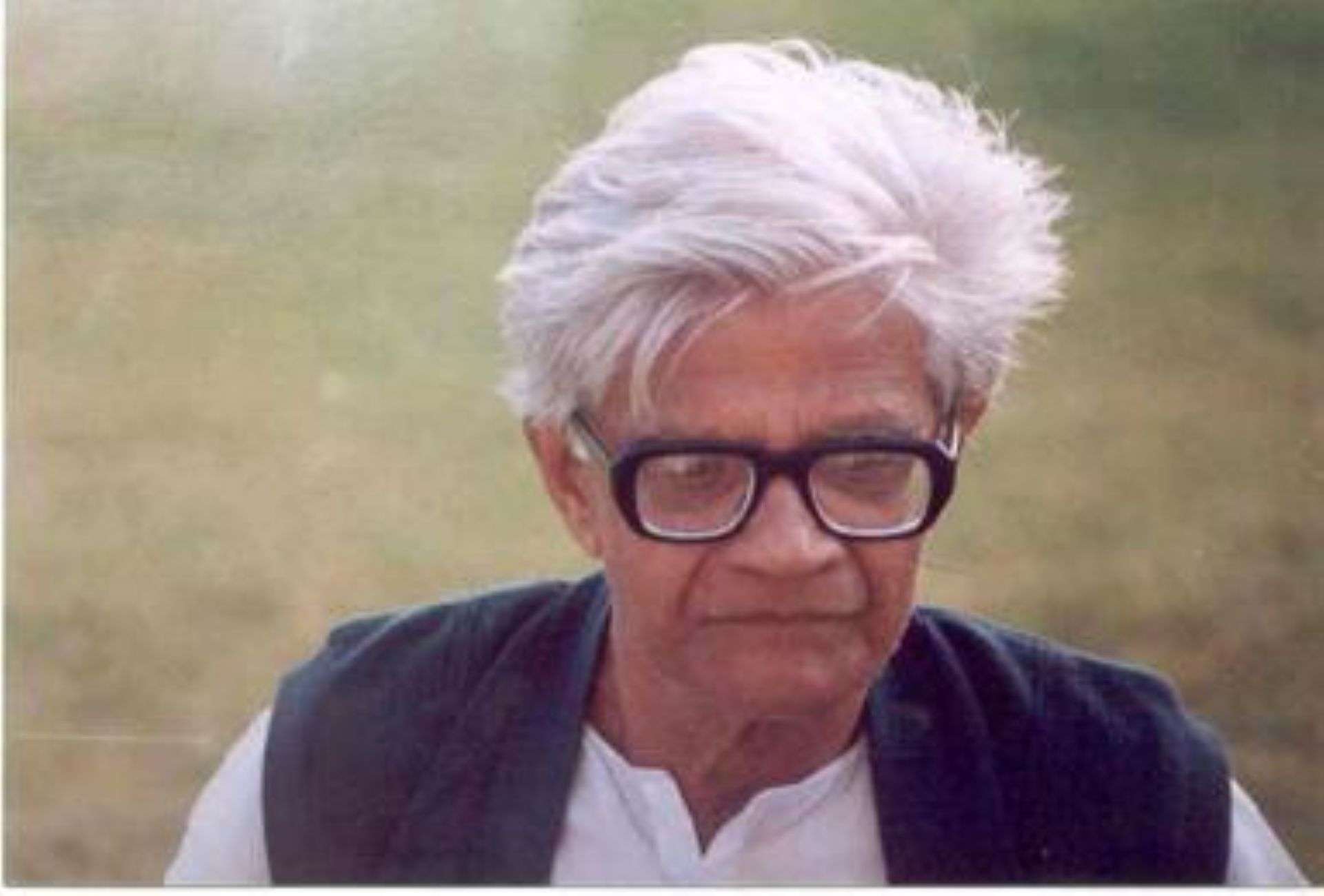
When the history of modern physics is written, the names of Albert Einstein, Roger Penrose and Stephen Hawking naturally dominate the discussion on gravity, black holes and the mysteries of the universe. Yet, behind some of the most profound developments in our understanding of spacetime stands an Indian physicist whose remarkable work was born not in a celebrated international laboratory, but amid indifference and limited encouragement. He was Amal Kumar Raychaudhuri, whose equation eventually became fundamental to the study of gravity, black holes and singularities.
Born in Barisal in 1923, Raychaudhuri studied physics at Presidency College in Kolkata. His fascination, however, was with mathematical physics. He wanted to explore the theoretical foundations of nature, particularly the emerging field of general relativity. But his early academic circumstances did not favour that ambition. At the Indian Association for the Cultivation of Science (IACS), he was assigned experimental research rather than the mathematical work he wanted to pursue.
Undeterred, Raychaudhuri began studying general relativity largely on his own. At a time when the subject attracted relatively little attention in his immediate academic surroundings, he persisted in exploring its difficult mathematical framework. His efforts did not always receive encouragement. Indeed, even the legendary physicist Satyendra Nath Bose reportedly declined to discuss Raychaudhuri’s work with him.
For many, such resistance might have been enough to abandon an apparently lonely pursuit. Raychaudhuri did the opposite.
His persistence eventually produced a result that would change the language through which physicists understand gravitational collapse. In 1953, he submitted a landmark paper to the journal Physical Review. Publication did not come quickly. He waited 17 months before the paper finally appeared in 1955. The work contained what became known as the Raychaudhuri Equation.
In deceptively compact mathematical form, the equation describes how a family of trajectories through spacetime converges or diverges under the influence of gravity. Put simply, it provides physicists with a way of understanding how gravity causes paths followed by particles or light to come together or spread apart. This seemingly abstract mathematical description turned out to have extraordinary consequences.
Years later, the Raychaudhuri Equation became a crucial mathematical ingredient in the celebrated singularity theorems developed by Roger Penrose and Stephen Hawking. These theorems fundamentally changed our understanding of gravitational collapse and demonstrated that, under appropriate physical conditions, general relativity inevitably leads to the formation of singularities. The work helped establish the theoretical foundations for modern thinking about black holes and also provided important insights into the conditions surrounding the origin of the universe.
What makes Raychaudhuri’s achievement particularly inspiring is the circumstances in which it emerged. He was working on a subject that had not received the attention he believed it deserved. He lacked the institutional support that often accompanies groundbreaking research. Yet he continued because he was convinced that the mathematics held something important.
Raychaudhuri later earned his DSc from Calcutta University and, in 1961, joined Presidency College as a faculty member. He remained there for the next 25 years, teaching and inspiring generations of students. His contribution was therefore not confined to a single equation; it extended to the minds he influenced through teaching.
The story of Amal Kumar Raychaudhuri is ultimately a story of intellectual courage. He pursued an unpopular field, faced discouragement, worked largely through his own determination and waited patiently for recognition of an idea that would eventually influence some of the deepest questions in physics.
One equation was enough to secure his place in modern science. But the greater lesson lies in the perseverance behind it: sometimes the most important breakthroughs begin when someone refuses to stop asking the questions others have chosen to ignore.