
U Lakshman Rao
The spectacular demonstrations of humanoid robots—running, sprinting, playing games, performing coordinated movements and even participating in sporting activities—represent an important achievement in robotics, artificial intelligence and machine learning. They demonstrate that machines can acquire sophisticated physical capabilities through a combination of sensors, actuators, computer vision, reinforcement learning, simulation and increasingly powerful computational systems. Yet physical performance should not be confused with intelligence in its fullest human sense. A robot that runs like an athlete has not necessarily acquired the athlete’s judgment, imagination, intuition, situational awareness or capacity to understand the larger purpose for which the activity is being performed.
The distinction becomes much more important when humanoid robots are considered for military deployment. A battlefield is not simply an environment in which a machine has to walk, run, shoot or carry equipment. War operates at multiple scales simultaneously: tactical engagement, operational movement, logistics, intelligence, diplomacy, deception, political objectives, civilian considerations and strategic consequences. These layers interact in unpredictable ways. Human commanders continually interpret incomplete information, reconsider objectives, recognize ambiguity and sometimes deliberately change a plan because circumstances have altered. Contemporary AI can assist many of these functions, but a humanoid platform itself does not automatically possess such comprehensive intelligence merely because it can move with remarkable dexterity.
Machine learning fundamentally differs from biological intelligence. A trained machine operates through mathematical representations, learned parameters, programmed objectives, sensor inputs and computational decision processes. Human intelligence arises from an extraordinarily complex biological system shaped by evolutionary history, development, culture, language, emotion, memory, social interaction and embodied experience. The human brain did not emerge as a single engineered device; it is the product of an immensely long evolutionary process. Consequently, comparing a robot’s ability to imitate one aspect of human performance with the totality of human cognition is scientifically misleading.
This does not mean that robots are primitive or unimportant. On the contrary, their greatest value may emerge precisely when we stop expecting them to become artificial copies of human beings. A robot can be exceptionally valuable when performing a narrowly defined task repeatedly, accurately and without fatigue. It can inspect hazardous industrial facilities, work in environments contaminated by radiation or toxic substances, assist in disaster response, transport materials, inspect infrastructure, support elderly or disabled people, perform laboratory procedures and undertake repetitive manufacturing operations. In these circumstances, the machine’s limitations can actually become manageable because the objective is clearly defined.
The same principle applies to medicine. Robots can assist surgeons, rehabilitation specialists, laboratory technicians and hospital logistics, but technological assistance does not eliminate the need for medical expertise. Diagnosis often requires interpretation of incomplete evidence, recognition of unusual symptoms, communication with a patient, understanding of personal circumstances and acceptance of responsibility for difficult decisions. A doctor who becomes excessively dependent on automated systems could gradually lose practical expertise. Technology should therefore augment professional competence rather than replace it.
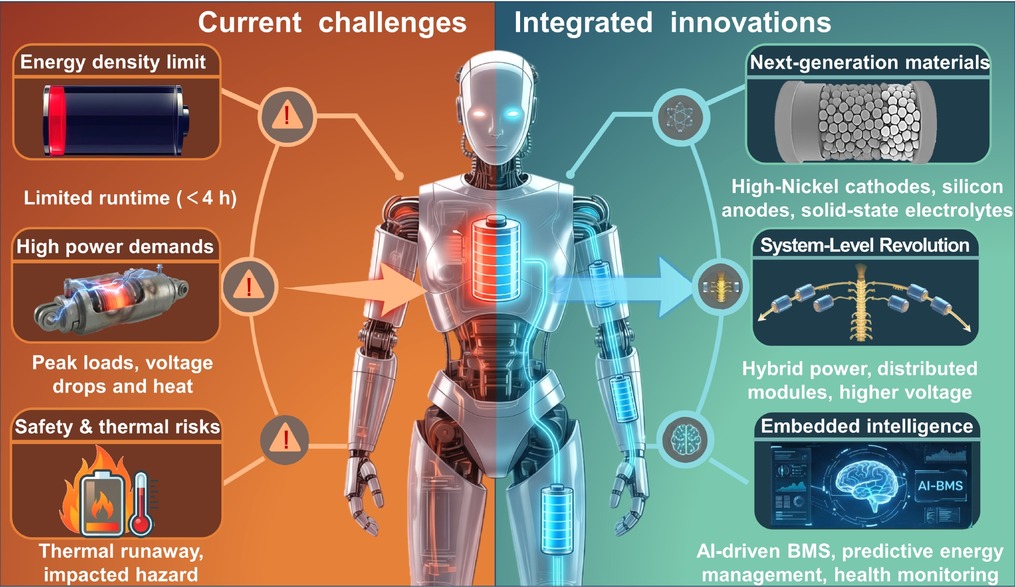
The question of military robotics requires even greater caution. Robots may become extremely useful for surveillance, reconnaissance, logistics, bomb disposal, casualty evacuation, perimeter monitoring and operating in environments considered too dangerous for human personnel. Autonomous or semi-autonomous systems may also process enormous quantities of sensor information faster than humans. However, the physical appearance of a humanoid robot should not be mistaken for military superiority. A machine’s effectiveness depends on communications, power supply, sensors, software reliability, cybersecurity, electronic warfare resistance, maintenance, terrain, weather and the quality of its command architecture. A sophisticated robot can become ineffective if any critical component fails.
There is also a fundamental problem of command. If the instruction supplied to a machine is incomplete, contradictory or based upon faulty information, the machine may faithfully execute the wrong objective. Machine learning does not magically transform a defective command into a wise one. A human commander can sometimes recognize that an instruction no longer makes sense and suspend action because of moral, strategic or contextual considerations. An automated system requires carefully designed safeguards to deal with uncertainty, conflicting objectives and unexpected circumstances.
This is particularly important because warfare is not a laboratory experiment. A battlefield contains civilians, allies, adversaries, misinformation, unexpected movements, political consequences and rapidly changing conditions. An autonomous system that performs perfectly under its training distribution may encounter circumstances that differ fundamentally from those represented in its training data. The problem is therefore not simply whether a robot can “think,” but whether the entire system can reliably perceive, reason about and respond to situations that its designers did not anticipate.
The popular fear of a humanoid robot suddenly becoming a cinematic “rogue machine” is therefore somewhat misplaced. The more realistic concerns are less dramatic but more technically significant: software errors, adversarial manipulation, sensor failure, communication disruption, cyberattacks, poor training data, inappropriate objectives, excessive human trust in automation and failures in command-and-control systems. The danger of advanced robotics is not necessarily that machines will spontaneously develop cinematic intentions; it is that humans may give powerful systems poorly specified objectives or deploy them beyond the conditions for which they have been adequately tested.
There is also an important distinction between autonomy and intelligence. An autonomous machine can perform a sequence of actions without continuous human intervention, but autonomy does not necessarily imply general intelligence. A cruise-control system can regulate speed autonomously without understanding why a journey is being undertaken. Similarly, a robot can navigate a building, identify an object or execute a learned maneuver without possessing a comprehensive understanding of the human world surrounding that task.
The human brain itself should not be romanticized as a perfect multitasking machine. Neuroscience suggests that humans are generally better at rapidly switching between tasks than at performing several demanding conscious operations simultaneously. Nevertheless, human cognition possesses an extraordinary capacity for abstraction, contextual reasoning, analogy, social understanding, creativity and the integration of diverse forms of knowledge. Machines are becoming extremely capable in selected cognitive domains, but excellence in a collection of specialized functions should not automatically be equated with general human intelligence.
The spectacular demonstrations coming from China, South Korea and other technologically advanced countries should therefore be viewed as evidence of rapid progress in robotics rather than evidence that human intelligence has already been reproduced. These countries, along with the United States, Japan, Europe and others, are advancing different components of the robotic ecosystem—actuators, batteries, sensors, computer vision, artificial intelligence, materials science, control systems and manufacturing. Humanoid robotics is an important technological frontier, but it represents only one part of the much larger problem of creating machines capable of robust general-purpose intelligence.
Socially, the arrival of humanoid robots will probably produce both genuine benefits and exaggerated expectations. Children may regard them as sophisticated toys, while adults may be fascinated by their ability to imitate human movements. Demonstrations naturally emphasize what a machine can do successfully rather than the conditions under which it fails. Commercial promotion also has an incentive to present a technological prototype as the beginning of a revolutionary industry. Revenue from robotics, electronics, sensors, computing infrastructure and associated services may indeed become substantial. But commercial success and scientific maturity are not the same thing.
The most sensible future is therefore neither blind enthusiasm nor fear of machine substitution. Humans should design robots to extend human capability where machines are stronger—precision, endurance, repetitive activity, hazardous operations, rapid computation and continuous monitoring—while retaining human responsibility where judgment, ethics, creativity, accountability and contextual understanding are indispensable. The central question should not be whether robots will replace humanity, but where machines should appropriately assist human beings and where human authority must remain decisive.
A technologically mature society will consequently require technologists, scientists, doctors, engineers, military professionals, ethicists and policymakers to work together. The robot should remain a tool within a larger human system rather than becoming the unquestioned authority within that system. Even the most sophisticated machine ultimately depends upon human-designed objectives, infrastructure, energy, maintenance, data and governance.
The possibility of a future in which robots perform useful functions across industry, healthcare, laboratories, transportation, entertainment and defense is therefore real and potentially transformative. But the humanoid form itself should not be confused with human intellect. A machine may acquire the appearance, movement and selected skills of a person without acquiring the full architecture of human understanding. The proper response is neither complacency nor alarmism, but scientific discrimination: recognize what the technology genuinely achieves, understand precisely where it fails, and build systems in which human intelligence remains responsible for the purposes to which machine intelligence is applied.