



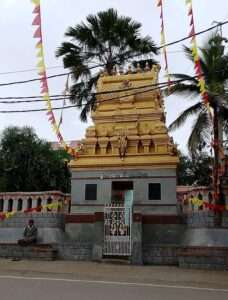
Sri Varadarajaswamy Temple is located in Singapura, near Jalahalli, in Yelahanka Taluk of Bengaluru Urban District, Karnataka. Situated atop a small hill overlooking the historic village of Singapura, this ancient Vaishnava temple is one of Bengaluru’s oldest surviving shrines dedicated to Lord Vishnu. The temple is dedicated to Sri Varadarajaswamy, the compassionate bestower of divine grace, prosperity and protection. Revered for more than five centuries, it has remained an important centre of Sri Vaishnava worship and continues to attract devotees seeking the blessings of the Lord.
The temple dates back to the Vijayanagara period and is more than 500 years old. Its antiquity is established through three stone inscriptions dated 1524 CE, 1528 CE, and 1530 CE. These inscriptions reveal that the temple was originally dedicated to Sri Tiruvengalanatha, a form of Lord Vishnu, and over time the presiding deity came to be worshipped as Sri Varadarajaswamy.
The presiding deity is Sri Varadarajaswamy, a graceful form of Lord Vishnu who blesses devotees with prosperity, protection and spiritual well-being. The temple also enshrines Sri Lakshmi Devi (Perundevi Thayar), Sri Garuda and Sri Anjaneya Swamy. The entrance to the sanctum is guarded by the divine gatekeepers Jaya and Vijaya, symbolising the sacred threshold to the abode of Lord Vishnu.
The temple showcases the elegant Vijayanagara style of architecture, with its original garbhagriha (sanctum), sukhanasi (vestibule) and portions of the ancient stone structure still preserved. Its most remarkable feature is the 40-foot monolithic Deepa Stambha (Garuda Kamba), carved from a single block of stone. The pillar bears a sculpted image of Anjaneya in Anjali Mudra at its base, while the other faces display the sacred Sri Vaishnava symbols of Shankha, Chakra and Garuda. This unique Deepa Stambha is one of the finest examples of Vijayanagara stone craftsmanship in the Bengaluru region and is the architectural highlight of the temple.
More than five centuries ago, during the glorious reign of the Vijayanagara Empire, the peaceful hill of Singapura became an important centre of Sri Vaishnava worship. Devotees established a temple dedicated to Sri Tiruvengalanatha, a sacred form of Lord Vishnu. Surrounded by serene surroundings, the temple soon became a place where pilgrims, saints and scholars assembled to worship the Lord, study the scriptures and spread the philosophy of Sri Vaishnavism.
The earliest inscription, dated 1524 CE, records that Singappanayaka made generous endowments for the worship of the Lord. Another inscription from 1528 CE mentions Nalapanayaka, while a third inscription dated 1530 CE records that Krishnappanayaka, the chief of Sivanasamudra, donated the entire village of Harohalli for the maintenance of the temple and its daily rituals. These noble offerings ensured that worship, festivals and religious services continued uninterrupted for generations.
The inscriptions also mention the establishment of a Ramanujakoota in honour of Jagadacharya Sri Ramanujacharya. This institution welcomed pilgrims, scholars and ascetics by providing food, shelter and a place for spiritual learning. Over the years, the temple became not only a sacred place of worship but also a respected centre for religious education, charity and the propagation of Sri Vaishnava philosophy.
As centuries passed, the deity came to be worshipped as Sri Varadarajaswamy while preserving the temple’s ancient traditions. Even today, the centuries-old inscriptions, the original sanctum and the surviving Vijayanagara architectural features stand as silent witnesses to the unwavering devotion, generosity and spiritual legacy of those who nurtured this sacred shrine, making it one of the most historically significant Vaishnava temples in Bengaluru.
Sri Varadarajaswamy Temple is one of the oldest surviving Vishnu temples in Bengaluru and holds immense historical, religious and archaeological importance. Originally known as Sri Tiruvengalanatha Temple, it preserves rare Vijayanagara-period inscriptions that provide authentic evidence of its antiquity and royal patronage. The temple was also home to a Ramanujakoota, reflecting its role as an important centre of Sri Vaishnava philosophy, religious learning and charitable service. Despite the passage of time and periodic renovations, the temple continues to preserve its ancient sanctum and many original architectural features, making it a priceless heritage monument of Karnataka.
Vaikuntha Ekadashi, Brahmotsavam, Sri Rama Navami, Sri Krishna Janmashtami, Narasimha Jayanti and Deepavali are celebrated with great devotion and grandeur. A traditional village Jathre, observed with the participation of devotees from Singapura and the surrounding villages, continues to preserve the temple’s centuries-old religious traditions and cultural heritage.


