



Spain’s World Cup triumph was a victory for skill, discipline, and attacking football over theatrics and gamesmanship.
Spain did not merely win the FIFA World Cup 2026 final. They restored faith in what football’s biggest prize is supposed to reward—the better team, not the better dramatist.
The defending champions from Argentina arrived with all the hype that accompanies Lionel Messi and a generation of world champions. What they left with, however, was a harsh lesson that reputations do not win World Cup finals. Performances do. And by that measure, Spain were miles ahead. Spain’s 1-0 extra-time victory was not fortunate, controversial or undeserved—it was inevitable. Argentina were outplayed for virtually the entire contest.
For over 110 minutes, Argentina failed to register a single shot on target—or even an attempt during regulation time—an astonishing statistic for a defending champion in a World Cup final. Since detailed records have been maintained, no defending champion has looked so toothless on football’s grandest stage. Messi, arguably the greatest footballer of his generation, cut a peripheral figure for much of the match. The magic simply wasn’t there.
Spain, on the other hand, played football the way it ought to be played—with relentless pressing, intelligent possession, tactical discipline and unwavering belief. They dominated possession with around 65 per cent of the ball, attempted nearly 20 shots, created multiple big chances and forced Emiliano Martínez into a series of brilliant saves that kept Argentina alive far longer than they deserved to be. Had it not been for Martinez’s heroics, Spain could have buried the contest within the regulation ninety minutes.
Ironically, Argentina’s biggest contribution to the final was not footballing excellence but gamesmanship. Throughout the tournament they were celebrated for their resilience and grit. In the final, however, grit often crossed over into cynicism. Tactical fouls, constant appeals to the referee, and attempts to disrupt Spain’s rhythm became more visible than their attacking intent.
Even Messi, revered for letting his feet do the talking, appeared visibly frustrated at various stages and was unable to influence proceedings. The image of Argentina in this final was not that of the elegant world champions of Qatar 2022 but of a side desperately trying to survive wave after wave of Spanish attacks. Football romantics expecting one final Messi masterclass were instead treated to an Argentine rear-guard action.
Discipline—or the lack of it—further exposed Argentina’s unraveling. The Albiceleste accumulated the bulk of the yellow cards during the contest. Enzo Fernandez’s second bookable offence in stoppage time of regulation meant Argentina were forced to play extra time with ten men. Leandro Paredes would later see red amid ugly post-match scenes that overshadowed what should have been a celebration of football. Argentina’s frustrations boiled over precisely because Spain had outclassed them where it mattered most—on the pitch.
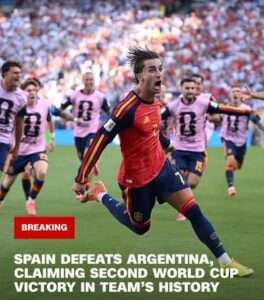
Then came the moment that football itself deserved. In the 106th minute, Ferran Torres finally broke Argentine resistance. It was a goal that had been coming for nearly two hours—a reward for Spain’s courage to attack and refusal to settle for penalties. The Spanish players never stopped believing that football should decide the final, not theatrics or fortune.
This World Cup triumph is also symbolic of Spain’s footballing renaissance. European champions in 2024 and now world champions in 2026, Spain have successfully blended youthful brilliance with tactical maturity. Players such as Lamine Yamal have announced the arrival of a new golden generation capable of dominating world football for years to come. Their victory was built not on individual superstardom but on collective excellence.
Argentina deserves enormous respect for reaching yet another World Cup final. Messi’s legacy remains untouched by one disappointing evening in New Jersey. But legacies do not earn trophies. Performances do.
The FIFA World Cup final is not a lifetime achievement award. It is a contest to determine who was better on the day.
Spain was better in every conceivable department—possession, chances created, attacking intent, discipline and composure. They played football. Argentina played for survival.
The right team lifted the trophy. And football, thankfully, was the ultimate winner.


