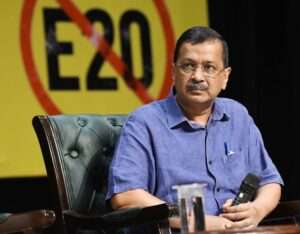
Politics has every right to question government policies. Democracy thrives on scrutiny, debate and accountability. But when political rhetoric abandons scientific reasoning and economic realities in favour of sensational allegations, it ceases to be constructive criticism and becomes little more than fear-mongering. Arvind Kejriwal’s opposition to Bharat’s E20 ethanol-blended fuel policy falls precisely into that category. No responsible government policy is beyond criticism. Consumers are entitled to question mileage, pricing and compatibility issues. Vehicle owners deserve transparency about fuel efficiency. If petrol pumps are indeed making E20 the default option without ensuring an affordable alternative for owners of older vehicles, those concerns deserve serious attention. Likewise, if motorists experience lower mileage because ethanol contains less energy per litre than conventional petrol, there is a legitimate case for pricing E20 proportionately. These are practical consumer issues that merit debate. But none of these concerns remotely justify demanding a blanket rejection of India’s ethanol blending programme. That is where Kejriwal’s argument collapses under the weight of facts. The science behind ethanol blending is neither new nor controversial. Countries including Brazil and the United States have successfully used ethanol-blended fuels for decades. Bharat itself has gradually expanded ethanol blending over several years after extensive testing, research and consultations involving automobile manufacturers, oil marketing companies and scientific institutions. E20 is not an overnight experiment but the culmination of a carefully phased national policy. The objective is straightforward. Bharat imports a significant share of its crude oil requirements, making the country vulnerable to volatile global prices and geopolitical disruptions. Every litre of domestically produced ethanol blended into petrol helps reduce dependence on imported fossil fuels, strengthens energy security and conserves valuable foreign exchange. Equally important is the impact on Bharatiya agriculture. Ethanol production creates additional demand for sugarcane and surplus food grains such as maize, providing farmers with another stable source of income. Rather than allowing agricultural surpluses to remain underutilised, the policy converts them into clean energy while supporting rural livelihoods. It is difficult to understand how any government committed to farmer welfare would abandon such a strategy merely because of political sloganeering. Even environmental considerations cannot be ignored.
Although ethanol is not a perfect solution to climate change, blending ethanol with petrol contributes to lowering net carbon emissions and forms an important transitional step as Bharat gradually expands electric mobility, green hydrogen and other cleaner energy alternatives. Energy transitions across the world are incremental, not instantaneous. What makes Kejriwal’s campaign particularly unconvincing is his attempt to portray the policy as the result of alleged foreign pressure, especially from the United States. This allegation is conspicuously devoid of credible evidence. During the past decade, the Narendra Modi government has repeatedly demonstrated its willingness to pursue policies based on Bharat’s national interests, irrespective of international pressure. Whether dealing with China’s military provocations along the Line of Actual Control, maintaining an independent foreign policy during global geopolitical crises, or refusing to be dictated to on trade and strategic matters, Bharat has consistently asserted its strategic autonomy. To therefore claim that the ethanol blending programme exists because New Delhi supposedly yielded to American pressure is not a serious policy argument. It is political theatre masquerading as economic analysis. Criticising implementation is one thing. Demanding better pricing, greater consumer choice, improved awareness and stronger safeguards for owners of older vehicles are all legitimate policy suggestions. Those issues deserve discussion and corrective action wherever necessary. But reducing an important national energy strategy to conspiracy theories without substantiating them with scientific evidence or economic data does a disservice to public discourse. Bharat’s ethanol programme should certainly continue to evolve based on evidence, consumer feedback and technological advancements. What it does not need is alarmist politics that ignores facts while appealing to emotion. Public policy should be shaped by science, economics and national interest—not by headlines built on speculation.