
Lakshmanrao Upadhyayulu
The sage Vāmadeva, composing in the Triṣṭubh metre of the Ṛgveda, presents Indra as the supreme embodiment of divine strength, wisdom, protection, and prosperity. The hymns portray him not merely as a mighty warrior but as the guardian of cosmic order, the benefactor of humanity, and the upholder of righteousness. They reveal a profound synthesis of spirituality, ethics, natural philosophy, and human aspiration.
In the Vedic vision, Indra is the fulfiller of noble aspirations who responds to the sincere prayers of devotees, whether they call upon him from distant lands or nearby settlements. Ever vigilant, he extends shelter, courage, and hope to those who uphold truth and perform their duties with devotion. His presence symbolizes the victory of order over chaos, confidence over fear, and righteousness over injustice. Every invocation reflects the unwavering faith that divine strength accompanies those who live with integrity.
Whenever forces of conflict and disorder arise, Indra appears as the unconquerable warrior whose determination never falters. Wielding the mighty Vajra, the celestial thunderbolt, he stands as the fearless defender of justice. Alongside him march the radiant Maruts, embodiments of the dynamic energies of wind and storm. Together they represent the harmonious cooperation of cosmic forces that preserve creation and overcome destructive influences. Indra’s triumphs are not merely military victories but enduring affirmations that courage guided by righteousness ultimately prevails.
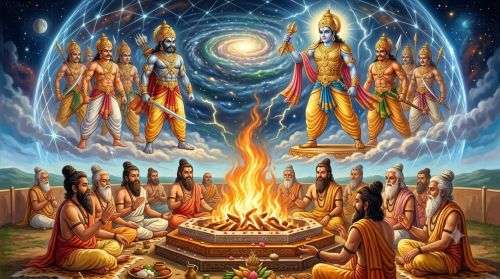
The hymns lovingly invite Indra to turn his gracious face towards his worshippers and bless them with secure homes, flourishing families, abundant wealth, and lasting prosperity. Riding his resplendent chariot drawn by swift horses, he arrives at the sacred yajna, where the human and divine realms unite through sacred offerings. Revered as the foremost leader among the gods, he is respectfully invited to accept the offerings and honour the devotion of the priests. Thus, the yajna becomes a living bridge between disciplined human effort and divine grace, reminding humanity that prosperity blossoms where gratitude and selfless action coexist.
The worshippers humbly acknowledge themselves as priests serving the wielder of the Vajra. Their aspirations are founded not upon greed but upon righteous endeavour. Like a skilled hunter who succeeds through patience, discipline, and precision, they seek victory through courage, wisdom, and divine blessings. Material prosperity is regarded as the rightful fruit of honest labour, moral conduct, and sacred dedication. The hymns affirm that wealth acquired through virtue strengthens both society and spiritual life.
Indra is praised as the inexhaustible source of nourishment and the generous sustainer of all beings. The purified Soma, carefully prepared and sanctified through sacred rites, is lovingly offered to him. Soma signifies far more than a ritual drink; it symbolizes purified consciousness, elevated awareness, and the bliss that arises from disciplined spiritual practice. By accepting these offerings and heartfelt hymns, Indra fills the hearts of devotees with courage, peace, enthusiasm, and inner fulfilment. Divine communion transforms the human mind into a source of enduring happiness and resilience.
The seers compare Indra to a magnificent tree laden with ripe fruits, always ready to nourish those who seek refuge beneath its shelter. Master of every weapon and the living embodiment of victory, he is praised not only by the ancient sages but also by successive generations of enlightened seers. Just as accomplished artists earn admiration through perfected skill, the sages express their devotion through exquisitely composed hymns whose beauty reflects the harmony of cosmic truth.
Indra is further portrayed as majestic and steadfast like the eternal mountains, whose silent grandeur inspires awe across generations. His generosity, radiant brilliance, and unwavering commitment to justice define his divine character. From the earliest moments of creation, he was destined to subdue the forces of ignorance and safeguard the moral order of the universe. The sparkling Vajra in his hand resembles a vessel filled with pure, life-giving waters, signifying that true power is inseparable from purity, wisdom, and compassion. Strength without righteousness finds no place in the Vedic understanding of divine authority.
From the moment of his divine birth, no force has possessed the power to restrain Indra’s righteous energy. His immense strength exists not for domination but for the generous distribution of blessings. He bestows imperishable riches upon those who perform yajnas with sincerity and unwavering faith. These treasures include not only material prosperity but also moral excellence, intellectual clarity, spiritual wisdom, and social harmony. The sages teach that wealth rooted in virtue never diminishes, for it continues to enrich generations through noble deeds and enlightened living.
One of Indra’s greatest achievements celebrated in the hymns is the liberation of the cows concealed by demonic forces. In Vedic symbolism, cows represent not merely material wealth but also knowledge, light, wisdom, and the nourishing powers of nature. By restoring them, Indra dispels the darkness of ignorance and oppression while re-establishing prosperity and harmony. As the supreme protector of cosmic law, he guides humanity towards disciplined living, ethical conduct, responsible governance, and social welfare.
Indra’s greatness lies not merely in physical strength but in his ability to unite scattered efforts into purposeful action. This power reflects his profound wisdom, far-reaching vision, and enlightened leadership. He harmonizes courage, knowledge, compassion, and authority, thereby removing the suffering and moral shortcomings of those who sincerely seek transformation. He generously rewards priests and seekers devoted to truth, demonstrating that genuine leadership is founded upon the perfect balance of power and wisdom.
The concluding prayer expresses complete trust in Indra’s benevolence. The devotees humbly pray that he may never afflict them but always sustain, protect, and nurture their lives. They seek lasting prosperity born of generosity, sacrifice, and righteous conduct. In return, they dedicate fresh and heartfelt hymns composed with reverence, devotion, and profound understanding. These ever-renewing prayers remind humanity that sincere worship is not the repetition of empty words but the continual renewal of inner consciousness and spiritual awareness.
From a scientific perspective, these Vedic hymns reveal remarkable observations about both nature and human psychology. Indra’s thunderbolt symbolizes atmospheric electricity, while the Maruts represent the dynamic forces of wind, storms, and seasonal transformations that sustain ecological balance. The liberation of the cows metaphorically signifies the release of rain-bearing clouds that nourish the earth and ensure agricultural prosperity. Soma represents elevated states of consciousness attained through disciplined spiritual practice rather than sensory indulgence. The yajna illustrates principles of cooperation, environmental harmony, gratitude, and collective responsibility. Thus, these hymns seamlessly unite spirituality with rational observation, presenting a timeless worldview in which nature, ethical living, disciplined inquiry, and divine consciousness exist in perfect harmony, inspiring humanity to pursue both inner enlightenment and the responsible stewardship of the world.