



Oil price shock and rising inflation in India
Why does life in India become more expensive as global crude oil prices rise?
Inflation isn’t simply a rise in the price of goods in the market; it’s driven by numerous domestic and global factors. When the price of goods or raw materials imported from abroad increases, impacting domestic market prices, it’s called imported inflation. This challenge is even more serious for a country like India, as our economy relies heavily on imported crude oil for its energy needs. Fluctuations in global crude oil prices are therefore not limited to petrol and diesel prices alone; they impact transportation, industry, agriculture, food, and ultimately, the common man’s pocket.
India imports more than 85 percent of its crude oil needs. Therefore, rising oil prices in the international market directly signal higher import costs for India. When crude oil prices suddenly rise due to factors such as global war, geopolitical tensions, production cuts by oil-producing countries, supply disruptions, or increased demand, India has to spend more foreign exchange to purchase the same oil. This is the starting point where imported inflation pressures begin.
The most direct impact of rising oil prices is on fuel costs. As petrol and diesel become more expensive, transportation costs increase. Road transport is the backbone of trade and the supply chain in India. Fuel plays a vital role in transporting most goods from farms to markets, from markets to wholesale markets, and from there to shops. Therefore, freight costs can increase as diesel becomes more expensive. Transportation companies incorporate the increased costs into freight charges, ultimately passing them on to consumers.
The impact of oil is not limited to transportation. Many industries in the economy are energy-dependent. Fuel and energy play a significant role in the production costs of cement, steel, chemicals, fertilizers, and other energy-intensive industries. Rising crude oil prices directly or indirectly increase production costs. Industries may raise product prices to control their costs. Thus, the initial oil shock gradually spreads to different sectors of the economy.
This could also impact food inflation. Diesel is useful for farmers in irrigation, agricultural machinery, and transportation. Fuel is also needed to transport agricultural produce from one place to another. If transportation and agricultural costs rise, prices of vegetables, fruits, grains, and other food items could be pressured. This is why a shock to the international oil market could reach household kitchens.
The rupee exchange rate also plays a significant role in this process. Crude oil is generally traded in US dollars in the international market. If global oil prices rise while the rupee weakens against the dollar, crude oil becomes more expensive for Indian importers. This means India has to spend more rupees for the same amount of oil. This could further increase the pressure on imported inflation.
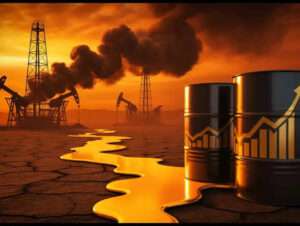
A sustained rise in oil prices also impacts inflation expectations. When individuals and businesses anticipate further increases in fuel costs, they tend to increase their prices. This can have a cascading effect on wages, freight, services, and other commodity prices. Thus, an initial oil shock has the potential to escalate into widespread inflation. The Reserve Bank of India’s estimates also consider the impact of rising crude oil prices on inflation; a frequently cited estimate is that a 10 percent increase in crude oil prices could exert approximately 20 basis points of upward pressure on consumer price inflation, although the actual impact varies depending on circumstances.
At such times, the government and central bank face a balancing challenge. Excessive fuel tax increases could impose additional burdens on consumers, while excessive tax cuts could strain government revenues. Therefore, a balanced and timely tax policy is essential during times of extraordinary global oil shocks. Similarly, monetary policy is crucial to prevent a second wave of inflation, but excessively stringent measures could impact economic growth.
The long-term solution lies not just in controlling oil prices, but in reducing dependence on oil. India must diversify its crude oil import sources and strengthen its strategic petroleum reserves to mitigate immediate pressure during times of global supply shortages. It also needs to promote electric vehicles, renewable energy, public transport, and energy efficiency. The faster the economy shifts to alternative energy sources, the less vulnerable it will be to shocks in the international oil market.
For India, crude oil is not just a source of energy, but a crucial issue for economic stability. We cannot control the price of oil in the global market, but the impact it will have on our economy depends largely on our policies and preparedness. While it’s not possible to completely eliminate imported inflation, its impact can certainly be mitigated.
Every oil price shock reminds us that energy security is a crucial foundation for economic security. Until India reduces its import dependence, global oil market fluctuations will continue to impact the Indian market and the pockets of ordinary consumers. Therefore, the need today is not just to fight inflation, but to build an economy that is stronger, more self-reliant, and more resilient to external price shocks.


