

I woke up today with a profound, unexplainable sense of connection to my late parents. Yielding to modern habit, I opened WhatsApp, only to be met with an extraordinary sight. My screen was filled with messages from students, colleagues, and friends, including several from across the world I hadn’t heard from in years. Reading how positively I impacted their lives and careers during my association with them all through my professional journey left me incredibly humbled and grateful.
Every message ended with a sentence, “Happy Guru Purnima Day, Sir,” followed by an emoji of namaskar. Overwhelmed with emotion, I wondered why I was receiving so many messages today on 29 July, which is still a month ahead of Teacher’s Day that is celebrated on 5 September every year when I used to get such messages.
Not being a teacher in the strict sense, I used to wonder why I received messages every Teachers’ Day. This Wednesday brought clarity, as I finally understood the difference between a teacher and a guru. It became obvious to me that a teacher usually works in a formal setting like school, college, university or a training class, whereas gurus need not be formal classroom teachers. A guru is someone who plays a deeper mentor role in the learning as well as character-building process while guiding his disciples or students. He can also be a person whose conduct inspires transformation in people’s lives. While growing up, we all have come across teachers who became our gurus by combining the twin roles of teaching and mentoring.
Gu-ru means “dispeller of darkness” in Sanskrit, and Purnima means full moon. Amongst the 12 full moons in a year, Guru Purnima falls on the first full moon day after the summer solstice on 21 June in the Ashadha month of the Hindu calendar. This roughly corresponds to a time period between July and August of the Gregorian calendar, every year.
Numerous legends and traditions trace the roots of Guru Purnima back to thousands of years. According to yogic tradition, the day is celebrated on the occasion when Lord Shiva became the first Guru when he started teaching yoga to the Saptarishis. Hindus dedicate Guru Purnima to Maharshi Veda Vyasa, the sage who is believed to have composed the sacred Hindu text, the Vedas, and wrote 18 Puranas, the Mahabharata, and the Srimad Bhagavatam, all of which form the very foundation of the Hindu religion.
In Buddhist tradition, it is the day when Gautam Buddha gave his first sermon to his five disciples at Sarnath, in Uttar Pradesh, after attaining enlightenment. They also call this day as Dhamma Chakra Day and the sermon as Dhammacakkappavattana Sutta. According to the sacred Buddhist text Saṁyutta Nikāya (SN 56.11) it means, “Setting the Wheel of Dhamma in Motion”. In Jainism, Guru Purnima marks the special day when Lord Mahavira, the 24th Tirthankara (spiritual teacher), accepted his very first disciple, Gautam Swami.
Today, in Bharat, we celebrate this day by showing respect and reverence to our teachers and gurus. As the weight of this Wednesday hit me, I was able to connect to the profound, unexplainable sense of connection to my late parents that I felt today; it was their WhatsApp message to me. I realized it was my soul’s way of remembering them, my first gurus. While my mother was a traditionally devout follower of Sanatana Dharma and never let a special occasion pass by unnoticed, my father took a more philosophical, spiritual approach to life as an Arya Samaji. Had they been alive today, I would have received the blessings from them in person.
So, the first thing I did after reading all the messages was to bow my head in gratitude to my parents. As my very first gurus, they had taught me to walk and talk, guiding my steps through both joyful and challenging times. I silently wished them a happy Guru Purnima. Not to sound weird, but today, after a long time, I spent time with them silently, thanking them profusely for teaching me to lead an upright life.
In our professions too, we have seen leaders who rose because of great mentorship and learning provided by their gurus who were inspirational and knowledgeable. We are all aware of concepts like succession planning in an organisational setup that has now become a trending concept in the corporate world. These concepts find their roots in the Bhagavad Gita, where Lord Krishna teaches Arjun on great thoughts, which have popularly found its place in spiritual teachings. So, rooted in antiquity, the “Guru-shishya” relationship represents a sacred form of mentorship. It is a profoundly revered bond shared between a guide and his disciple.
To be a mentor is not easy. You need to be experienced, knowledgeable, spontaneous, and a leader who can teach. If you have found a mentor or a guru in your lifetime, you must consider yourself very privileged. It is from them that a stream of pure wisdom and vision. We must learn to never take them for granted and must aspire to become one for others as well.
Life is beautiful and amazing. So is our culture where gurus play a very important role in our lives. From the beginning of life to the very end, there is someone who guides us at every point in our lives. So, take a moment out of your busy lives today and pay respects to the ones who have given you guidance, knowledge, and shown the path of righteousness. Call or text them to say how lucky you are to have them in your lives. Thank them for their guidance and promise to always make them proud. After all, a teacher’s greatest joy is the love and respect of their students and disciples.
Thank you, everyone, who wished me today, a Wednesday I will cherish for a long time. Also, wishing all my teachers and gurus a happy, enlightening Guru Purnima!


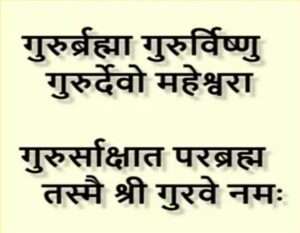
yes indeed remebering your most Valuable Guru today is truly considered very Revered, The teacher who is considered so important and is so instrumental in moulding us is to be remembered always. 🙏🙏🙏Guru Bramha, Guru Vishnu, Guru Devo Maheswara, Guru Sakshath Para Bramha,Tas main Sree Guru ve Namahah
Beautifully written piece, Dr Chadha. It has a brief background on the significance of Guru Purnima along with a personal touch based on your experiences. I am sure that many of us feel the same way.
Hi great message last two paragraph are conveying ou respectful wishes to our Gurus I.e teachers are great.👍👌
Sir, Very auspicious day to extend our reverence to our gurus. Scholarly teachers r always remembered for not only for their schoarship but also in developing the over all personality of their disciples. Very true that after parents, it is the guru who plays an important role in moulding the future of the student. On this occasion let me pay my tribute to all my teachers who shaped my future.
Great thought that the ‘parents’ got placed at highest pedestal among respected Gurus. They are the people without any expectation of returns mentor their siblings after going through all hardships and sacrifices. Perfect tribute at appropriate occasion.
Good informative message.
Through your writing you are also inspiring thousand of readers so in a way you are also guru
Happy guru purnima
Pranam
Perum
Your distinction between a teacher and a guru is both insightful and inspiring.
Beautifully explained. Guru Purnima is a timeless reminder to honour the Guru, whose wisdom dispels ignorance and lights the path to knowledge.
The tribute to your late parents as your first gurus is especially touching and reminds us that our greatest lessons in life often begin at home.
Thank you for sharing this heartfelt message. Wishing you and all gurus a Happy Guru Purnima.
The article on Guru Purnima is written very nicely connecting beautifully the guru,teacher and guru Purnima concept in our life.It is so logically summed to give the importance of guru Purnima in oue life.
Happy Gurupurnima 🙏🏻
Very nice article on this auspicious day.
Remembering the first gurus in our lives, the parents, Father and Mother. Paying great tribute to those because of them our very own existence on this very beautiful Earth and connecting to ancient to modern gurus.
Very beautiful article
🙏🏻
Excellent article, enlightening Guru Purnima and its historical birthday. On this auspicious day, once again my salutations to all my teachers, gurus, etc. , including the author, who is all in one and one in all subjects. Thanks for a wonderful write up.
Guru is one who dispels darkness. Rig Veda hymn, Thamsoma jyothirgamaya. On this auspicious occasion of Guru Poornima we recollect our Guru’s and pay our tributes to them. Dr. Chaddha’s article made me emotionally connect to my parents who are my first Guru’s.
Mentoring students and also staff comes with maturity and wisdom gained with our own varied experience over the years. Not all of us can transform the younger generation. It’s an art bestowed on some of us. Even if we’re able to guide and lead a few of our youngsters in the right direction it’s a remarkable contribution to the nation.
Fortunately being in the teaching profession I reverentially remember my teacher’s, mentors and my spiritual gurus. This article is like a waking call to remember ancient Guru’s like Lord Shiva in the form of Dakshinamurthy, Sri Krishna as the Jagath Guru, Lord Buddha and many more. My obeisance to all of them
Sir
Thank you for being the guiding light in my darkest hours and the inspiration behind my achievements. Happy Guru Purnima to my Respected Dr R. K Chadha Sir🙏🙏🙏🙏🙏🙏
Dr. R K Chadha’s article is a heartfelt reflection on the true meaning of Guru Purnima, showing how a mentor shapes not just knowledge but also character and values, while also sharing rich cultural and spiritual insight, and it is truly a beautiful piece deserving sincere regards on this occasion of remembering one’s guru.