Long Journey with P.V., the Telugu Pride! — Reminiscences: 2
P.A. Rama Rao
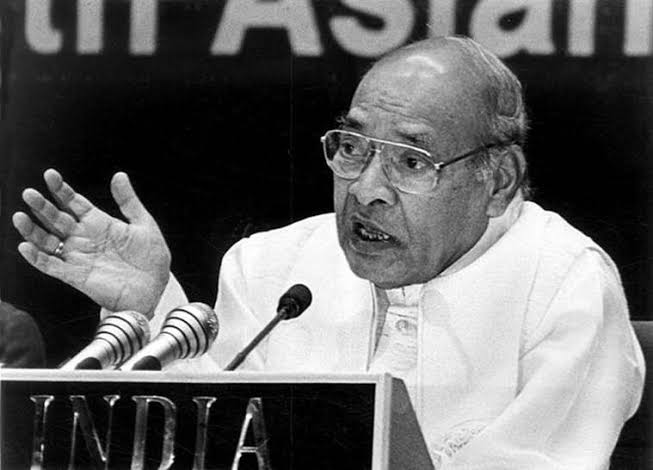
It was my proud privilege to observe the multifaceted genius of former Prime Minister and Bharat Ratna P.V. Narasimha Rao from close quarters for 32 years, beginning in 1969. During this long association, I watched him in different roles — as a minister in the undivided Andhra Pradesh government, Chief Minister, Member of Parliament, Union Minister and, eventually, Prime Minister of India. I also had the opportunity to report on him for the Deccan Chronicle group, first from Hyderabad and subsequently from New Delhi.
In retrospect, I firmly believe that P.V. was a remarkable embodiment of the concept of the Philosopher King, propounded by the Greek philosopher Plato. The ideal ruler, according to this philosophy, is one whose wisdom, knowledge, and commitment to principles take precedence over the pursuit of power. P.V. demonstrated many of these qualities in public life.
One incident that remains etched in my memory was the day he stepped down as Chief Minister of undivided Andhra Pradesh in 1973. At the press conference following his resignation, there was not the slightest trace of disappointment, anger or anxiety on his face. He appeared as calm and composed as he had been on the day he assumed office.
His message was unmistakable. Power and position were not paramount; principles were. Preserving the unity of the state was far more important than clinging to the Chief Minister’s chair. At a time when political leaders often measure success by the length of their tenure, P.V.’s attitude reflected an extraordinary sense of detachment and commitment to a larger cause.
Another incident from the 1977 Lok Sabha election campaign revealed his philosophical approach to uncertainty and destiny.
P.V. contested from the Hanamkonda constituency. A few days before polling, I toured the constituency to assess the electoral prospects of the candidates. One night, after a hectic day of campaigning, P.V. returned to a guest house to spend the night. I called on him and tried to elicit his assessment of the likely outcome.
Most politicians would confidently predict victory or point to favourable electoral factors. But P.V. was different. Despite my persistent questions, he refused to make any prediction. His response was characteristically philosophical: “Let us see what happens. There is something called destiny. In a contest, somebody wins and somebody loses. Why indulge in guesswork?”
That brief conversation revealed much about his temperament. He was neither carried away by optimism nor troubled by uncertainty. He accepted the unpredictability of political life with remarkable equanimity.
His greatest political achievement, however, was completing a full five-year term as Prime Minister between 1991 and 1996, despite heading a minority government. His survival and eventual completion of the term were testimony to his political ingenuity, patience and ability to build consensus in a fragmented Parliament.
His government faced formidable challenges, including the demolition of the Babri Masjid and the terrorist attack on the Charar-e-Sharief shrine in Kashmir. Opposition parties mounted relentless attacks, and the political atmosphere was frequently charged. Yet P.V. managed to navigate these turbulent waters through persuasion, consultation and an extraordinary capacity to engage political opponents.
He repeatedly emphasised that important national issues required consultation and consensus. His quiet diplomacy, perseverance and command over parliamentary debate helped him blunt opposition attacks without allowing political confrontation to paralyse governance. He proved that political strength need not always be demonstrated through aggression or loud rhetoric. Sometimes, silence, patience and persuasive reasoning can be more effective weapons.
What was equally remarkable was that, even while immersed in the demanding responsibilities of political office, P.V. never abandoned his intellectual pursuits.
Few may know that, as Education Minister in Andhra Pradesh, he took a personal interest in the preparation of school textbooks. He would spend sleepless nights scrutinising proofs, correcting errors and ensuring accuracy. For him, education was not merely another ministerial portfolio; it was a responsibility that demanded personal involvement.
His intellectual curiosity extended even to the emerging world of computers and technology. As Prime Minister, he took a keen interest in the development and design of computers capable of handling Indian languages, particularly Hindi.
I vividly recall an occasion in the Lok Sabha when members sought information about the progress of Hindi computer development. P.V. responded with an extraordinarily detailed explanation of the technical processes involved. His nearly 40-minute narration, delivered with remarkable clarity and command over the subject, left the House astonished. Members responded by thumping their desks in appreciation.
As I emerged from the press gallery, half a dozen Hindi newspaper journalists approached me. They were visibly impressed by his intelligence, grasp of technology and phenomenal capacity to recall technical details. Their spontaneous description of him was particularly memorable: “A Telugu Diamond!”
These are only a handful of incidents from my 32-year association with a leader whose greatness extended well beyond the offices he occupied. P.V. was a politician who thought like a philosopher, an administrator with an academic temperament and a statesman who understood that power was transient but principles and knowledge endured.
For a leader who rose from a modest village in Telangana to occupy the highest executive office in the country, his journey was extraordinary. But perhaps his greatest distinction was that he never allowed the trappings of power to overwhelm the pursuit of knowledge, reason, and public duty.
That, to me, was the real greatness of P.V. Narasimha Rao — our Telugu Pride.