



“I am always tired.” “I feel weak even after sleeping.” “I get breathless when I climb stairs.” “Maybe it is because I am getting older.”
These complaints are extremely common. But sometimes, they are not simply the result of a busy life, poor sleep or ageing. They may be signs of anaemia, a condition that can remain unnoticed for months before a person realizes that something is wrong. India continues to face a major burden of anaemia.
According to the National Family Health Survey-5 (NFHS-5), 67.1% of children aged 6–59 months, 59.1% of adolescent girls aged 15–19 years and 57.2% of non-pregnant women aged 15–49 years are anaemic. Among all women aged 15–49 years, the prevalence is 57%.
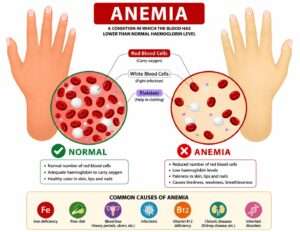
The problem is not limited to iron deficiency. Nutritional deficiencies, blood loss, infections, inflammation, chronic diseases and inherited blood disorders can all contribute to anaemia.
According to the World Health Organization (WHO) 2025 global anaemia estimates, anaemia remains a major public-health problem, particularly among women of reproductive age. In 2023, around three in ten women aged 15–49 years worldwide were estimated to have anaemia. But anaemia is much more than a number on a blood report.
What exactly is anaemia?
Haemoglobin is a protein inside red blood cells. Its main job is to carry oxygen from our lungs to every part of the body. When haemoglobin becomes too low, the body’s ability to deliver oxygen decreases. The heart may have to work harder, and the muscles may tire more easily.
The WHO 2024 guideline on haemoglobin cut-offs emphasizes that anaemia should be defined using appropriate haemoglobin thresholds according to age, sex, pregnancy and other relevant factors rather than using one number for everyone. 1 In general, haemoglobin below about 13 g/dL in adult men and 12 g/dL in non-pregnant adult women is considered anaemia, although interpretation depends on the individual and the clinical situation.
A simple complete blood count (CBC) can detect anaemia. But finding a low haemoglobin level is only the beginning. The more important question is: Why has the haemoglobin fallen?
Anaemia is not always iron deficiency
This is one of the most important things people need to understand. Iron deficiency is extremely common, but not every anaemic person is iron deficient. The World Health Organization emphasizes that anaemia has many possible causes, including nutritional deficiencies, infections, inflammation, chronic diseases, blood loss, gynaecological and obstetric problems, and inherited disorders of red blood cells. Iron deficiency can occur because the body is not receiving enough iron, is unable to absorb enough iron, or is losing blood.
Vitamin B12 and folate deficiencies can also interfere with the production of healthy red blood cells. Chronic infections and inflammatory diseases can cause another type of anaemia in which iron may actually be present in the body but is not properly available for making red blood cells. Kidney disease can also cause anaemia. The kidneys normally produce erythropoietin, a hormone that tells the bone marrow to manufacture red blood cells. When kidney function deteriorates, erythropoietin production may decrease.
The Kidney Disease: Improving Global Outcomes (KDIGO) 2026 Clinical Practice Guideline for Anaemia in Chronic Kidney Disease, published in Kidney International, recognizes anaemia as a common and important complication of chronic kidney disease and provides updated recommendations for its evaluation and treatment. There are also inherited conditions such as thalassaemia, in which the body produces abnormal haemoglobin. Giving iron to such a person without establishing iron deficiency may not solve the problem.
Why does anaemia make you tired?
Think of haemoglobin as the body’s oxygen delivery vehicle. When there are fewer vehicles—or they are carrying less oxygen—the tissues receive less oxygen, especially when the body’s demand increases. That is why a person with anaemia may develop: Persistent tiredness Weakness Breathlessness while walking or climbing stairs Dizziness or light-headedness Headache Palpitations, meaning awareness of a fast or forceful heartbeat Poor concentration Pale skin or pale inner eyelids Reduced ability to exercise
The severity of symptoms depends not only on the haemoglobin level but also on how quickly it has fallen and the person’s underlying health. Someone whose haemoglobin falls slowly may adapt surprisingly well and may not realize how abnormal it has become. That is precisely what makes anaemia easy to neglect.

Normal haemoglobin does not always mean normal iron stores
This is another important distinction. A person can have iron deficiency without anaemia. In other words, the body’s iron stores may already be depleted while haemoglobin is still within the normal range. A 2025 article in JAMA explains that iron deficiency occurs when the body does not have enough stored iron and can exist before iron-deficiency anaemia develops.
Tests such as serum ferritin, which reflects stored iron, and transferrin saturation, which gives information about the iron available for use, may therefore be useful when iron deficiency is suspected. But ferritin needs to be interpreted carefully because it can rise during infection or inflammation. The British Society of Gastroenterology guideline, published in Gut, emphasizes that ferritin is the most useful marker of iron deficiency, while additional iron studies can help when inflammation may make ferritin appear falsely reassuring.
Don’t simply start iron tablets
This is where self-medication can become a problem. A person sees a low haemoglobin value and immediately buys an iron supplement. Sometimes iron is exactly what is required. But sometimes the anaemia is due to vitamin B12 deficiency, kidney disease, chronic inflammation, thalassaemia, ongoing blood loss or another condition. More importantly, even when iron deficiency is confirmed, we should ask why the person became iron deficient.
A 2025 Indian review on the management of iron-deficiency anaemia, published in the International Journal of Reproduction, Contraception, Obstetrics and Gynecology, emphasizes individualized assessment and treatment of iron deficiency in Indian patients rather than simply assuming that every anaemic person requires the same approach.
If a woman has very heavy menstrual bleeding, repeated blood loss during menstruation may explain the deficiency. But unexplained iron-deficiency anaemia in a man or a postmenopausal woman deserves particular attention because slow blood loss from the gastrointestinal tract can sometimes be responsible.
The British Society of Gastroenterology guideline in Gut recommends appropriate gastrointestinal evaluation in adults with newly diagnosed iron-deficiency anaemia when there is no obvious explanation. So the correct approach is not: “Your haemoglobin is low. Take iron.”
It is: “Your haemoglobin is low. Let’s find out why.”
Can food prevent anaemia?
A good diet certainly helps. Iron is found in foods such as pulses, beans, lentils, green leafy vegetables, nuts, seeds, eggs, fish and meat. Iron from animal foods is generally absorbed more efficiently than the non-haem iron found in plant foods. Vitamin C can improve absorption of plant-based iron. Therefore, including foods such as amla, guava, citrus fruits, tomatoes and other vegetables and fruits along with meals can be helpful.
On the other hand, tea and coffee consumed with meals can reduce iron absorption. A 2025 review in Current Nutrition Reports examined the relationship between plant-based diets, iron bioavailability and iron-deficiency anaemia, emphasizing that dietary patterns and the availability of iron are important considerations. However, there is an important difference between preventing iron deficiency and treating established iron-deficiency anaemia.
A person with significant deficiency may require iron supplementation under medical supervision. Depending on the severity, tolerance and ability to absorb iron, doctors may choose oral or intravenous iron.
Women should not ignore heavy periods
Repeated menstrual blood loss is an important cause of iron deficiency, particularly when periods are very heavy or prolonged. The problem may develop gradually.
A woman may initially feel slightly more tired than usual. Later, she may develop weakness, headaches, reduced exercise tolerance or breathlessness. Eventually, the haemoglobin may fall significantly. Heavy menstrual bleeding should therefore not simply be dismissed as “normal for me.”
The cause of excessive menstrual bleeding also needs to be considered. 5 Similarly, anaemia during pregnancy deserves proper assessment because the nutritional and oxygen requirements of both mother and developing baby increase.
When should you get checked?
Persistent tiredness should not automatically be blamed on stress, ageing or lack of sleep. A medical evaluation is particularly important if fatigue is accompanied by: Breathlessness during ordinary activities Recurrent dizziness Fainting Persistent palpitations Very heavy menstrual bleeding Unexplained weight loss Blood in the stool Black, tarry stools Persistent abdominal symptoms Repeatedly low haemoglobin Anaemia in a man without an obvious explanation Anaemia developing after menopause Anaemia that does not improve despite treatment A simple complete blood count (CBC) is often an excellent starting point, but subsequent tests should be guided by the patient’s history and blood-count pattern.
Don’t treat the number, treat the person
Anaemia is common, but common does not mean harmless. Sometimes the answer is straightforward—iron deficiency caused by inadequate intake or blood loss. Sometimes the low haemoglobin is the first clue to heavy menstrual bleeding, vitamin deficiency, kidney disease, chronic inflammation, an inherited blood disorder or hidden blood loss.
That is why repeatedly taking supplements without investigating the cause is not good medicine. Find the deficiency. Find the cause. Treat both. 6 And the next time someone says, “I am tired all the time,” don’t immediately tell them to sleep more. Sometimes the body is not asking for more rest. It is asking you to look at the blood.

