MS Shanker
Internal dissent, governance questions and shifting electoral equations could reshape Telangana’s political contest in 2028
The political temperature in Telangana is rising, and this time the heat is coming as much from within the ruling Congress as from the Opposition. A series of public disagreements involving Congress legislators, allegations of discrimination in development funding and criticism of the administration have put Chief Minister A Revanth Reddy in an uncomfortable position. More importantly, the manner in which the leadership is responding to dissent could become as politically consequential as the allegations themselves.
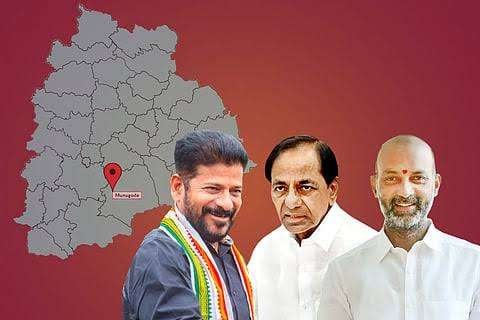
Munugode MLA Komatireddy Rajagopal Reddy has openly accused the Chief Minister of favouring certain constituencies in the allocation of development funds, alleging that Kodangal, represented by Revanth Reddy, and constituencies represented by senior ministers receive preferential attention. He even warned of another ‘Kurukshetra’ if Munugode continued to be neglected. His demand for equitable development funding is not an Opposition charge but a complaint from a legislator belonging to the ruling party itself. The controversy escalated after Revanth reportedly described some critics as having been bitten by a ‘mad dog’, drawing further criticism from within the Congress. The party leadership has taken note of the developments and indicated that the high command would examine the matter.
Jadcherla MLA J Anirudh Reddy has added another dimension by alleging widespread corruption among government officials, including demands for commissions of 10 to 20 per cent from contractors to clear bills. These remain allegations requiring investigation, but their political significance cannot be dismissed. When elected representatives publicly question the functioning of their own government, the administration has an obligation to respond with facts rather than rhetoric. Mahabubabad MP Porika Balram Naik’s controversial remarks suggesting that women without husbands need not worry as long as the Congress stands behind them have also attracted criticism over the manner in which welfare and political loyalty were linked.
These developments raise a larger question: is the Congress leadership managing internal differences through institutional dialogue or allowing individual confrontations to become public spectacles? A party that came to power promising a different style of governance cannot afford to appear preoccupied with internal rivalries.
The electoral arithmetic makes the situation particularly interesting. In the December 2023 Assembly elections, Congress secured 64 of the 119 seats with 39.40 per cent of the votes, while the BRS won 39 seats with 37.35 per cent. The BJP secured eight seats with 13.90 per cent. The Congress victory was decisive in terms of seats, but the popular vote difference between Congress and BRS was only about two percentage points. The result therefore reflected a competitive political landscape rather than the disappearance of the BRS as an electoral force.
The 2024 Lok Sabha elections, however, produced a significant change. Congress and BJP won eight seats each, while the AIMIM retained Hyderabad. More revealing was the vote share: Congress secured approximately 40.1 per cent, BJP 35.2 per cent, while BRS was reduced to around 16.6 per cent. The BJP’s improvement from 13.9 per cent in the Assembly elections to over 35 per cent in the parliamentary contest demonstrated that its support base had expanded considerably. However, the difference between the two elections also underlines the importance of local leadership, candidates and campaign issues in determining voting behaviour.
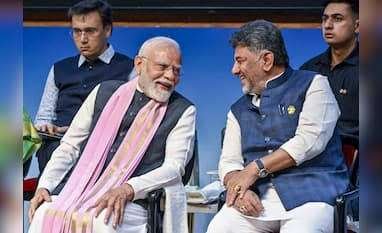
Against this background, the BJP’s prospects in Telangana deserve serious political attention. The party may not presently have the organisational cohesion or an undisputed state-level leadership required to challenge both Congress and BRS across all 119 constituencies. Nevertheless, its parliamentary performance has established that it cannot be dismissed as a marginal player. Prime Minister Narendra Modi’s national appeal, the BJP’s expanding organisational network and the possibility of consolidating different sections of the electorate provide the party with political opportunities. Former state president Bandi Sanjay Kumar, now Union Minister of State for Home Affairs, remains an important organisational figure, although the party’s eventual leadership strategy will be a decision for its central leadership.
There is also a wider political calculation involving the Telugu Desam Party’s residual organisational network in Telangana and Jana Sena’s association with the NDA in neighbouring Andhra Pradesh. Whether these networks translate into electoral support in Telangana will depend on local political arrangements, leadership and constituency-level equations. An alliance with the BRS, too, cannot be assumed merely because sections of its leadership may find political accommodation attractive. The BJP would have to weigh the advantages of any such arrangement against its own organisational ambitions.
But the Congress should not assume that the BRS is its only serious challenger. Nor should the BRS presume that public dissatisfaction with the ruling party will automatically translate into its revival. Both parties have records in government that will be scrutinised by voters, particularly over corruption allegations, financial management, delivery of welfare assurances and the treatment of political critics and the media.
The late N T Rama Rao’s description of a ‘Nishabda Viplavam’ (silent revolution) before the 1994 elections remains an interesting historical reference. Electoral discontent can accumulate quietly before finding expression at the ballot box. However, whether such a sentiment is developing in Telangana today can only be established through sustained public engagement, credible surveys and, ultimately, electoral results.
Revanth Reddy has now publicly set an ambitious target of 90 Assembly seats and one crore votes for Congress in 2028. Such confidence may energise party cadres, but it also raises expectations and invites scrutiny of the government’s performance.
As someone who has followed electoral politics for four decades, I believe the BJP’s potential in Telangana deserves closer examination rather than casual dismissal. Its 2024 parliamentary performance provides a measurable basis for that assessment. Equally, the Congress and BRS retain substantial electoral bases and organisational strengths.
The 2028 contest is still some distance away. But one thing is becoming increasingly clear: Telangana’s political equations are not frozen, and no party can afford to mistake its present position for a guaranteed electoral mandate.