
Lakshmanrao Upadhyayula
Among the luminous hymns of the Rigveda, the praises offered by the sage Vāmadeva to the divine artisans known as the Ribhus stand as a remarkable celebration of human excellence elevated to divine stature. Composed in the majestic Triṣṭubh and Jagatī metres, these hymns glorify extraordinary skill, creativity, disciplined effort, and unwavering dedication to the welfare of the universe. The Ribhus are not worshipped merely because they possess supernatural powers, but because they attained divine honour through intelligence, selfless work, and perfection in craftsmanship. Their lives proclaim the Vedic truth that sincere labour guided by wisdom becomes a sacred offering to the Divine.
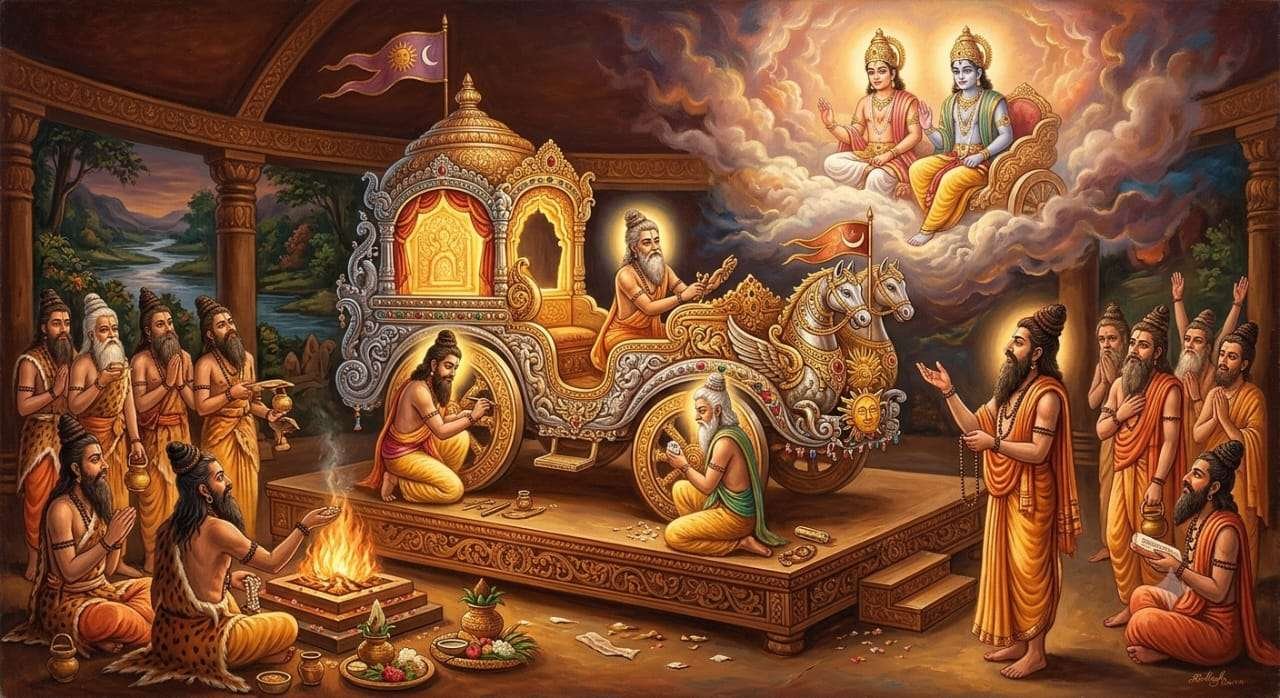
Vāmadeva begins by extolling the glorious achievements of the Ribhus, whose actions deserve everlasting praise. Their most celebrated creation is the magnificent chariot fashioned for the Aśvins, the divine physicians. Unlike ordinary chariots, this celestial vehicle possesses three wheels and moves effortlessly through the vast expanse of space without horses or reins. This astonishing description reflects not only poetic imagination but also the Vedic fascination with advanced engineering, mechanical design, and the harmonious application of natural principles. The hymn presents the chariot as a masterpiece of architecture and technology, revealing that divine intelligence expresses itself through precise craftsmanship and scientific ingenuity.
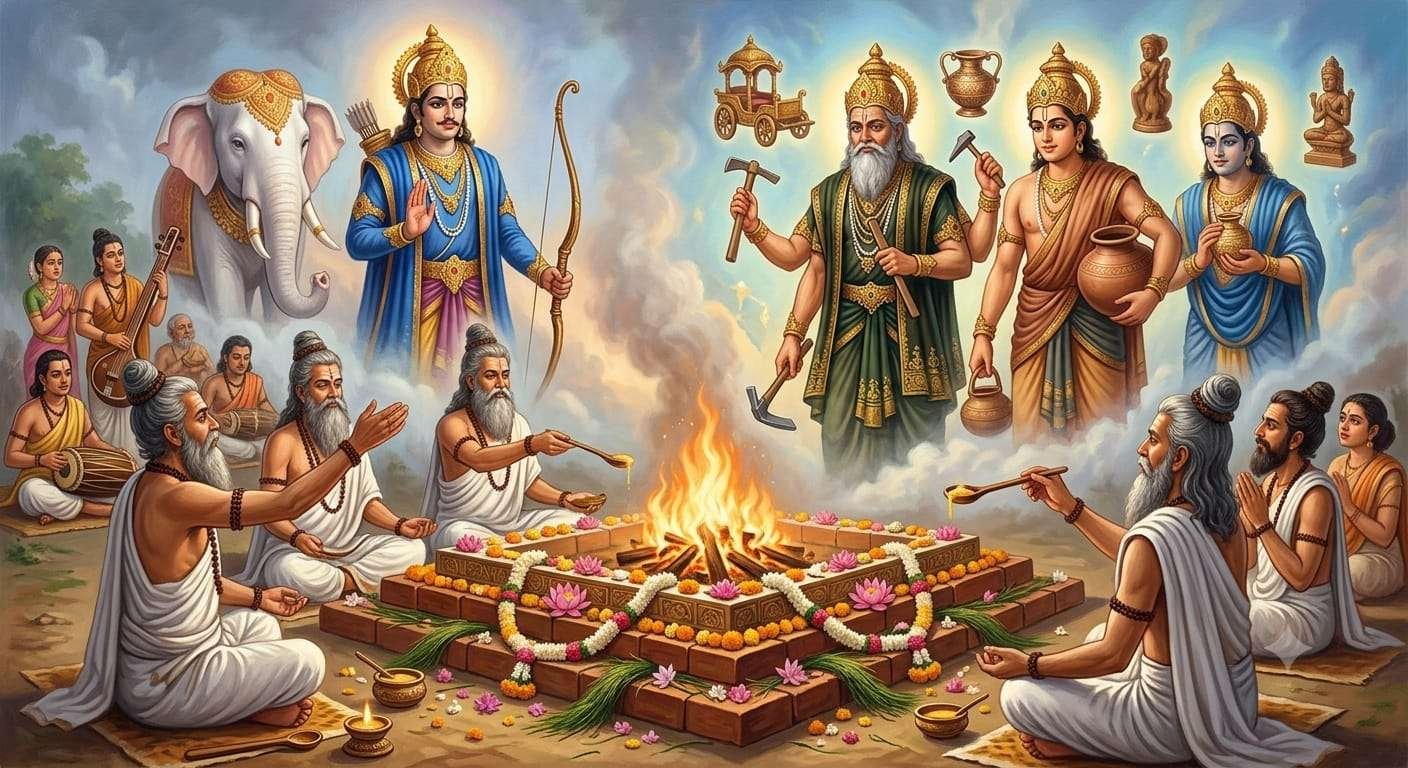
The Ribhus are further praised for their purity of heart and immense inner strength. Their technical brilliance is inseparable from their moral excellence. The Vedic seers consistently teach that true knowledge blossoms only in minds free from selfishness and impurity. The Ribhus designed a vehicle capable of traversing every terrain with perfect stability and strength, symbolizing the ability of enlightened wisdom to overcome every obstacle. Such inventions are not created for personal glory but for the benefit of the cosmic order. Therefore, Vāmadeva lovingly invites these divine craftsmen to partake of the sacred Soma offerings, acknowledging that noble work itself becomes worthy of divine worship.
One of the most touching episodes celebrated in the hymn is the transformation performed by Vāja, Ribhu, and Vibhva upon their aged parents. They restored their frail bodies to youthful vitality and excellent mobility. This extraordinary act symbolizes the Vedic reverence for parents and the ideal of using knowledge to relieve suffering and restore health. While it appears miraculous, it also reflects an enduring aspiration toward rejuvenation, medical science, and the preservation of life. The hymn suggests that scientific progress should ultimately serve compassion, family, and society rather than mere personal ambition.
Another celebrated accomplishment of the Ribhus is their creation of four sacred vessels from a single cup. This astonishing feat is admired by the gods themselves. Symbolically, it represents the multiplication of resources through wisdom, efficiency, and innovation. The hymn also recounts how they restored a weak and exhausted cow to perfect health, emphasizing the Vedic concern for agriculture, animal welfare, and sustainable prosperity. These acts earned the Ribhus immortality among the gods, demonstrating that extraordinary achievements dedicated to universal welfare elevate human beings to divine status.
The hymn further praises the Ribhus as masters of sacred rites and ritual purification. The wealth they generate is not measured merely by material abundance but by its nourishing and life-sustaining qualities. True prosperity in the Vedic vision consists of food, health, knowledge, harmony, and righteousness. Therefore, the worshippers pray that the same abundance created by the Ribhus may flow into their own lives, bringing nourishment, stability, and enduring well-being. Their divinely crafted chariot becomes a fitting symbol in sacrificial rituals, representing disciplined effort directed toward sacred purposes.
The sage also proclaims that those protected by Vāja, Vibhva, and Ribhu become strong, courageous, and victorious. Such individuals gain not only physical power but also intellectual brilliance and spiritual insight. They become seers capable of composing sacred hymns, fearless warriors who defend righteousness, and noble leaders endowed with wisdom. Their strength is balanced by compassion, and their prosperity is enriched with children, grandchildren, and lasting honour. The hymn thus portrays true success as the harmonious union of courage, knowledge, virtue, and family continuity.
Vāmadeva lovingly acknowledges the graceful forms and radiant presence of the Ribhus. They are described as intelligent, wise, and poetic beings whose brilliance inspires the composition of beautiful Vedic hymns. The sage humbly offers these prayers, recognizing that sincere devotion expressed through refined speech is itself an act of worship. The Vedic tradition honours poetry as a sacred bridge between human consciousness and divine reality, where carefully chosen words awaken spiritual insight and preserve eternal wisdom for future generations.
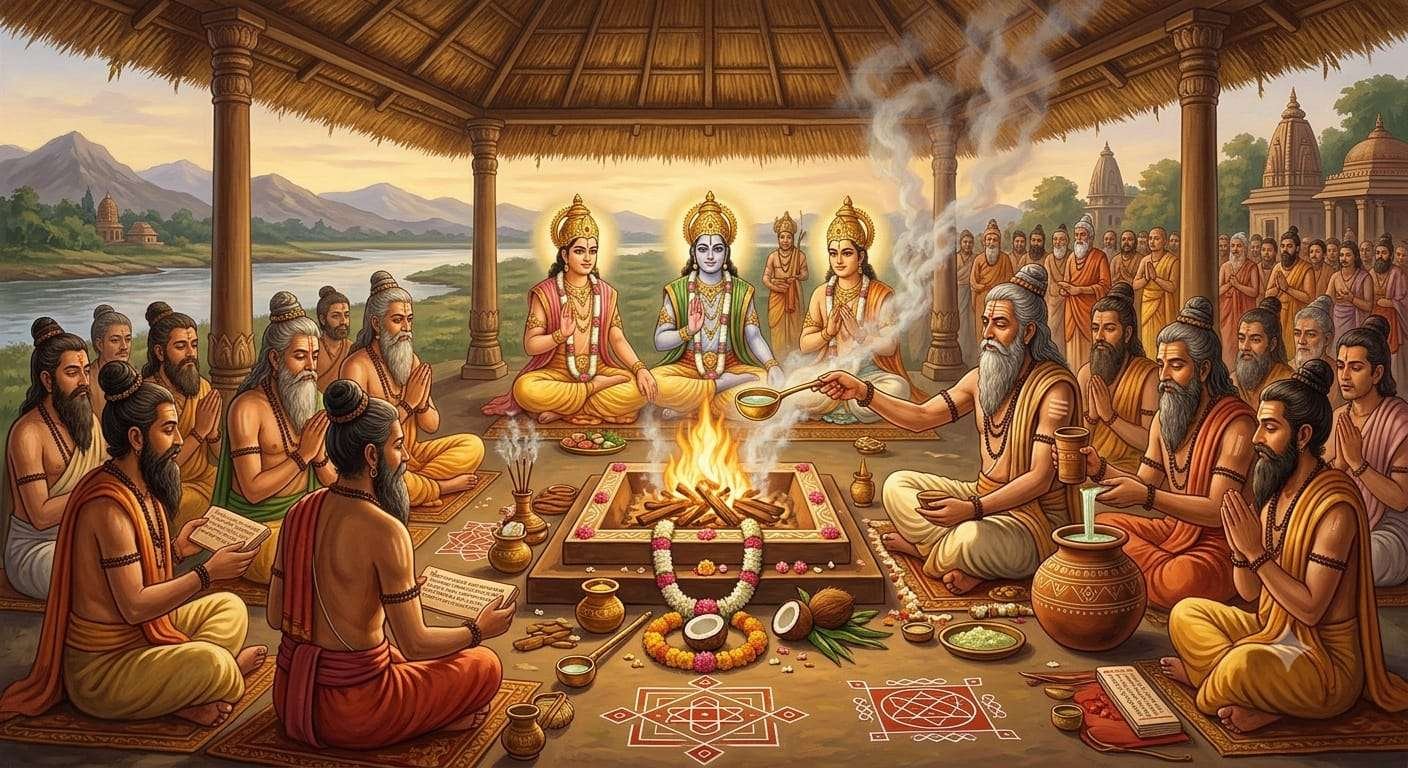
The concluding prayer is filled with hope and universal goodwill. The worshippers request the Ribhus to gather every element necessary for successful worship and to bless their lives with contentment. They seek nourishing food, radiant energy, invincible strength, abundant wealth, righteous descendants, flourishing families, and enduring glory. They pray for prosperity that cannot be diminished by enemies and for wisdom that enables society to progress in every dimension of life. The Ribhus are invited to the yajña with wholehearted devotion so that their divine presence may strengthen the community and inspire future generations to unite scientific excellence with spiritual purity.
This magnificent Rigvedic hymn presents the Ribhus as eternal symbols of disciplined creativity, ethical innovation, and selfless service. Their achievements reveal that science and spirituality are not opposing paths but complementary expressions of the same divine intelligence. Knowledge becomes sacred when guided by compassion, and technology becomes noble when employed for the welfare of all beings. Through the example of the Ribhus, the Rigveda teaches that every invention, every discovery, and every act of dedicated craftsmanship can become a sacred offering, leading humanity toward prosperity, wisdom, harmony, and ultimately, immortality through righteous action.