For centuries, we were taught to see ourselves through borrowed eyes. We learnt more about ourselves from colonial historians than from our own civilizational memory. We were told Bharat was mythology and India was history. Nothing could be farther from the truth. Perhaps, no ancient civilization has suffered such intellectual colonisation as Bharat. Its history was rewritten, its traditions were questioned and its civilizational memory was subjected to the approval of foreign chroniclers. We were conditioned to believe that if the Greeks did not write it, if the Persians did not record it or if the British did not acknowledge it, it was somehow less worthy of acceptance. The tragedy was not political subjugation alone. It was teaching an ancient civilization to become a stranger to itself. The name India may have travelled to the world through the Indus or Sindhu. There is no shame in acknowledging that. But there is equally no reason for Bharat to seek legitimacy from the Indus, the Greeks, the Persians or the British. Bharat existed long before colonial cartographers drew lines on maps or foreign travellers attempted to describe this civilization. This land called itself Bharat. Our sacred texts spoke of Bharatavarsha. The Vishnu Purana describes the sacred geography of Bharat extending from the Himalayas to the seas. The Mahabharata speaks of Bharat not merely as a political entity but as a civilizational consciousness. For millennia, generations preserved these traditions not through stone inscriptions alone, but through one of the world’s most remarkable oral traditions. Our ancestors were not waiting for foreigners to give them a name. They already had one. Yet, somewhere along the way, we were persuaded to believe that Bharat needed validation while India required no explanation. Bharat became a matter of debate and India became a matter of habit. That intellectual imbalance continues even today. Mention Bharat and one is immediately asked whether it is constitutional, secular or politically motivated. No such questions are asked when India is invoked. Why must an ancient civilization justify remembering its own name?
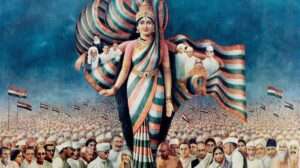
Reclaiming Bharat is, therefore, not about changing a name. It is about recovering a memory. It is about refusing to believe that our story began when others wrote about us. It is about recognising that Bharat is not a political slogan coined in the twenty-first century but a civilizational idea that has endured across millennia. There is nothing revisionist about remembering what has been forgotten. There is nothing exclusionary about celebrating an ancient inheritance. Nations across the world proudly preserve their civilizational symbols, languages and histories. The Chinese do not apologise for China. The Egyptians do not apologise for Egypt. The Greeks do not apologise for Greece. Bharat, too, owes no apology for remembering itself. The greatest injustice colonialism inflicted upon conquered peoples was not merely taking their resources—it was severing them from their civilizational memory. A people disconnected from their past are easier to define, easier to divide and easier to persuade that they are merely a recent political creation. Bharat is not a recent political creation. It is among the world’s oldest continuous civilizations. Bharat does not have to defeat India to exist. It merely has to remember itself. Before there were Constitutions, there was Bharat. Before there were colonial maps, there was Bharat. Before there were historians arguing over etymology, there was Bharatavarsha. We are perhaps the only civilization asked to debate whether we may call ourselves by the name we have known for millennia. There is nothing improper, dangerous or regressive in reclaiming that inheritance. A civilization that loses its memory eventually loses its future. Bharat is not seeking a new identity. It is reclaiming an ancient one. And there is nothing wrong in reclaiming one’s past legacy—especially when that legacy has shaped the soul of a civilization for thousands of years.