New Delhi: The plan was to assemble at Jantar Mantar, but it was not to be.
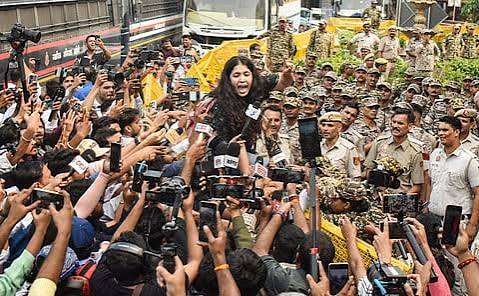
A sea of khaki and blue-green fatigues, metal barriers and buses parked askew on streets turned India’s address of dissent into a fortress on Saturday, scattering protesters across Delhi, with small groups raising slogans, changing routes and trying to regroup, before being detained.
By 5 PM, at least 3,000 people were detained.
The Cockroach Janta Party (CJP) had called for a demonstration demanding Chief Election Commissioner (CEC) Gyanesh Kumar’s resignation, accusing him of masterminding voter-list manipulation during the Special Intensive Revision (SIR) of electoral rolls and other irregularities involving Form 6, which is used for voter registration.
However, heavy security deployment prevented protesters from reaching the designated venue, turning what was intended to be a collective gathering into a series of demonstrations across streets, intersections and alternative meeting points in Delhi.
Saturday’s protest was the latest in a series of demonstrations in New Delhi over the past week, including one led by Congress leader Rahul Gandhi. Another protest by the INDIA opposition bloc is scheduled for Monday.
A previous CJP protest in July against competitive examination paper leaks had forced the resignation of then Education Minister Dharmendra Pradhan after young men and women camped at Jantar Mantar for days.
Mindful of the success of that demonstration, the government placed central Delhi under a much tighter security cordon on Saturday, shutting down metro services, suspending trains arriving in New Delhi from outside the capital and blocking mobile internet services.
From Connaught Place and Gurdwara Bangla Sahib to Dilli Haat, Gole Market, INA Market and Minto Bridge, protesters moved between locations, searching for places to assemble and trying to find others who had set out for Jantar Mantar. At several locations, slogans rang out before police personnel moved in to chase and detain protesters.
For those who had participated in the July protest, the difference was stark. They had assembled at Jantar Mantar before marching, but on Saturday even deciding where to meet had become a challenge.
A protester who had attended the July demonstration said participants were struggling to work out where to assemble, with most updates coming through social media posts and messages.
“Last time, we were stationed at Jantar Mantar and then had to march. This time, there is so much confusion about when and where to come. The only updates we are getting are through tweets and posts. How do we decide when to arrive and where to go? Even if a few of us gather together, we could be detained immediately. But we will continue this fight. We will fight for our democracy,” the protester said.
By the afternoon, the planned gathering at Jantar Mantar had given way to smaller demonstrations across Delhi. Streets and intersections became temporary meeting points as protesters searched for one another, raised slogans and attempted to sustain the protest despite repeated dispersals and detentions.
The demonstration was scheduled to begin at 10.30 am, but security personnel prevented participants from reaching Jantar Mantar, where prohibitory orders were in force. Some protesters were detained near the venue, while others dispersed into adjoining areas to continue the demonstration elsewhere.
The outer circle of Connaught Place, the area near Hanuman Mandir, Sansad Marg, Raisina Road, Imtiaz Khan Road, H K S Surjeet Bhawan, the stretch around the Safdarjung Airport flyover and the vicinity of Shivaji Stadium metro station were among the locations where protesters gathered or attempted to mobilise.
Several were detained near Regal Cinema in Connaught Place, while others were sent back or chased away as they tried to regroup.
The pattern continued through the morning, with groups gathering at new locations, raising slogans and attempting to draw others in before being dispersed or detained. With the original venue effectively cut off, protesters relied on social media posts and messages to find out where others were assembling and where to head next.
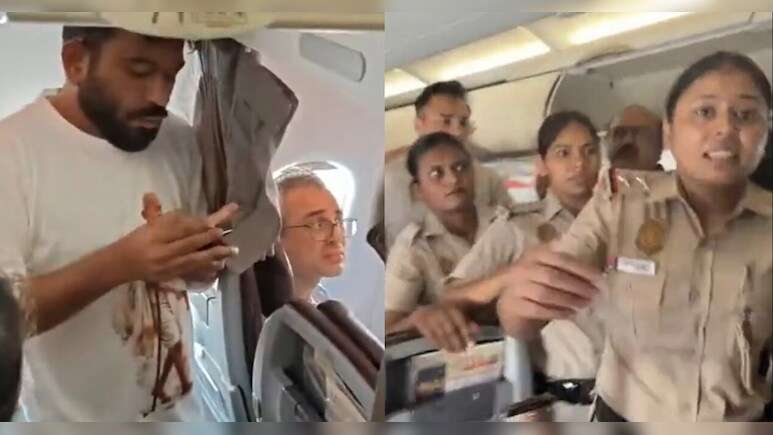
The detention of CJP leaders Abhijit Dipke, Saurav Das and Ashutosh Ranka at Delhi airport upon their arrival from Mumbai earlier in the day added to the confusion, leaving other organisers to coordinate the protest amid rapidly changing circumstances.
Ajinkya Shinde, who was appointed the CJP’s national organisation in-charge following the detention of the three leaders, called on people to continue demonstrating wherever they were stopped.
“We call upon every citizen to march towards Jantar Mantar. If your movement is blocked by barricades or police personnel anywhere on the streets, do not stop — start your protest right where you are stopped. The nation’s movement to safeguard democracy and demand the resignation of CEC Gyanesh Kumar will go on,” Shinde said.
At Gurdwara Bangla Sahib, the situation turned chaotic as some protesters sought refuge inside the gurdwara, while those who came out faced the risk of detention near Sansad Marg and adjoining areas. Elsewhere, protesters attempted to breach barricades as police personnel pursued groups moving between locations.
The All India Students’ Association (AISA) announced that it was changing its destination to Dilli Haat after several protesters were detained in and around Jantar Mantar. Its president, Neha Bora, marched towards the alternative location and urged others to join her.
“Delhi Haat becomes Jantar Mantar today! See you there!” Bora wrote on X.
The call offered protesters who were unable to reach Jantar Mantar an alternative meeting point. However, the attempt to regroup was also disrupted, with Bora detained, according to protesters.
In another attempt to establish an alternative venue, Rajya Sabha MP A A Rahim, along with detained activists from the Students’ Federation of India (SFI), announced “Jantar Mantar 2.0” at Nangloi Stadium.
Delhi Police officials had earlier said they expected around 7,000 protesters to arrive in the national capital on Saturday. Senior officers had directed personnel to exercise maximum restraint and handle the situation professionally, an official said.
The preparations were extensive, with around 25,000 police and paramilitary personnel deployed across the city. Entry and exit restrictions were imposed at 45 metro stations, while surveillance was stepped up at Delhi’s borders, railway stations, bus terminals and other sensitive locations ahead of the planned demonstration.