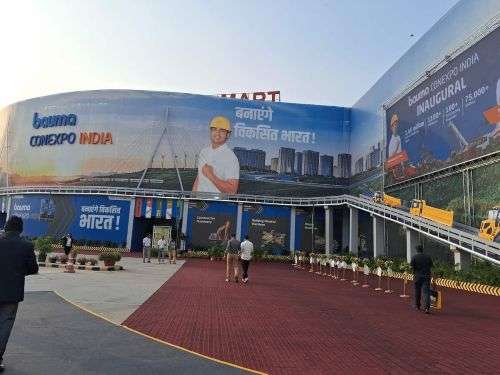
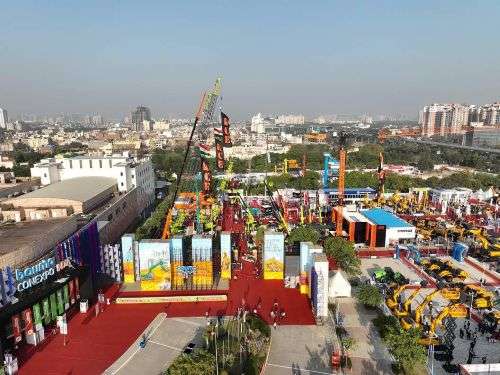
From earthmoving and mining equipment to road construction, concrete, lifting, tunnelling, transport, tyres and specialised machinery, bauma CONEXPO INDIA 2026 will bring together a wide cross-section of the construction equipment industry at Greater Noida.
When the exhibition opens at the India Expo Centre on September 15, visitors will encounter a market that has changed considerably since the previous edition. Infrastructure activity continues to drive demand, but equipment buyers are also paying closer attention to productivity, operating costs, fuel efficiency, service support, localisation and technology.
The exhibition covers construction machinery, building material machines, mining machines and construction vehicles, giving it a considerably wider scope than an event focused only on earthmoving. Excavators and loaders will share attention with road construction equipment, concrete machinery, cranes, tunnelling systems, material-processing equipment, commercial vehicles, tyres and compact machinery.
That breadth also makes the exhibition relevant to a much wider audience than equipment buyers. Contractors, infrastructure companies, mining and quarrying operators, fleet managers, rental companies, dealers and technology specialists will all have reasons to look beyond individual machines and examine the wider equipment ecosystem.
The mix of global manufacturers and Indian companies reflects the development of a market in which local manufacturing, specialised equipment and increasingly sophisticated customer requirements are becoming more prominent. It also means that visitors can compare not simply machines, but different approaches to productivity, support, technology and ownership economics.
Earthmoving Giants
Earthmoving remains one of the largest segments of India’s construction equipment market, and several major manufacturers will be represented at the exhibition. Caterpillar India Engineering Solutions is among the exhibitors, bringing the Caterpillar portfolio into the Indian construction, infrastructure and mining conversation.
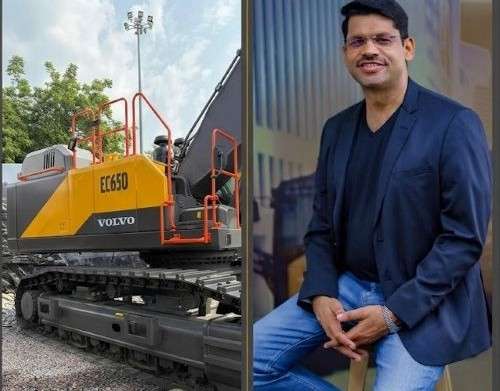
Volvo CE India adds another major global manufacturer, with a construction equipment portfolio spanning earthmoving and related applications and an increasing emphasis on connectivity, automation and electrification. Tata Hitachi Construction Machinery remains an important name in India’s excavator market, with equipment used across construction, infrastructure, quarrying and mining. JCB India will bring its established construction equipment portfolio to Greater Noida, while HD Construction Equipment India adds another international manufacturer to an increasingly competitive excavator and construction machinery market.
For buyers, the comparison will extend beyond specifications. Fuel consumption, maintenance requirements, availability of parts, service response, operator productivity, uptime and resale value can materially affect the economics of a machine over its working life. A machine that performs well on paper but spends too much time waiting for parts or service can quickly become an expensive asset. That is why the earthmoving displays are likely to be examined as much for their operating proposition as for their technical specifications.
Roads Get Serious
Road construction is another major area of equipment demand in India, and the exhibition brings together machinery involved in several stages of roadbuilding and material processing. Ammann India will be relevant to contractors and road infrastructure companies involved in asphalt production, compaction and related applications, while Wirtgen India brings technologies associated with milling, recycling, paving and road construction.
Terex India adds equipment associated with material processing and infrastructure applications, an area in which processing efficiency and material quality have direct implications for aggregate producers, quarry operators and contractors. XCMG’s road machinery business adds another international participant to the segment, while Zoomlion India broadens the international representation.
The road construction section consequently extends from asphalt plants and pavers to milling machines, rollers, crushers and screening equipment. For contractors, the more useful comparison may be how different machines perform as part of a production chain rather than how an individual machine looks in isolation. Material flow, machine utilisation, maintenance and coordination between different stages of the operation can all affect project economics and delivery schedules.
Concrete Moves Forward
Concrete equipment occupies another important part of the construction machinery market, supported by demand from buildings, roads, bridges, metros, industrial projects and other infrastructure.
Schwing Stetter India is among the prominent participants in this segment, with an established Indian presence in concrete batching, pumping and related equipment. Putzmeister India provides another major presence in concrete technology, particularly in pumping and placement applications, making its equipment relevant to contractors working on large and complex projects. Propel Industries represents the growing Indian manufacturing base in crushing, screening and material processing, while Hailstone Innovations adds another Indian participant in the broader material-processing ecosystem.
These businesses occupy parts of the equipment chain that do not always receive the same attention as excavators and loaders but remain important to project execution. Equipment availability, plant capacity, material quality, and maintenance can all affect production rates and schedules. The growing presence of Indian manufacturers in these areas is also significant because it points to a construction equipment industry that is developing capabilities beyond the traditional heavy-machine categories.
Mining And Tunnelling
Mining and quarrying place different demands on equipment, while India’s expanding underground infrastructure has increased the requirement for specialised tunnelling technologies.
Liebherr India brings one of the major international heavy-equipment names to the exhibition, with a product portfolio spanning construction, mining and material-handling applications. SANY Heavy Industry India adds another major international manufacturer serving heavy construction and mining-related requirements, reflecting the increasingly competitive international landscape in the Indian market. Epiroc Mining India provides a more specialised mining perspective, with its focus on mining and rock excavation technologies and relevance to mining operators, contractors and companies involved in underground applications.
Herrenknecht AG India extends the exhibition into specialised tunnelling, an area that has acquired greater importance as metro systems, water infrastructure, road tunnels and other underground projects expand across India. Robbins Tunneling and Trenchless Technology India adds another specialist presence in underground and trenchless construction, where equipment selection is often determined by ground conditions, available working space and the need to minimise disruption. For visitors from mining, quarrying and underground construction, this part of the exhibition provides a view of equipment operating in some of the industry’s most demanding applications.
Lifting And Handling
Lifting and material handling are central to construction and infrastructure projects, particularly where large structures, equipment and materials have to be moved safely and efficiently. Action Construction Equipment, widely known as ACE, represents the Indian manufacturing side of the lifting segment, with cranes and other equipment used across construction, infrastructure and material-handling applications.
PALFINGER India brings lifting and loader-crane technology used across construction, transport and industrial applications, while Escorts Kubota adds another established Indian engineering company to the exhibition.
Tadano Cranes India provides another international crane manufacturer for visitors to evaluate, with safety, mobility, setup time, precision, reliability and operating economics all relevant to equipment selection.
Crane selection increasingly involves more than lifting capacity. The suitability of a machine depends on the project, the working environment, the frequency of movement, and the operating conditions in which it will be used. That makes lifting equipment another area where productivity has to be considered alongside safety and operating cost.

Power, Transport And Support
Construction equipment operates within a much larger system involving transport, power, components, parts, service and maintenance. LiuGong India adds another international construction equipment manufacturer to the exhibition, while Komatsu India and Larsen & Toubro represent an important India-based manufacturing and distribution relationship and the continuing importance of local engineering, production and customer support.
Scania Commercial Vehicles India brings the commercial-vehicle side of construction logistics into the exhibition, connecting off-highway equipment with the movement of aggregates, concrete, equipment and other materials between plants, depots and job sites. Tata Motors strengthens that representation, with payload, reliability, operating cost, utilisation and suitability for particular applications remaining important considerations for construction fleets.
Wacker Neuson Equipment adds compact machinery for applications where size, manoeuvrability and versatility matter, particularly in urban construction, utilities and sites where working space is restricted.
Doosan Bobcat India provides another presence in the compact-equipment segment, where machines are increasingly expected to perform multiple tasks in confined working environments. The inclusion of these companies broadens the show beyond conventional heavy equipment and provides a more complete picture of the machinery and transport requirements that sit around construction projects.
Indian Manufacturing Expands
One of the notable features of the exhibition is the presence of Indian manufacturers alongside global equipment companies. Balkrishna Industries, or BKT, brings off-highway tyres into the equipment conversation, while Brokk India brings specialised equipment for demolition and underground applications. Terratec India adds another specialist presence associated with tunnelling and related technologies, and Bauer Equipment India represents another specialised engineering capability, particularly in foundation equipment and technologies used in demanding construction applications. These companies illustrate how the Indian equipment ecosystem extends well beyond the largest earthmoving manufacturers.
Tyres affect traction, stability, durability and operating costs, while specialist machines are designed around particular site conditions and applications. Local production also has implications for supply chains, parts availability, engineering capability and the adaptation of equipment to Indian operating conditions. The result is a manufacturing base that is becoming more diverse in both product range and technical capability.
The Technology Question
Technology will run through many of the equipment categories at bauma CONEXPO INDIA 2026, but its usefulness will ultimately be judged by equipment users. Telematics and connectivity are increasingly being used to monitor machine utilisation, operating conditions, service requirements and fleet performance, while digital fleet-management systems are becoming more relevant as contractors operate machines across multiple projects and locations.
Electrification is also attracting greater attention, although its suitability varies according to machine size, duty cycle, charging infrastructure and application. Compact equipment and urban projects may provide more immediate opportunities where operating conditions are favourable, while alternative fuels and lower-emission power technologies remain part of the industry’s longer-term development.
Automation and advanced control systems are similarly being developed around safety, productivity and operator support. For equipment owners, the underlying issue remains the relationship between technology and operating economics. A digital system has to provide useful information, a more efficient powertrain has to deliver an economic benefit, and automation has to improve safety, consistency or productivity to justify its cost and complexity.
What Buyers Are Looking For
The way Indian customers evaluate equipment is changing alongside the market. Purchase price remains important, but professional equipment users are increasingly looking at the total cost of ownership, including fuel consumption, maintenance costs, parts availability, service response, operator productivity, uptime and resale value. After-sales support has consequently become an important part of equipment selection. A machine working on a major infrastructure project cannot afford prolonged downtime because a critical component or technician is unavailable, making service networks, parts logistics and technician capability significant factors in the purchasing decision.
Financing and rental arrangements also influence equipment acquisition, with contractors having more than one way of accessing machinery and manufacturers and dealers developing different approaches to ownership and support.
Training has become another consideration as machines incorporate more electronic systems, connectivity, automated functions and sophisticated powertrains. Operators and maintenance personnel have to be able to use and support those systems effectively, because their skills ultimately affect productivity, fuel consumption, safety and uptime.
The Larger Market
The breadth of the exhibitor base reflects the diversity of India’s infrastructure and industrial economy. Roads, metros, airports, ports, housing, industrial facilities, logistics infrastructure, water projects and urban development all require different types of equipment, while mining and quarrying create demand for heavy-duty machinery and urban construction and utilities create opportunities for compact equipment.
No single equipment category can adequately represent this market. The major earthmoving manufacturers — Caterpillar India Engineering Solutions, Volvo CE India, Tata Hitachi, JCB India and HD Construction Equipment India — represent the continuing importance of excavators and related equipment.
Ammann India, Wirtgen India, Terex India, XCMG and Zoomlion bring road construction and material-processing technologies into the picture, while Schwing Stetter India, Putzmeister India, Propel Industries and Hailstone Innovations cover concrete, crushing, screening and material-processing applications. Liebherr India, SANY Heavy Industry India, Epiroc Mining India, Herrenknecht AG India and Robbins Tunneling and Trenchless Technology India extend the exhibition into mining and underground construction.
ACE, PALFINGER India, Escorts Kubota and Tadano Cranes India represent lifting and handling, while LiuGong India, Komatsu India and Larsen & Toubro add to the construction equipment manufacturing and support landscape. Scania Commercial Vehicles India and Tata Motors connect construction machinery with project transport requirements, Wacker Neuson and Doosan Bobcat add compact equipment, and BKT, Brokk India, Terratec India and Bauer Equipment India represent specialist areas of the wider equipment ecosystem.
The result is an exhibition that covers much of the machinery required to build, process, move and maintain infrastructure.
More Than A Machine Show
For equipment buyers, bauma CONEXPO INDIA 2026 will provide an opportunity to compare machines, technologies and support arrangements. Contractors will be able to examine productivity and operating costs, while manufacturers and suppliers will have access to customers and business partners from across one of India’s major infrastructure markets.
For the wider industry, the exhibition offers a useful view of how the Indian construction equipment ecosystem is developing, particularly through the combination of global manufacturers, Indian companies and increasingly specialised equipment businesses. The presence of tyres, transport, tunnelling, material processing and compact machinery alongside the major earthmoving brands is part of that story.
The exhibition will provide plenty of equipment to inspect, but its wider interest lies in the way these different parts of the industry increasingly intersect. Construction projects depend on equipment working alongside trucks, aggregates, crushers, concrete machinery, tyres, operators, maintenance teams and service networks, with digital systems now connecting more of those activities. For visitors, that broader context may be as important as the individual machines on display.
From September 15 to 18, that wider equipment ecosystem will be on display across the exhibition halls and outdoor areas at Greater Noida.