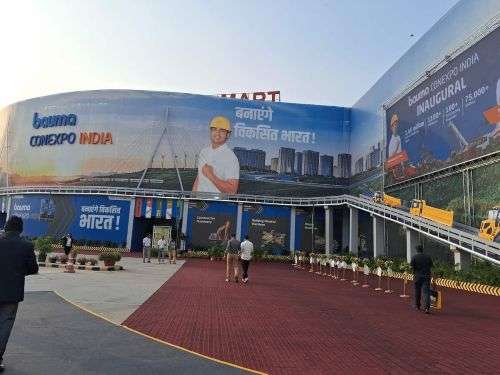
The industrial atmosphere at the recently concluded bauma CONEXPO INDIA 2026 hummed with a heavy mix of diesel exhaust, hot asphalt, and fresh machinery paint.
It served as the perfect backdrop for Volvo Construction Equipment to completely rewrite the rulebook of modern infrastructure, while eager crowds ducked past aggressive dust devils kicked up elsewhere in neighboring exhibits.
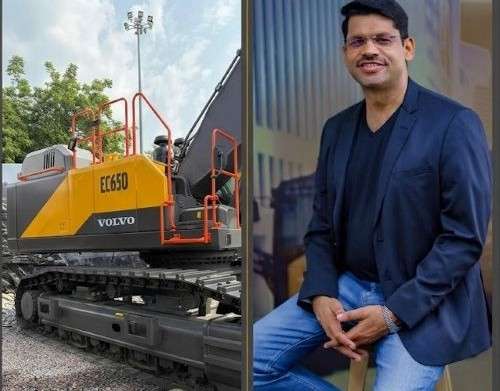
Standing on the turf last week, I watched the official commercial launch of the EC650, a sixty-five-tonne class mining titan designed for high-intensity excavation.
Rather than teasing distant timelines, the company’s India leadership confirmed that these machines are available for immediate delivery to capture the current buying season. Underneath the reinforced steel casing, the machine relied on a Volvo D13E engine pumping out four hundred and thirty-five horsepower. This power plant was balanced by a heavy-duty undercarriage and an advanced hydraulic network built to withstand decades of absolute site abuse. It was a clear statement that local production no longer means compromising on world-class structural density.
Shifted Models
The commercial deployment of the EC650 introduced a radical paradigm shift in domestic fleet management last week. The iron arrived alongside an innovative Equipment-as-a-Service operational framework that had several old-school procurement managers scratching their heads in disbelief. This alternative model allowed large-scale operators to bypass traditional capital expenditure constraints entirely. Mining companies can now pay for continuous machine utilization rather than purchasing the asset outright.
Yet, as any seasoned field observer will note, this asset-light framework faces a steep uphill battle against a deeply entrenched, asset-obsessed mindset among domestic contractors who prefer owning their iron. Furthermore, deploying advanced telematics and relying on uninterrupted predictive maintenance cycles in remote, dust-choked mining belts like Jharkhand or Odisha remains a significant operational gamble, given the notorious local connectivity gaps. Nevertheless, if the company can successfully smooth out these logistical wrinkles, it positions Volvo CE India not just as an equipment vendor, but as a critical operational partner embedded directly within the customer’s balance sheet.
Human Elements
The strategy behind these machine rollouts found its voice through Dimitrov Krishnan, Managing Director, Volvo CE India, during our exclusive conversation last week. Anchoring the industrial showcase in the visceral realities of national progress, he emphasized that the unprecedented operating scale of the domestic mining landscape now forces a desperate need for fuel-efficient machinery that remains instantly responsive to field crews operating under the most brutal environmental constraints.
Rather than looking at this 65-tonne addition as a superficial catalog update, the company leadership frames it as a dependable field partner engineered to support continuous shifts across the subcontinental industrial landscape. This design provided the exact mechanical dependability required as the country moves forward toward a sustainable Viksit Bharat. This operational philosophy was further amplified by the debut of the ‘Aaj Banayein Kal’ brand campaign. The framework intentionally positioned infrastructure laborers and contractors as the true structural backbone of the nation’s development, thereby elevating the company’s brand capital to a key institutional champion.
Versatile Ranges
Beyond the massive scale of the mining pavilion, the company organized a dense, multi-tier exhibition zone. This segment was dedicated entirely to versatile construction, compaction, and urban infrastructure applications, drawing in a colorful mix of curious engineering students and hard-nosed quarry owners who spent their time enthusiastically kicking massive rubber tires. Visitors gathered around the core twenty-tonne excavator range, which featured the highly adaptive EC210, EC215, and EC220 models. These units were displayed alongside the heavier EC300 excavator, presenting a highly scalable portfolio for diverse site requirements.
The expansive machinery display also included the rugged SD110 soil compactor and the DD90 double-drum asphalt roller. This presented a comprehensive lineup optimized for road networks, urban centers, and river-bed extraction projects. The spatial organization of the booth used an application-led design to guide visitors. This setup ensured that contractors could evaluate machinery based on the specific terrains and duty cycles they encounter in the field, showcasing deep application expertise.
Silent Power
The technological divergence became strikingly visible when attendees transitioned toward the cleaner segments of the equipment display. Standing out among the diesel giants was the quiet presence of the L120 Electric Wheel Loader. This machine showcased zero-emission capabilities without sacrificing the immediate operational torque required for heavy loading cycles, prompting a few old-school contractors to wonder aloud if the machine was actually turned on or just meditating. It proved to global stakeholders that the Indian market possesses the technical maturity to absorb advanced decarbonized heavy machinery.
However, a realistic assessment requires acknowledging the immense infrastructural hurdles that accompany this electric shift. Operating an electric wheel loader in a remote aggregate quarry where site-level charging grids are virtually non-existent or highly unstable poses a massive daily headache for site supervisors. In the adjacent mining section, the company reinforced its high-capacity lineup with a targeted, application-led approach, grouping the newly launched EC650 with its proven heavy-duty counterparts, the EC480 excavator and the L150 wheel loader. This dual focus demonstrated a highly adaptive engineering strategy that balances immediate, heavy-duty combustion requirements with an inevitable long-term transition, trying to address both current field realities and upcoming environmental mandates.

Smarter Patterns
The massive product array displayed in India matched an emerging global pattern of localized, high-value industrial investments. The underlying reality is that the factory is the headline, but the pattern is the story. Some announcements refuse to remain confined within their own headlines. What begins as an isolated story gradually evolves into an attempt to understand why one of the world’s most respected industrial companies seems to be placing unusually large bets on things that cannot be measured merely in tonnes, units, or factory output.
The obvious interpretation is also the correct one, at least partly: Volvo is strengthening its position in the excavator market, a segment that remains the largest and arguably the most important within the global construction equipment industry. Demand across infrastructure, utilities, mining, industrial development, and energy projects continues to create long-term opportunities. From that perspective, a growing market justifies additional capacity, shortens lead times, reduces supply chain risk, and ensures investors appreciate resilience. Yet, industrial companies rarely commit investments of this scale solely because demand forecasts look attractive.
Local Brains
The deeper question that lingers long after these announcements is why a company chooses specific manufacturing locations over lower-cost alternatives. Sweden is many things, but nobody has ever mistaken it for a low-cost manufacturing destination. In an industry that spent decades optimizing production footprints, relocating supply chains, and pursuing efficiencies across continents, choosing to deepen manufacturing activity in premium regions feels almost stubbornly unfashionable. The answer lies in bringing people, ideas, and execution closer together; ideas rarely struggle to find a place inside industrial companies, but the challenge is helping those ideas travel from engineering to industrialization and to market quickly enough to matter.
This exact philosophy explains the company’s aggressive new capital investment into its Bengaluru Technology Centre. It confirmed a major structural shift: this hub is no longer a peripheral support office, but the primary intellectual engine driving global innovation. By centering research and development within the subcontinent, the engineering teams ensure rapid feedback loops. Structural data from grueling local job sites directly dictates the blueprint of next-generation machinery. This strategic shift transforms India from a mere consumer market into a core exporter of engineering intelligence. It effectively places the Bengaluru hub on equal footing with the legacy European engineering center in Eskilstuna, cementing its role as the definitive architect of the company’s future emerging-market portfolio.
Corporate Vitality
This localized intellect has elevated Volvo CE India far beyond its regional boundaries, transforming it into a vital asset within the Volvo Group’s overarching macro scheme. Corporate boardrooms in Gothenburg are increasingly recognizing that the sheer velocity and structural demands of the Indian market serve as a stress test for the group’s global resilience, proving that if a machine component can survive a monsoon excavation shift in Jharkhand, it can likely survive anything on Earth. The technical solutions developed here are no longer siloed for domestic use but are being reverse-engineered to fortify international product lines.
As Krishnan detailed to me during our conversation, “virtually every machine engineered and constructed across our global sites today integrates localized contributions from Bengaluru, especially in spheres like digital system diagnostics and electronic architecture validation.” Just as with the heavily funded new factories situated at the global headquarters in Eskilstuna, the true centerpiece of global operations concentrates where engineering thoughts and marketplace execution line up seamlessly. Consequently, the Indian footprint has achieved a level of corporate gravity that influences capital allocation and strategic priorities across the parent entity. The ability of the local team to successfully manage heavy-duty excavation alongside asset-light commercial experiments, like service-based leasing, offers a blueprint for global markets. Volvo Group’s broader leadership is leaning heavily on this ecosystem to spearhead innovation, making the subcontinental framework absolutely indispensable to the company’s worldwide industrial ascendancy.
Lasting Waves
As the exhibition gates closed last week, the clear takeaway for the domestic earthmoving market was highly evident. It highlighted the company’s absolute refusal to compete solely on initial retail price tags, a bold stance that drew both nervous laughter and deep respect from competitors trying to win on discounts alone. By focusing on total lifecycle efficiency, predictive digital diagnostics, and durable structural engineering, the display challenged the transactional norms. The showcase pushed the boundaries of the traditional construction equipment sector toward long-term value.
Yet, holding a premium pricing line in a notoriously cost-sensitive market remains an incredibly high-stakes gamble. Lower-cost domestic and regional competitors continue to command massive volumes by undercutting on price, meaning Volvo’s value-driven thesis must perform flawlessly in the dirt to justify the capital premium to local buyers. The post-event consensus among industrial analysts pointed to a manufacturer banking heavily on continuous domestic expansion. The heavy investments in technology and equipment lifecycles validated Volvo CE India’s strategic position, striving to shift the conversation from short-term procurement costs to long-term asset optimization.
Iron Shadows
My final thought as I walked away from the stall was that this display conveyed a deeper, unyielding truth for the industry. Volvo CE has successfully moved past the era of pure transactional sales. The showcase demonstrated that true sector leadership isn’t about discounting iron; it is about building a comprehensive ecosystem where high-performance machines and digital infrastructure converge seamlessly.
The showing proved that Volvo CE, through its aggressive product evolution and unyielding customer focus, has transitioned into an irreplaceable cornerstone of the nation’s core infrastructure framework, anchored by local engineering intelligence. By turning the local infrastructure boom into a global testing ground, the team has proven that their engineering acumen is no longer just regional—it has become a vital, non-negotiable anchor in the Volvo Group’s worldwide scheme of things.