


Unkeshwar Mahadev Temple is located in Unkeshwar village, Kinwat Taluka, Nanded district, Maharashtra, near the Maharashtra–Telangana border. Surrounded by lush forests and scenic hills, the temple is situated beside a perennial natural hot water spring that has been revered since ancient times. Dedicated to Lord Shiva, this sacred shrine is one of Maharashtra’s most unique pilgrimage centres, renowned for its Ramayana connection, medicinal hot springs, and centuries-old spiritual heritage. Thousands of devotees visit the temple every year to seek the blessings of Lord Unkeshwar Mahadev and to take a holy dip in the sacred thermal spring before offering prayers.
The present temple dates back to the 13th century CE during the reign of the Yadava dynasty. A stone inscription dated 1281 CE found within the temple mentions Yadava King Ramachandra Deva, his feudatory Bhavak Deva, and the renowned minister Hemadri Pandit. The inscription records that several villages were donated for the maintenance of the temple, reflecting its great importance during medieval times. However, local tradition believes the sacred site itself is much older and dates back to the Treta Yuga due to its close association with Lord Rama and Sage Sharabhanga.
The presiding deity is Lord Shiva, worshipped as Sri Unkeshwar Mahadev in the form of a sacred Shiva Linga. Behind the Linga are the idols of Lord Shiva, Goddess Parvati, and Lord Ganesha. The temple complex also houses a separate shrine dedicated to Lord Rama, Goddess Sita, Lord Lakshmana, and Lord Hanuman, symbolising the temple’s deep connection with the Ramayana. Other shrines within the complex are dedicated to Goddess Durga, Lord Dattatreya, Goddess Saraswati, Sai Baba, Lord Krishna with Sudama, and several Shiva Lingas.
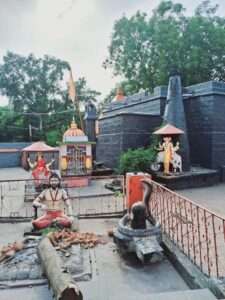
The temple is an excellent example of Hemadpanthi architecture, constructed using finely dressed black basalt stones. It consists of a Sabha Mandapa, Antarala, and Garbhagriha enclosed within fortified stone walls. Beautifully carved pillars, ancient inscriptions, Deepastambhas, decorative ceilings, and stone doorways enhance its beauty. A unique feature of the temple is the natural hot water spring enclosed within a stone tank inside the temple complex, along with the Samadhi of Sage Sharabhanga located within the Sabha Mandapa.
Unkeshwar Mahadev Temple flourished under the patronage of the Yadava rulers of Devagiri during the 13th century. The inscription of 1281 CE confirms the temple’s historical significance and records grants of twenty villages for its upkeep. The temple has remained an important centre of Shaivite worship for centuries and continues to attract devotees from Maharashtra, Telangana, Karnataka, and Andhra Pradesh. Its naturally occurring hot water spring, believed to possess medicinal properties, has made Unkeshwar famous as both a spiritual and healing destination.
According to the sacred tradition associated with the Ramayana, Sage Sharabhanga was afflicted with a severe skin disease and performed intense penance at this place while constantly meditating upon Lord Rama. Pleased by the sage’s unwavering devotion, Lord Rama appeared before him and shot a divine arrow into the earth. Instantly, a stream of hot water emerged from the ground and flowed over the sage’s body, curing his illness completely. The hot spring has continued to flow ever since, and devotees believe its mineral-rich waters possess healing properties, especially for skin ailments. The miraculous event sanctified the place, and Lord Shiva came to be worshipped here as Sri Unkeshwar Mahadev.
Mahashivaratri is the most important festival celebrated with great devotion at the temple. The holy month of Shravan, especially the Mondays of Shravan, attracts thousands of devotees for special Abhishekams and prayers. Sri Rama Navami and Chaitra Padwa are also celebrated with religious fervour. On these occasions, devotees first take a holy bath in the sacred hot water spring before offering worship to Lord Unkeshwar Mahadev.


