
The blueprint to clean up HCA was handed over in 2023. The elected council had three years to implement it but failed. Now the High Court has reopened the reform process, while those who presided over the mess are demanding the keys back.
Special Correspondent
Twenty recommendations. Three years. Countless opportunities. Yet, the Hyderabad Cricket Association (HCA) remains entangled in the very governance crisis it was expected to overcome. The uncomfortable question is not whether HCA knew what needed to be done, but who prevented it from happening.
In this part
- The buried blueprint: What Justice L. Nageswara Rao recommended in 2023.
- The performance test: Three years of the elected Apex Council versus the SMC’s record.
- The real disease: The entrenched power structure behind the revolving door of HCA administration.
- The unfinished surgery: What the High Court’s October 29, 2026 order makes possible.
- The Blueprint They Buried
On October 29, 2023, Justice L. Nageswara Rao submitted twenty recommendations to clean up HCA. The observations on corruption in team selection were particularly damning. He recorded that “certain HCA office bearers and selectors were selecting players and teams for HCA matches by accepting bribes. Scoresheets of games were being tampered and matches were being rigged.”
These were not vague suggestions for administrative improvement. They were specific recommendations intended to dismantle a compromised system and restore credibility to the association.
Most importantly, the responsibility for implementation rested squarely with the newly elected Apex Council.
Justice Rao specifically recommended that the elected Apex Council appoint an Ombudsman and an Ethics Officer. It was also entrusted with examining clubs similarly placed to the 57 disqualified clubs, strengthening HCA’s legal defence and commissioning forensic audits.
The General Body accepted the report at the 86th AGM. The council therefore had the recommendations, the mandate and three full years to act.
What did it do with that opportunity? Very little that can be described as meaningful institutional reform.
The question of accountability cannot be brushed aside by blaming administrators, courts or rival factions. The elected council had a responsibility to implement the blueprint. It failed to
- Three Years: A Tale of Two Administrators
The contrast between the elected Apex Council’s tenure (2023–26) and the SMC’s subsequent stewardship is revealing.
| Area | Elected Apex Council (2023–26) | SMC (since 2025) |
| Running cricket | Leagues collapsed; judicial intervention became necessary. | Leagues conducted on schedule, open selections and competitive performances. |
| Ombudsman and Ethics Officer | Appointments at the disputed adjourned AGM; subsequent presidential arrangement struck down. | Fresh appointments through the High Court-supervised process. |
| Clubs and voters | No effective framework for admission and removal; enquiry into similarly placed clubs not completed. | Membership verification now ordered by the Court. |
| Pending complaints | A February 2024 complaint remained undecided until the aggrieved club approached the Court. | Complaints to be addressed through the verification process. |
| AGM, accounts and elections | No 2026 AGM; accounts not placed; court-directed presidential election not held. | Approached the High Court for directions on the way forward. |
| Anti-corruption and POSH | Institutional mechanisms not effectively established. | Mechanisms established, with their actual functioning now requiring scrutiny. |
| Court cooperation | The High Court recorded a non-cooperative approach and attitude. | Approached the Court seeking directions for the next phase of reforms. |
The comparison is difficult to ignore. One administration inherited a blueprint and allowed three years to pass without implementing its essential recommendations. The SMC inherited a fractured association, continued cricketing activities and has sought judicial directions to take the reform process forward.
This is not to suggest that the SMC’s job is complete or that it should be beyond scrutiny. It must be judged by what it delivers from here. But the difference in approach deserves recognition.
So, who dropped the ball? The elected Apex Council must answer that question.
- The Real Disease: The Old Power Structure
The 57 clubs were never the entire problem. They were part of a much larger governance failure. The deeper problem has been the concentration of influence in a small circle of individuals who have remained relevant to HCA’s power structure for years, irrespective of who formally occupies the top posts.
Some are former international cricketers; others have built their influence through club affiliations and administrative networks. Committees change, office-bearers come and go, and courts intervene, but the familiar faces and their networks often remain.
Allegations of proxy control, clubs being leased or operated by others, and votes being mobilised to protect particular interests have repeatedly surfaced. These are serious matters that deserve proper investigation, not convenient dismissal.
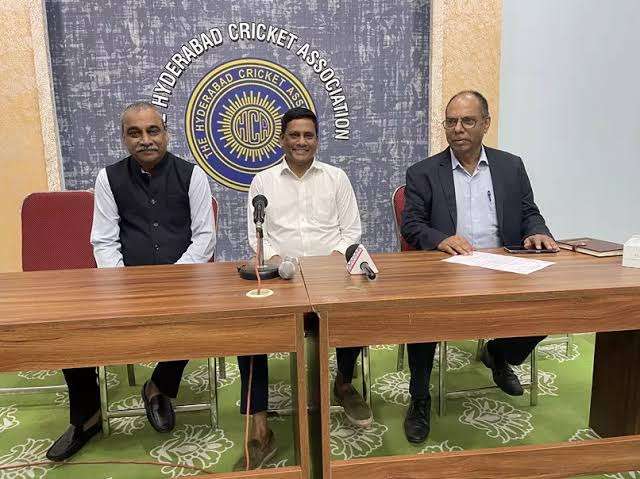
The recent press conference by some former HCA functionaries demanding immediate elections and an end to administrators raises an obvious question: Is the demand genuinely about restoring democracy, or about restoring access to power?
Some individuals associated with the old establishment have figured in the reports of court-appointed committees, while cases relating to the association’s affairs remain pending. Their involvement or culpability in any specific wrongdoing must be established through due process. But neither should their past associations and the questions raised by judicial committees be conveniently forgotten.
Members have not forgotten the events of 2025–26: the so-called adjourned AGM convened at short notice, 57 clubs being kept out, appointments made at that meeting, and the subsequent controversy over a President who was neither elected nor the Vice-President. The resulting confusion continued until judicial intervention became unavoidable.
There are also allegations by members that the episode was orchestrated by influential individuals and that a substantial amount of money moved out of HCA’s accounts during the turbulent period. These claims require documentary verification and a transparent accounting.
Who convened the meeting? Who benefited from the decisions taken there? What was the basis for the appointments? And where did the money go?
These are not questions that disappear merely because some of those involved now demand fresh elections.
The problem is not the absence of elections alone. It is the possibility of reproducing the same power structure through another election.
Equally troubling is the silence of members who allowed their clubs, signatures and votes to be used without demanding accountability. Silence may appear convenient in the short term, but it perpetuates the very system that has brought HCA to this pass.
- The Surgery Must Now be Complete
The High Court’s October 29, 2026 order offers HCA another opportunity to get its house in order.
On HCA’s own application, the Court permitted the existing Apex Council, whose tenure had ended, to continue in an interim, in-charge capacity under the SMC’s supervision, in accordance with its earlier directions. The arrangement is to continue until membership verification and elections are completed. The order also provides for a new CEO and a committee to monitor compliance with the 2023 recommendations and oversee the pre-electoral process.
This is an opportunity that must not be wasted.
The members’ expectations are straightforward:
- Trace club ownership and control: Establish who actually controls, funds and operates every affiliated club, including possible proxy arrangements.
- Resolve pending complaints: Examine all outstanding membership disputes, particularly those involving clubs similarly placed to the 57 disqualified clubs.
- Address conflicts of interest: Ensure that individuals facing serious and unresolved institutional conflicts do not influence the verification or electoral process.
- Account for HCA’s finances: Publish a transparent account of financial transactions during the disputed period and explain all questionable expenditure and withdrawals.
- Protect genuine club representatives: Ensure that legitimate club secretaries are not intimidated or pressured into supporting particular individuals.
- Encourage fresh leadership: Open the association to capable administrators and cricket stakeholders who have no baggage from the old power struggles.
- Publish a reform tracker: Place all twenty recommendations in the public domain with clear implementation status, timelines and responsibility for compliance.
The message must be unmistakable: HCA cannot continue to function as the private preserve of a handful of influential individuals. Clubs cannot become electoral instruments, and administrative positions cannot be treated as stepping stones to personal influence.
The SMC and the newly appointed oversight mechanisms must also remain accountable. Their credibility will ultimately rest not on the number of orders obtained or committees constituted, but on whether they deliver a transparent, functioning and genuinely democratic association.
Members, too, have a responsibility. They must submit genuine club records, resist pressure and refuse to lend their names to questionable arrangements. Institutional reform cannot succeed if those who constitute the institution remain passive spectators.
Twenty recommendations were made in 2023. Three years were lost. HCA cannot afford another round of excuses, litigation and administrative experiments.
The surgeon is in the operating theatre. The diagnosis is known, the prescription is available and the Court has provided the framework. This time, the operation must be complete.
Anything less, and HCA will once again find itself in the ICU, waiting for another judicial intervention to keep it alive.
Coming next: Integrity, Money and the Questions That Remain – the anti-corruption and POSH mechanisms, conflicts of interest, TG20 accounts, cases dating back to 2017, and the financial questions that HCA’s members still deserve answers to.