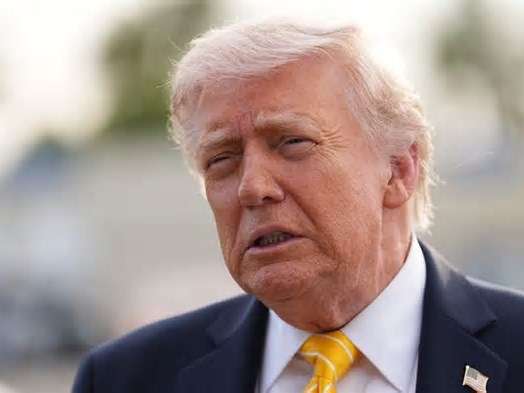
Washington: US President Donald Trump is “seriously considering” launching fresh strikes against Iran if last-minute negotiations do not result in a peace deal, US media outlet Axios reported on Friday.
It said that Trump met with a senior national security team in the morning to discuss the war on Iran even as Pakistan Army Chief Asim Munir visited Tehran and was joined by a delegation from Qatar in a last-minute bid to hammer out a deal.
President Trump convened a meeting with his senior national security team regarding the war with Iran on Friday morning, two US officials told Axios.
Some members of the U.S. military and intelligence community canceled their plans for the Memorial Day weekend in anticipation of possible strikes, several sources said.
Defense and intelligence officials began updating recall rosters for U.S. installations overseas as tranches of troops stationed in the Middle East rotate out of theater, part of an effort to reduce the American military footprint in the region amid concern about possible Iranian retaliation.
The U.S. and Iran have largely refrained from striking each other since a temporary ceasefire began in early April, buying time for indirect talks on a longer-term deal.
White House spokesperson Anna Kelly told CBS News that Mr. Trump has “made his redlines abundantly clear: Iran can never possess a nuclear weapon, and they cannot keep their enriched uranium.”
“The President always maintains all options at all times, and it is the job of the Pentagon to be ready to execute any decision the Commander-in-Chief could make,” Kelly said. “The President has been clear about the consequences if Iran fails to make a deal.”
Iran’s Islamic Revolutionary Guard Corps warrned Wednesday that any further strikes against the country from the United States or Israel could widen the conflict beyond the Middle East, promising “crushing blows … in places you cannot even imagine.”
Tehran is reviwingthe latest U.S. proposal for a possible agreement to end the nearly three-month war that has rattled energy markets and resulted in soaring fuel prices. The proposal was transmitted to Iran on Wednesday, according to a source who told CBS News that it was also accompanied by a warning that rejecting this so-called final offer would mean military strikes would resume.
“Iran is dying to make a deal,” Trump said Friday. “We’ll see what happens.”
The president said Wednesday he was prepared to give Tehran “a couple of days” to respond to the latest U.S. offer. He added that his team was “pretty impressed” by Iran’s negotiators, but cautioned that the administration would need assurances substantial enough to prevent the conflict from reigniting.
A response is expected to be transmitted via Pakistan, which has been acting as an intermediary.
Before boarding a flight to India, Secretary of State Marco Rubio told reporters that the U.S. expected to receive a response via the Pakistani field marshal, who has acted as the primary conduit of communication with Iran on behalf of the Trump administration. Rubio claimed that Trump preferred diplomacy to strikes and said progress had been made, though he indicated there was more work to be done.
Rubio also referenced conversations from meetings in Sweden with NATO members about how to reopen the Strait of Hormuz through military force, an effort he referred to as “Plan B” if Iran did not agree to do so itself.
In Washington, House Republicans on Thursday abandoned an effort to hold a vote limiting President Trump’s authority to conduct military operations against Iran after concluding they lacked the votes needed to stop the resolution from advancing.