M Jaishree
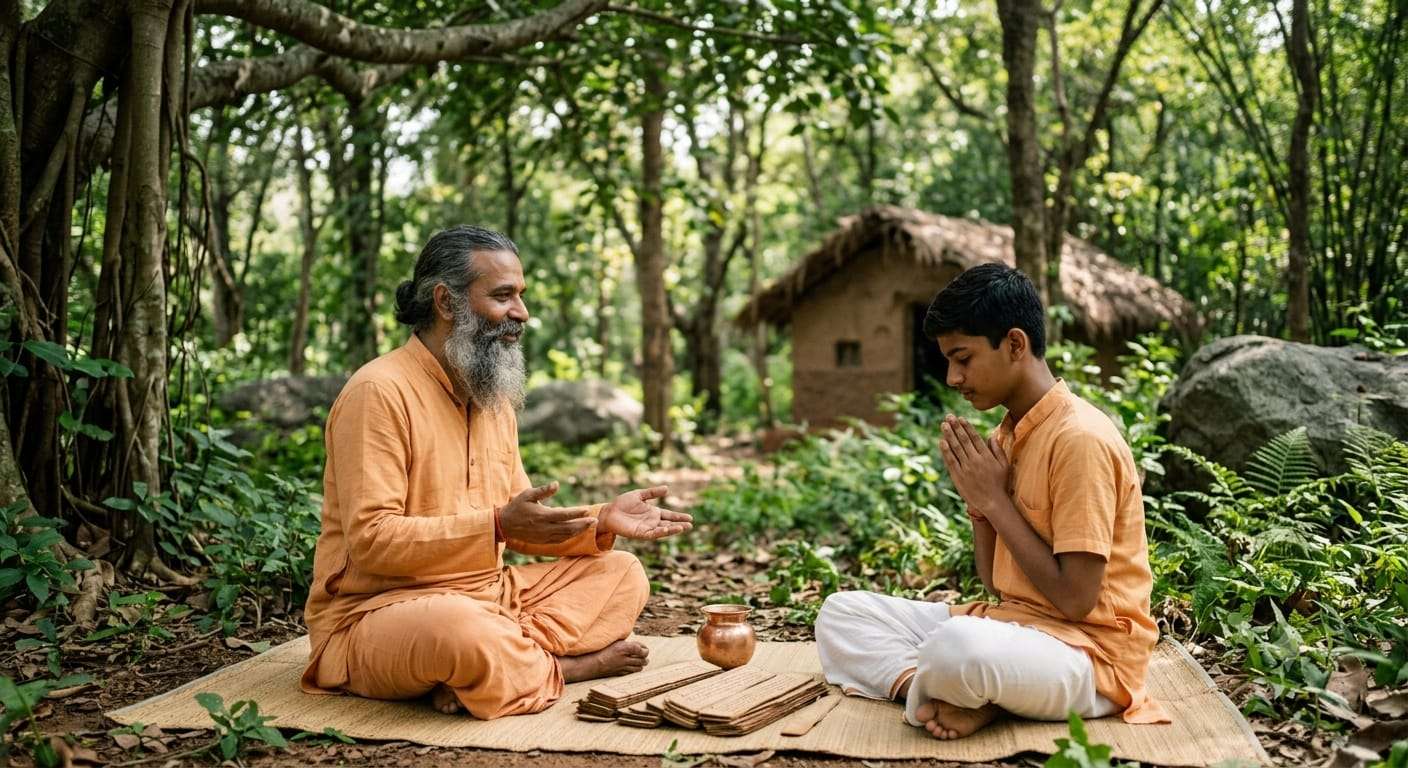
The ancient Indian system of education, as envisioned by the Upanishads, stands apart from every conventional model of instruction. It was never built upon authority, hierarchy, or intellectual domination. Instead, it rested upon a sacred covenant between the teacher and the student, where both accepted equal responsibility in the pursuit of truth. Neither considered himself superior nor inferior in the larger journey of knowledge. The teacher was entrusted with sharing wisdom, while the student was destined to receive, examine, question, and eventually enrich that wisdom. Their relationship was not a contract of power but a partnership in discovering reality.
The celebrated Upanishadic invocation, “Saha Nau Avatu, Saha Nau Bhunaktu, Saha Vīryam Karavāvahai, Tejasvināvadhītamastu, Mā Vidviṣāvahai” expresses this philosophy with extraordinary depth. “May we be protected together. May we be nourished together. May we acquire strength together. May our learning become radiant. May we never hate or dispute with one another.” Every phrase reflects a remarkable educational vision that modern pedagogy continues to rediscover. Education is not a one-sided transfer of information but a shared exploration where knowledge flourishes through cooperation, mutual trust, and intellectual honesty.
The Upanishads also recognized the freedom of choice. A student was not compelled to learn from a particular teacher, nor was a teacher obliged to accept every seeker. Both chose each other through mutual respect, sincerity, and commitment to truth. This freedom ensured that learning emerged from willingness rather than compulsion. Genuine education begins only when both minds are prepared to engage with humility and discipline.
Though the teacher possessed greater learning, the Upanishadic tradition never regarded him as a finished product. A true teacher remained a lifelong student. Every question raised by an inquisitive disciple opened new avenues of reflection. Every dialogue refined understanding. In this sense, teaching itself became one of the greatest methods of learning. Knowledge was never static; it expanded continuously through inquiry, contemplation, and experience. The teacher learned while teaching, and the student gradually became capable of teaching others.
The student too was expected to realize that learning did not end with the completion of formal education. The world itself was regarded as the greatest university. Nature, society, success, failure, joy, suffering, birth, and death all became teachers. The Upanishads repeatedly remind humanity that wisdom is not confined within classrooms or scriptures. Every experience becomes meaningful when observed with awareness. Thus education transformed into a lifelong discipline rather than a temporary academic exercise.
This philosophy also reveals an astonishing scientific temperament. The Vedic sages never demanded blind acceptance of knowledge. They encouraged observation, questioning, reflection, experimentation, and realization. Truth was to be verified through disciplined inquiry and direct experience rather than inherited merely through tradition. Questions were welcomed because they sharpened understanding. Doubt was not condemned; it became the starting point for deeper investigation. Such intellectual openness laid the psychological foundation for rational thinking while preserving spiritual depth.
Socially, this educational model created harmony instead of competition. The teacher never viewed the student’s brilliance as a threat, nor did the student consider the teacher an obstacle. Their success was inseparable. Knowledge became a shared wealth rather than a private possession. This cooperative spirit minimized jealousy, arrogance, insecurity, and unnecessary rivalry—psychological disorders that often accompany modern educational systems driven by competition alone.
The emotional strength of this relationship was equally remarkable. If difficulties arose, teacher and student faced them together. Hardship and comfort, success and failure, were shared with mutual responsibility. Such companionship nurtured courage, resilience, emotional security, and moral confidence. Education therefore developed not only intellectual excellence but also emotional maturity and social responsibility.
The same philosophy extended naturally into family life. Parents offered unconditional affection, sacrifice, and protection for their children. Children, in turn, learned gratitude, discipline, compassion, and reverence toward their parents. Love became the first school, and respect became its first lesson. The values cultivated within the family seamlessly continued in the Gurukula, creating continuity between home, society, and education.
The prayer “May we become radiant through our learning” carries profound psychological significance. Radiance does not refer merely to intellectual brilliance but to the luminosity of character. Knowledge without conduct was considered incomplete. Learning was expected to produce humility, integrity, self-restraint, compassion, truthfulness, and service. The true measure of education lay not in scholarship alone but in the transformation of personality.
The concluding prayer, “May we never dispute or hate one another,” demonstrates extraordinary insight into human psychology. The sages understood that ego, prejudice, hostility, and mistrust silently destroy the spirit of learning. Knowledge flourishes only where minds remain open and hearts remain free from bitterness. This was not a call to suppress disagreement but an appeal to prevent disagreement from becoming personal hostility. Respectful dialogue, not conflict, became the instrument of discovering truth.
The Upanishadic educational system functioned without excessive laws, rigid regulations, or external enforcement. Its foundation rested upon trust, affection, self-discipline, and shared moral responsibility. Governance emerged from conscience rather than fear. Relationships became stronger than rules because both teacher and student willingly accepted ethical obligations toward each other.
The educational heritage of Bharata Varsha thus presents one of humanity’s most refined philosophies of learning. It harmonizes spirituality with rational inquiry, freedom with discipline, authority with humility, and knowledge with character. It recognizes that life itself is the greatest teacher and that every sincere learner remains a student forever. In an age increasingly dominated by information, this timeless Upanishadic vision reminds humanity that the highest purpose of education is not merely to produce skilled individuals, but to awaken enlightened human beings whose wisdom benefits both society and the universe