MS Sparsha
Long before modern medicine began to celebrate its advances against leprosy, an ancient Indian remedy had already attracted the attention of Western medical science. Its journey from Ayurveda to hospitals across the world is a remarkable story of indigenous knowledge, scientific perseverance and an injustice that left one young chemist’s contribution unrecognised for years.
Yet, how many of us know that the early Western investigations into chaulmoogra oil, a traditional remedy used against leprosy, began in Calcutta? Or that Indian physicians and chemists played crucial roles in transforming this difficult-to-administer oil into a more practical treatment? The story deserves to be remembered as an important chapter in India’s scientific heritage.
The journey began with the seeds of the chaulmoogra tree, whose oil had long been used in traditional Indian medicine. Its potential came to the attention of Frederic John Mouat, a British professor at Bengal Medical College in Calcutta, through Indian medical practitioners, or vaidyas, and the headmaster of Hindu College.
Intrigued by the indigenous remedy, Mouat investigated its use at the Calcutta Leper Asylum. His observations eventually reached the wider Western medical community. In 1854, he published an account of chaulmoogra oil and its application in treating leprosy, helping introduce the remedy to Western medicine.
But recognising the potential of a traditional medicine was only the beginning. Administering it posed a formidable challenge. The oil was unpleasant to consume, and patients often found repeated oral doses intolerable. Its therapeutic promise could not be fully realised unless scientists found a more acceptable way to deliver it.
Once again, the answer involved Indian scientific ingenuity.
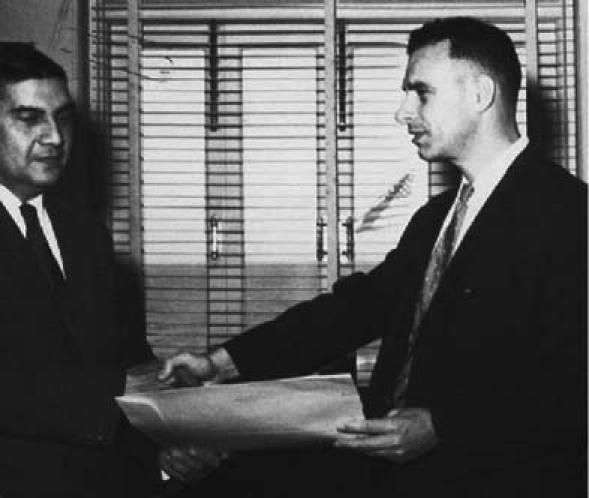
Leonard Rogers, a British physician working in India, collaborated with Indian chemist Chuni Lal Bose to develop a soluble preparation of chaulmoogra oil. The new formulation offered a way around the difficulties associated with taking the oil orally. On July 31, 1915, this preparation was administered to patients for the first time, marking an important milestone in the evolution of chaulmoogra treatment.
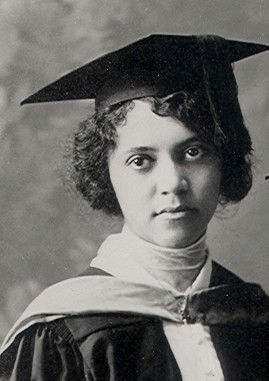
The story, however, was far from over. The next significant breakthrough came thousands of kilometres away, in Hawaii, where a young chemist named Alice Augusta Ball was working on the same stubborn problem.
Just 23 years old, Ball developed a method of processing chaulmoogra oil into injectable ethyl esters, making it possible to administer the active preparation more effectively. Her innovation became known as the Ball Method and was used in leprosy treatment for years, until more effective medicines emerged in the 1940s.
Ball’s achievement was extraordinary, particularly given her age and the scientific challenges involved. Tragically, she died in 1916, aged just 24, before she could publish her findings. The work was subsequently published by Arthur L. Dean, the head of her department, without initially giving her the credit she deserved. In 1922, a colleague, Harry T. Hollmann, publicly acknowledged her contribution and referred to the technique as the Ball Method.
Her story is a reminder that scientific recognition does not always arrive when it is deserved, particularly for pioneering researchers whose work is overshadowed by others.
There is an important distinction, however, between the contributions of the Indian pioneers and Ball’s specific achievement. The traditional use of chaulmoogra oil originated in India; Mouat helped bring it to Western medical attention; Rogers and Bose contributed to developing a more usable preparation; and Ball’s work made injectable derivatives more practical. Together, these efforts helped advance the treatment of a disease that had caused immense suffering and social exclusion.
Chaulmoogra oil was eventually superseded by more effective drug treatments, including sulphone drugs and later multidrug therapy. Its medical history nevertheless remains significant because it illustrates how traditional knowledge can provide a starting point for scientific investigation, while careful experimentation and improved formulations can make a remedy more useful.
The larger lesson is not that ancient remedies were always right or that modern medicine should be dismissed. It is that knowledge must be evaluated on evidence, irrespective of where it originates. India’s traditional medical heritage deserves neither unquestioning glorification nor casual dismissal; it deserves rigorous investigation and fair recognition.
The chaulmoogra story brings together an Indian medicinal tree, indigenous medical knowledge, scientific work in Calcutta and an overlooked young chemist in Hawaii. It also exposes how easily contributions can disappear from collective memory.
The tree was ours. The early medical lead came from our traditional knowledge. Indian researchers helped move the remedy towards practical treatment. Yet this remarkable chain of contributions remains largely absent from popular accounts of medical history.
In the Unsung Heroes series, the story of chaulmoogra oil is a timely reminder that India’s contribution to global knowledge extends well beyond the names that dominate textbooks. Recovering these stories is not about claiming every breakthrough as exclusively Indian. It is about ensuring that the people, knowledge and scientific efforts that genuinely contributed to human progress receive their rightful place in history.