


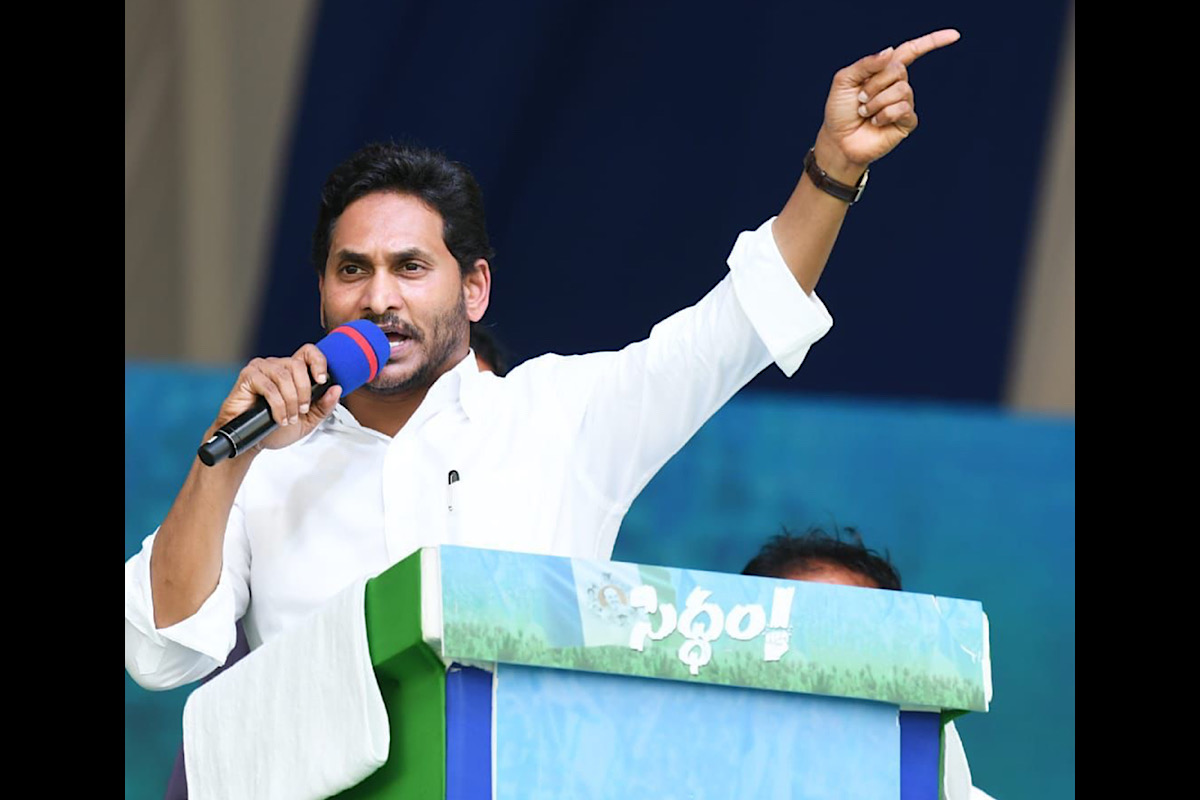
YSR Congress Party (YSRCP) founder YS Jagan Mohan Reddy, who stormed to power in Andhra Pradesh in 2019 but suffered a crushing defeat in 2024, has often extended issue-based support to the BJP-led NDA government at the Centre, including by abstaining on contentious matters. His sudden decision to challenge the NDA over the appointment of the Chief Election Commissioner (CEC) and the composition of selection panels raises an obvious question: is this a principled stand or a politically calculated manoeuvre? Jagan is entitled to question the government’s decisions. The issue, however, is the consistency of his position and the timing of his intervention. Having largely avoided direct confrontation with the Centre on several politically sensitive matters, his latest posturing has surprised observers who had come to regard the YSRCP as a party willing to cooperate with the NDA when its interests so demanded. At the heart of the controversy is the selection process for the CEC and Election Commissioners. Under the 2023 law, the selection committee comprises the Prime Minister, a Union Cabinet Minister nominated by the Prime Minister, and the Leader of the Opposition in the Lok Sabha. The exclusion of the Chief Justice of India, who was part of the earlier selection arrangement following a Supreme Court judgment, has been a major point of contention for the Opposition. Jagan’s criticism therefore touches upon a genuine institutional debate. But whether his intervention reflects a consistent commitment to electoral independence or a tactical shift in political positioning is another question altogether. The timing assumes significance amid the wider political battle over the proposed delimitation exercise and the representation of States in Parliament. Any constitutional amendment requiring a two-thirds majority in both Houses makes every vote consequential. The YSRCP has four MPs in the Lok Sabha and four in the Rajya Sabha. Though numerically modest, its position could matter if the government’s numbers are tight. However, the political arithmetic surrounding delimitation must be assessed on its actual merits, not speculation. The government’s prospects cannot be determined merely by counting the YSRCP’s MPs or assuming that other parties will switch sides. Any claim that the NDA has secured, or is certain to secure, the necessary numbers requires firm evidence. Delimitation is also a sensitive federal question, with profound implications for the representation of States and the balance between population and political influence.
Against this backdrop, Jagan’s decision to adopt a more confrontational posture could be an attempt to regain political relevance. Yet, it would be premature to conclude that his stand is necessarily linked to a specific strategy to obstruct the government’s legislative agenda. His motives remain a matter of political interpretation, not established fact. There is, nevertheless, a more immediate challenge confronting the YSRCP. Andhra Pradesh’s local-body elections could offer an early indication of whether the party has recovered from its 2024 electoral debacle. Facing the TDP-led coalition of the Telugu Desam Party, Jana Sena and the BJP, Jagan has much ground to recover. A poor performance would deepen questions about the party’s organisational strength and its ability to mount a credible challenge in 2029. The ruling alliance, however, is not without its own complications. Differences between the TDP and Jana Sena, including Pawan Kalyan’s reminders of his party workers’ role in opposing the previous YSRCP government, underline the need for sustained coordination within the coalition. Such friction could offer Jagan an opportunity, provided he can rebuild his own political base rather than rely on the weaknesses of his opponents. His legal troubles add another dimension to the political landscape. The cases pending against him, including those involving alleged corruption and money laundering, remain subject to judicial process. It would be wrong to presume that Central agencies will act or refrain from acting according to his political posture. Equally, Jagan cannot expect his political positions to insulate him from lawful investigation. Ultimately, Jagan’s latest intervention presents him with a test of credibility. If his objection to the CEC selection process is rooted in principle, he must articulate a consistent position and apply the same standards regardless of which party governs at the Centre. If it is merely tactical posturing, political observers will inevitably ask what he hopes to gain—and whether he is prepared to sustain the confrontation. For a leader seeking a comeback after a crushing defeat, political relevance cannot be restored through calculated surprises alone. Jagan may yet choose to cooperate, abstain or oppose the NDA on future legislative questions. But any such decision should be judged on its merits and consistency, not on speculation about secret bargains or the possible intervention of investigative agencies. The real question is whether Jagan has rediscovered his political convictions or merely changed his political calculations. Until his subsequent actions provide the answer, his sudden shift deserves scrutiny—but not assumptions presented as facts.


