Lakshmanrao Upadhyayula
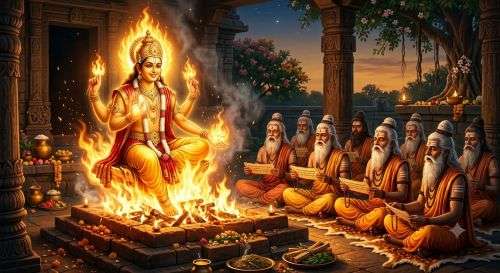
In the cadence of the sacred Tristubh metre of the Rigveda, the venerable sage Agastya raises his contemplative voice in reverence to Brihaspati, the divine embodiment of wisdom, eloquence, and sacred intellect. He is extolled as the fulfiller of noble aspirations, whose speech flows with sweetness and clarity, guiding both gods and mortals toward harmonious purpose. As the celestial priest, he stands worthy of invocation, receiving offerings adorned with devotion and hymns shaped by insight. His presence is not distant or indifferent; rather, he draws near to the resonance of sincere chanting, responding to the vibrational precision of sacred sound.
Brihaspati shines with a brilliance that transcends mere luminosity, embodying the illuminating force of knowledge that dispels the darkness of ignorance. The hosts of divine beings and the assemblies of humankind alike lift their voices in melodious praise, aligning themselves with the cosmic rhythm articulated in the Vedic hymns. These chants, particularly those attuned to seasonal cycles, move with the subtle intelligence of nature, reaching the creative consciousness of Brihaspati. They are not inert recitations but dynamic carriers of intention, capable of manifesting desired outcomes across the visible and invisible realms, much like the unseen currents of wind that govern the heavens.
The Vedic seers perceived a profound parallel between the operations of the cosmos and the duties of divine intelligence. Just as the sun radiates light without deviation from its ordained path, so does Brihaspati accept offerings, nourishment, and hymns, fulfilling his role with unwavering precision. This reflects an early scientific temperament, where observation of natural law becomes a metaphor for ethical and spiritual order. His strength is untainted by malice or opposition, and his power, fierce and expansive, resembles both the midday sun and the untamed force of nature. It is a power that circulates through all existence, sustaining balance and continuity.
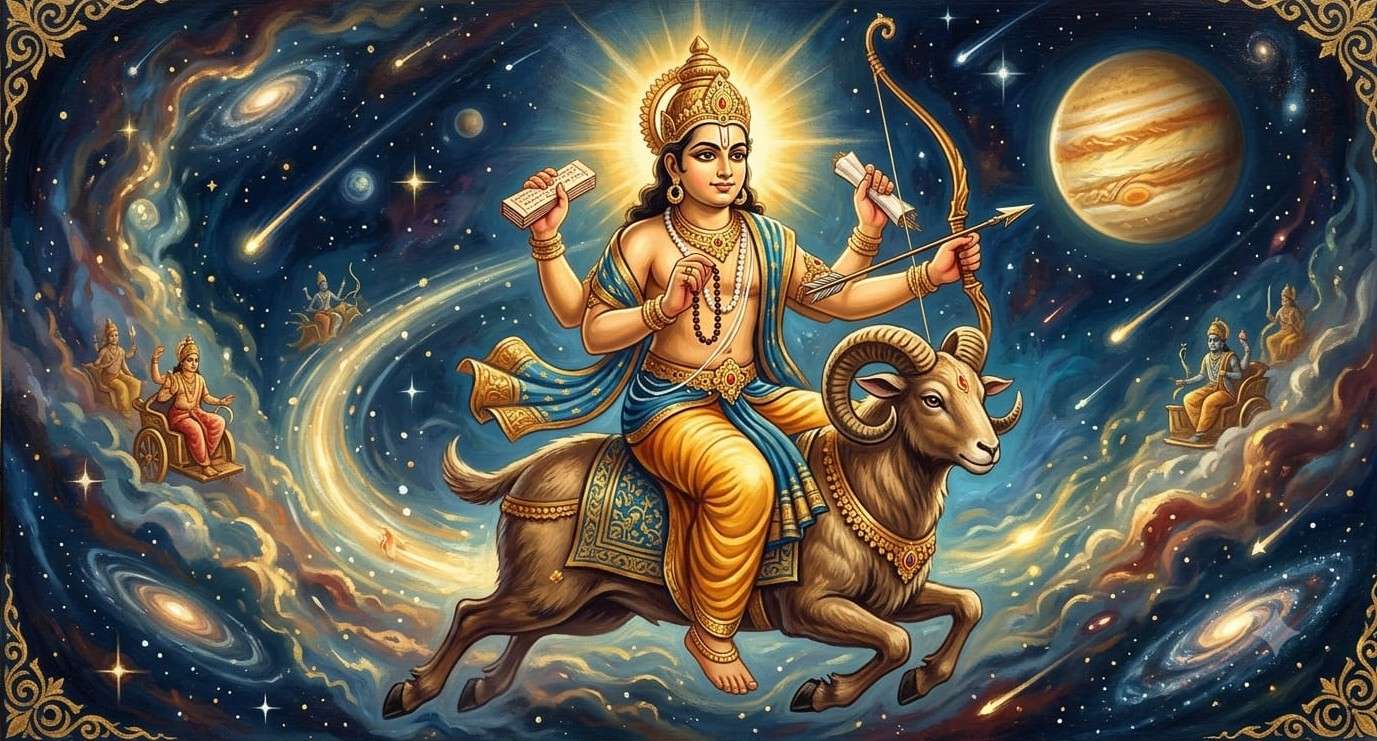
The glory of Brihaspati extends across earth and heaven, his brilliance akin to the solar radiance that nourishes life. He gathers the sacred oblations offered in ritual, transforming them into subtle energies that uphold cosmic harmony. His weapon, likened to that of a hunter, signifies discernment—the ability to pursue and dismantle falsehood, illusion, and disruptive forces. He stands vigilant against sorcery and distortion, preserving the sanctity of truth and order.
Yet, Brihaspati is not indiscriminate in his benevolence. Those who act with integrity, who perform sacred rites such as the Soma sacrifice with sincerity, receive his grace and protection. The malevolent, despite their outward strength, are denied his favor, their arrogance rendered powerless. This reflects a moral law embedded within the cosmos, where actions aligned with truth are rewarded, and those rooted in deception are ultimately exposed.
He is the patron of kings and the kin of the wise, a guardian of prosperity and skill. Those who seek refuge in righteousness find in him a steadfast ally. Even those who speak ill are not beyond his sight; he reveals their vulnerabilities, ensuring that justice prevails. As rivers inevitably flow toward the ocean, so do all hymns and prayers converge upon Brihaspati, the supreme intellect who perceives all with clarity. Like a bird soaring high, he observes the currents of existence, understanding both their origin and their destination.
In this grand vision, Brihaspati emerges as the magnificent lord whose might is unmatched, whose generosity is boundless, and whose presence is a guiding force for many. The devotees, in their earnest invocation, seek not only material blessings but the deeper gifts of strength, nourishment, and longevity. They aspire to become heroic in spirit, elevated in consciousness, and aligned with the eternal order. Through this hymn, the Vedic mind reveals a synthesis of spiritual reverence and rational insight, where the divine is not separate from the laws of nature, but their very source and sustainer.