Lakshmanrao Upadhyayula
In the sacred vision of the Rigvedic seers, the venerable sage Śaunaka Gṛtsamada invokes Lord Indra through the metres known as Aṣṭi and Atikvāri, poetic forms whose measured cadence mirrors the rhythm of cosmic order. In these hymns, Indra is not merely praised as a celestial warrior, but revered as the conscious power that responds to sincere invocation, righteous action, and disciplined sacrifice. He is the worshipful sovereign of divine strength, the radiant embodiment of awakened energy, and the protector of both the visible and invisible worlds.
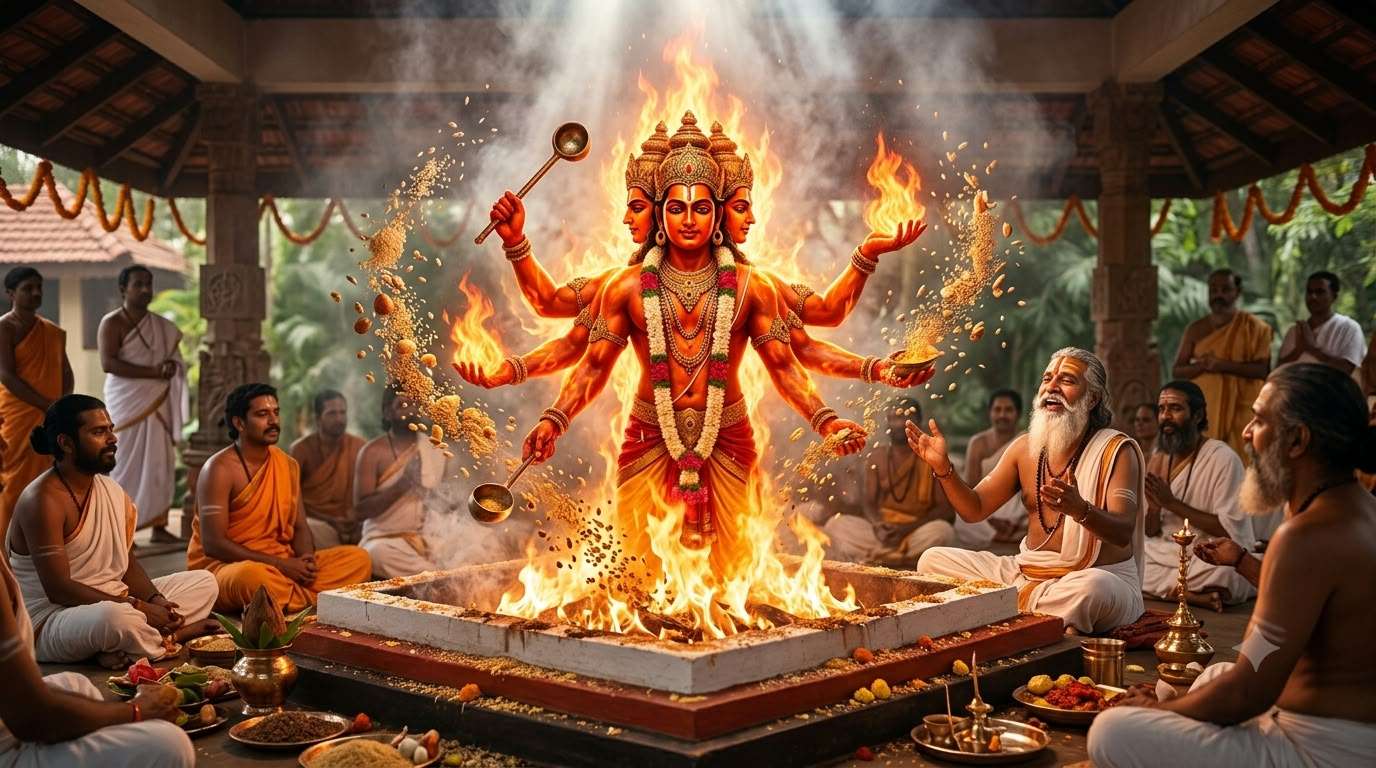
The hymn unfolds within the solemn grandeur of a special three-day Soma sacrifice, a rite of profound symbolic and spiritual significance. In this consecration, barley is carefully mixed with the purified and sanctified Soma juice. Barley, the staple grain of Vedic civilization, represents nourishment, stability, and the fruits of cultivated effort; Soma symbolizes distilled vitality, heightened consciousness, and the immortal essence latent within creation. Their union signifies the harmonization of material sustenance with spiritual illumination. This sacred preparation is offered to Indra together with Lord Vishnu, indicating the cooperation of dynamic force and all-pervading order. Indra, the power of action, and Vishnu, the principle of universal preservation, together uphold the equilibrium of the cosmos.
When Indra drinks the Soma elixir, his brilliance intensifies. The hymns declare that Soma magnifies his radiance, sharpens his intelligence, and prepares him for greater deeds. Spiritually, this portrays the transformation of consciousness when purified awareness is infused with divine inspiration. Scientifically viewed, Soma may be understood as a metaphor for those disciplines—ritual, meditation, controlled breathing, and concentrated intention—that elevate human cognition and unleash dormant capacities. Under the influence of this sacred vitality, Indra becomes luminous, energized, and inwardly delighted, revealing that joy is the natural outcome of alignment with truth.
The truthful and shining Soma expands Indra’s splendour in every direction. He becomes resplendent throughout heaven and earth, filling the four quarters with his power. This imagery reflects a universal principle: when consciousness is intensified and purified, its influence extends beyond the individual and becomes transformative for the surrounding world. Just as light radiates from a central source, awakened intelligence naturally illuminates all domains of existence. The Vedic poets thus portray divine radiance as both a spiritual reality and a cosmic phenomenon.
Empowered by Soma, Indra conquers the hostile Krivi and subdues obstructive forces. In Vedic symbolism, such enemies represent inner and outer resistances—ignorance, fear, inertia, and hostile tendencies that impede the movement of life. Indra’s victories signify the triumph of enlightened will over forces that confine growth. This reflects a timeless psychological truth: when clarity and strength unite, obstacles that once seemed formidable dissolve before awakened determination.
One portion of Soma, the hymn tells us, Indra retains within his own being, while another he distributes among the gods. This subtle image reveals a profound law of spiritual economy. True power is never hoarded; it is assimilated inwardly and then shared for the benefit of the whole. The enlightened being internalizes divine strength and becomes a channel through which energy, wisdom, and harmony are transmitted to all cooperating faculties of existence. In human life, this corresponds to the principle that genuine achievement nourishes both the individual and the community.
The seers extol Indra as one who shines with true strength in the sacrificial fire and whose intention is broad enough to receive all offerings. He flourishes in courage, boldness, discernment, and wisdom. Strength in the Vedic sense is never blind aggression; it is power guided by intelligence and moral insight. Indra’s greatness lies not only in force but in his capacity to discriminate between truth and falsehood, right action and destructive impulse. Thus he represents the ideal integration of energy and wisdom.
The hymn further implores Indra to bestow utility, prosperity, and desirable riches upon the priest. These riches are not limited to material wealth; they include intellectual clarity, moral courage, social harmony, and spiritual fulfilment. The Vedic tradition recognizes that abundance acquires lasting value only when it serves the advancement of life and the welfare of society. Prosperity becomes sacred when aligned with purpose and gratitude.
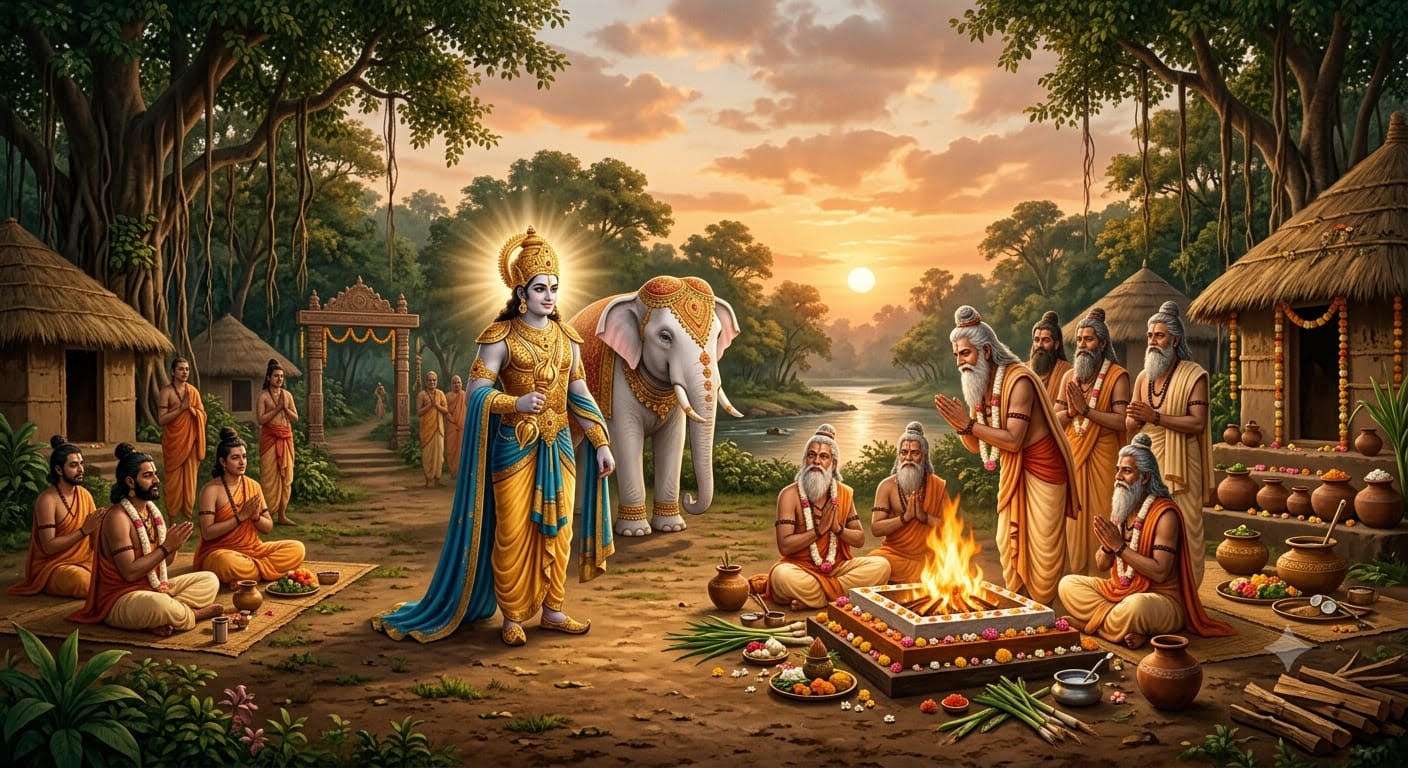
Indra is celebrated as the ancient friend and protector of humanity. For countless generations, he has defended seekers, sustained communities, and responded to earnest prayer. This enduring benevolence is applauded in the heavens, for divine strength exists not for domination but for protection and upliftment. The Vedic sages perceived the universe as fundamentally responsive to truth, effort, and reverence; Indra personifies this protective responsiveness within the cosmic order.
Among his greatest deeds is the destruction of the serpent-demon Vṛtra, who had imprisoned the life-giving waters. By striking down this force of obstruction, Indra releases the rivers and restores fertility to the earth. Vritra represents every condition that suppresses flow—whether drought in nature, repression in the mind, or stagnation in society. The liberated waters symbolize creativity, vitality, and wisdom once constraints are removed. In scientific terms, life depends upon circulation and exchange; in spiritual terms, liberation occurs when blocked energies are set free.
The hymn concludes by praising Śatakratu Indra, “the Lord of a Hundred Powers,” as strong, wise, and deeply knowledgeable. His many powers signify the innumerable capacities latent within consciousness when disciplined by truth and nourished by sacred insight. Indra stands as the archetype of enlightened strength: radiant yet compassionate, mighty yet discerning, victorious yet generous.
Thus, the ancient hymn of Śaunaka Gṛtsamada reveals a timeless teaching. Through sacrifice, purification, and awakened intention, ordinary energy is transformed into divine potency. Soma symbolizes the refined essence of life; Indra embodies the will empowered by that essence; and the victory over Vṛtra proclaims the liberation of all that has been restrained. The message is both spiritual and scientific: when energy is purified, directed, and harmonized with universal law, consciousness expands, obstacles are overcome, and the hidden waters of life flow forth to nourish the world.