Lakshmanrao Upadhyayula
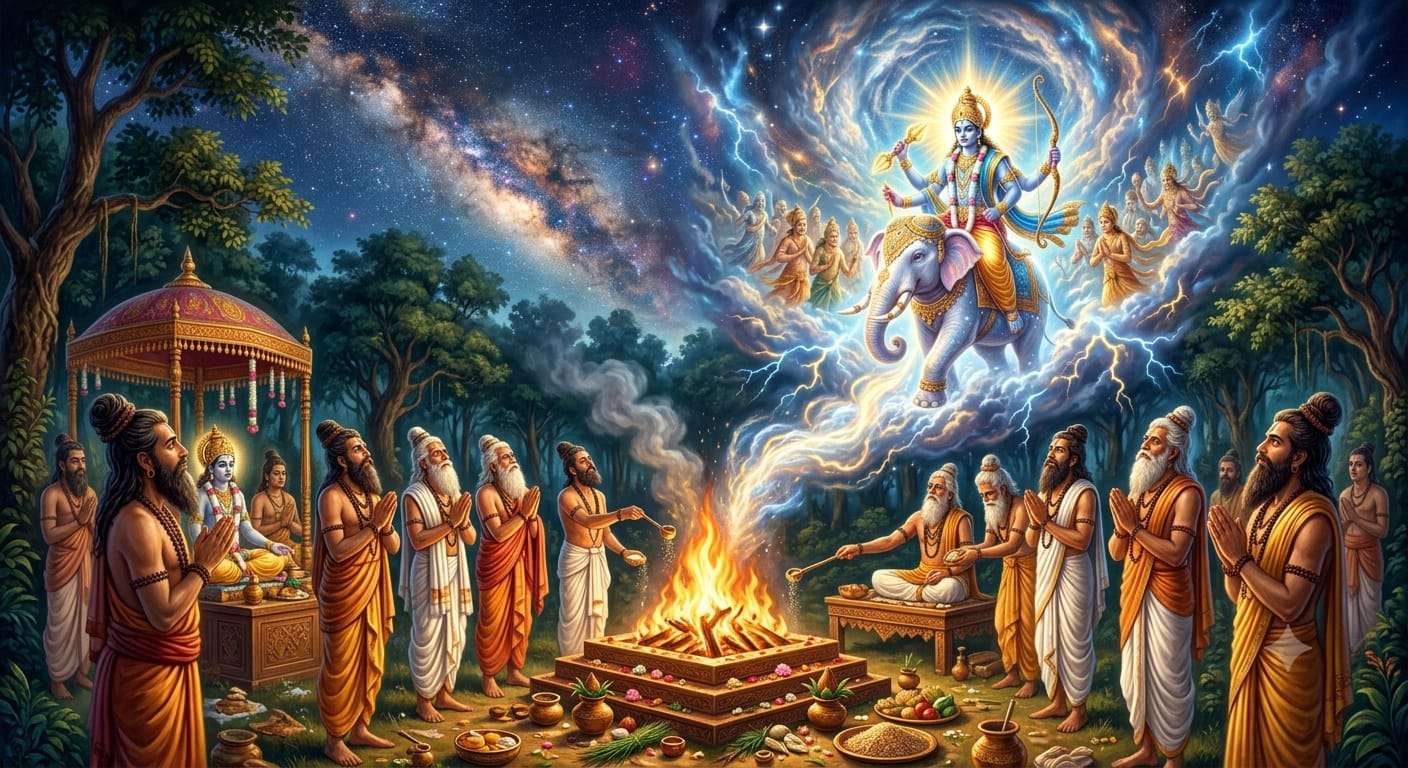
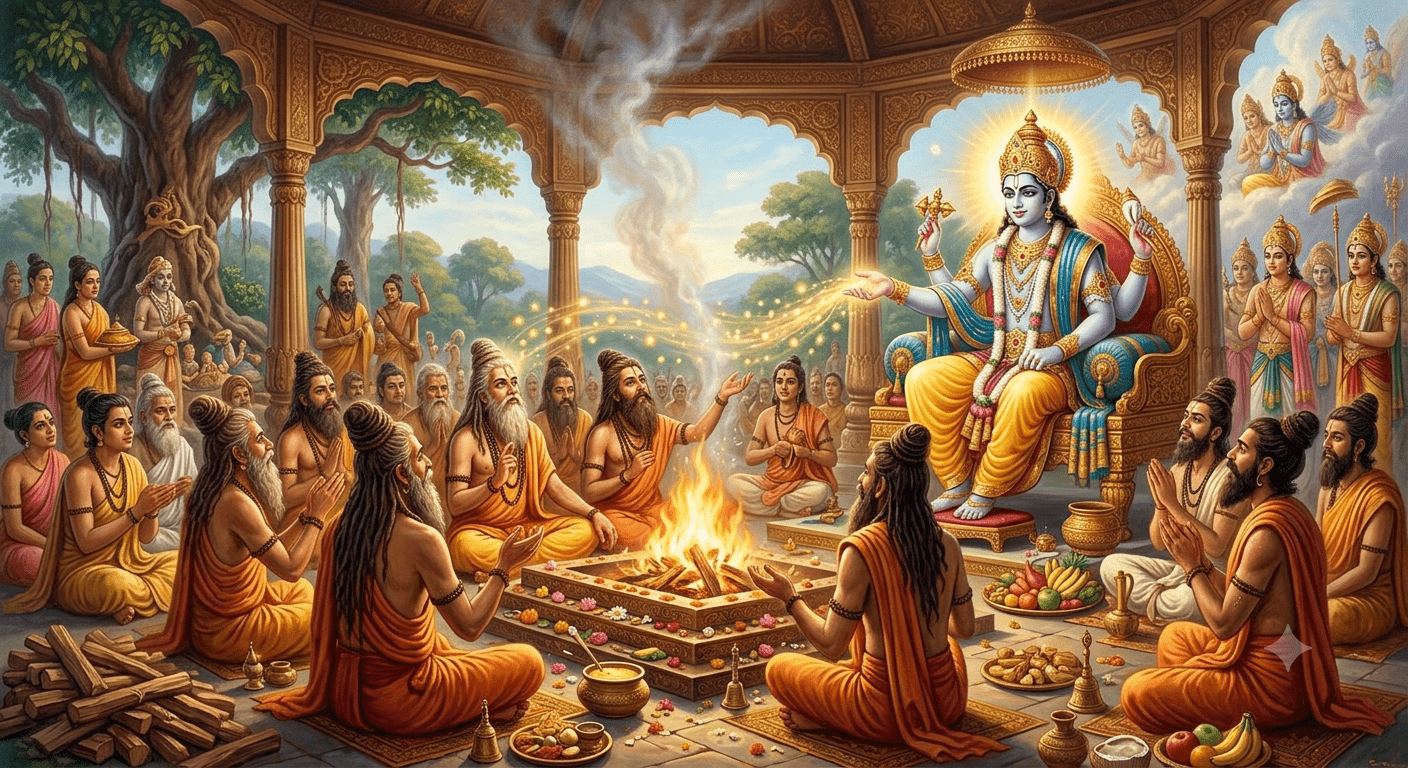
In this exalted hymn of the Ṛgveda, the venerable sage Śaunaka Gṛtsamāda invokes Lord Indra in the majestic cadence of the Triṣṭubh metre, a metrical form traditionally reserved for profound contemplations on divine power, cosmic order, and heroic action. The hymn arises from the sacred atmosphere of the yajña, where the seer, with disciplined mind and illumined understanding, addresses Indra as the supreme guardian of both spiritual aspiration and worldly welfare. Just as a vigilant traveller prepares nourishment for the journey and keeps his chariot ready for the path ahead, so does the wise worshipper prepare his inner and outer faculties before invoking the deity. The metaphor is deeply significant: food represents the accumulation of spiritual merit and knowledge, while the chariot symbolizes the body and mind, properly aligned to carry the soul toward its divine destination.
The sage declares with confidence that Indra knows his devotees intimately. Nothing remains hidden from the divine intelligence that pervades all beings. The worshippers resolve to magnify Indra through hymns of praise, not because the deity requires glorification, but because the act of praise purifies the heart and aligns human consciousness with the cosmic order. They seek auspiciousness from Indra, understanding that true welfare consists in harmony between thought, action, and universal law. In Vedic psychology, such auspiciousness is not a random blessing but the natural consequence of attunement to ṛta, the eternal principle that governs the movement of stars, seasons, and moral life alike.
Indra is hailed as the sovereign ruler and protector of the community. He safeguards not only the principal sacrificer but also all those who approach him with faith, including patrons, priests, and seekers of righteous prosperity. The hymn recognizes that society flourishes when divine grace extends to every contributor to the sacred enterprise. The patron offers material resources, the priest offers knowledge and mantra, and the people offer collective participation. Indra, as Lord Īśvara, sustains each according to their role and shields them from hostile forces, whether external adversaries or internal enemies such as greed, fear, and ignorance. This reflects a sophisticated social vision in which spiritual and communal welfare are inseparable.
The sage proclaims that Indra unfailingly accomplishes all things for those who worship in the proper order. This emphasis on order mirrors the scientific temperament inherent in Vedic thought. Ritual was never conceived as arbitrary ceremony; it was a disciplined process governed by precise timing, sound, and intention. Just as natural phenomena obey consistent laws, spiritual practices yield results when performed with accuracy and understanding. The Vedic seers perceived no division between science and spirituality. Both are founded upon observation, repetition, and alignment with universal principles. Indra, the deity of dynamic energy and victorious intelligence, responds to this orderly invocation by releasing the hidden potentials of life.
Ever youthful, Indra is welcomed as the most honored guest. His youthfulness signifies inexhaustible vitality, the perpetual renewal of energy that animates both cosmos and consciousness. In nature, this power is seen in thunderstorms, the release of atmospheric electricity, and the fertilizing rains that restore life to the earth. In the human being, it manifests as courage, clarity, and decisive action. By inviting Indra into the sacrificial arena, the worshippers symbolically invite these qualities into their own minds and hearts. Thus, the deity is not only a transcendent power but also a living archetype of awakened strength.
Indra is praised as a true friend and bestower of comfort. His friendship is not sentimental but transformative, empowering individuals to confront obstacles and attain prosperity rooted in righteousness. The hymn affirms that Indra grants shelter to priests, patrons, and all those who support sacred and social duties in their respective spheres. Through his protection they overcome the residual effects of past actions. This teaching reveals a profound spiritual principle: divine grace, combined with right effort, can neutralize karmic tendencies and open the way to a more luminous destiny.
The sage offers personal devotion, declaring his intention to praise Indra with gratitude. He observes that all those who have sincerely worshipped Indra in the past have flourished. Their enemies were overcome, their communities prospered, and their aspirations were fulfilled. This is both a historical remembrance and a psychological truth. When the human mind aligns with higher intelligence, confusion gives way to insight, weakness to strength, and fragmentation to integration. The “enemies” destroyed by Indra may therefore be understood as ignorance, inertia, and self-limiting tendencies.
New patrons now join the ancient tradition, chanting Vedic hymns and appealing to Indra for wealth and abundance. In the Vedic understanding, wealth is not mere accumulation but the capacity to sustain life, nourish society, and support sacred endeavors. Riches include material resources, wisdom, health, noble offspring, and spiritual insight. Indra, pleased by sincere prayer, bestows these treasures upon those whose desires are guided by dharma and dedicated to the welfare of all.
The hymn recalls Indra’s special favor toward the Angiras sages. Through his illumination they discovered the hidden cows, a symbolic expression of recovering the rays of knowledge concealed by forces of darkness. The cows represent both material abundance and the luminous insights of the awakened intellect. Indra sanctified their prayers and shattered the strongholds of ignorance. He subdued the powers associated with obscuration and delayed dawn, allowing Uṣas, the radiant goddess of spiritual awakening, to reveal the path of truth. The destruction of ancient hostile cities signifies the dissolution of rigid mental structures that obstruct enlightenment.
Resplendent and clearly visible, Indra stands ever ready to aid humanity. His luminosity reflects the power of conscious awareness that dispels confusion as the sun dispels night. He is mighty, irresistible, and invincible against forces that threaten cosmic harmony. The hymn describes him as severing the head of the Dasyu, the adversary of the universe. Symbolically, this act represents the removal of the governing principle of disorder. By destroying Vṛtra, the great obstruction, Indra releases the imprisoned waters. Scientifically, this imagery mirrors the breaking of atmospheric barriers that bring life-giving rain. Spiritually, it signifies the liberation of blocked energies and the restoration of inner flow.
Indra also destroys the hosts of Kṛṣṇa and the wrongful dwellings of demonic powers. These mythic expressions portray the triumph of light over concealment and truth over distortion. He establishes the earth and waters for the benefit of Manu, the archetypal human being and progenitor of civilized order. This act reveals Indra as a cosmic architect who shapes the conditions necessary for life and moral development. The world becomes a sacred field where humanity may pursue both material well-being and spiritual realization.
The priests continually offer oblations with the aspiration for rain and fertility. Water, indispensable to all life, was revered as a divine gift and carefully integrated into ritual symbolism. The moment Indra receives the vajra, the thunderbolt of concentrated power, he shatters the fortified dwellings of the Dasyus, even those constructed of metal. This striking image suggests that no barrier, however formidable, can withstand the force of enlightened intelligence. Whether understood as storm energy breaking resistant structures or as spiritual insight dissolving hardened ignorance, the symbolism remains profoundly relevant.
The hymn concludes with an intimate and earnest prayer. Indra, abundant in wealth and generosity, is asked to bestow gifts upon priests and patrons according to their noble aspirations. The sage seeks a worthy and enduring share of this divine bounty, not for selfish enjoyment, but to sustain the sacred tradition across generations. With children and grandchildren, the family vows to continue performing yajñas and chanting hymns in honor of the divine. Thus the prayer culminates in a vision of continuity, where spiritual wisdom, ethical living, and communal prosperity are transmitted from one generation to the next.
This magnificent hymn of Śaunaka Gṛtsamāda reveals Indra as both cosmic force and inner principle. He is the thunder that releases rain, the intelligence that removes obstacles, the courage that defeats fear, and the generosity that sustains civilization. Through disciplined ritual, insightful symbolism, and profound devotion, the Vedic seers taught that the powers of nature and the powers of consciousness are reflections of a single universal reality. To invoke Indra is therefore to awaken within oneself the strength to overcome limitation, the clarity to perceive truth, and the magnanimity to use all blessings for the welfare of the world.