Lakshmanrao Upadhyayula
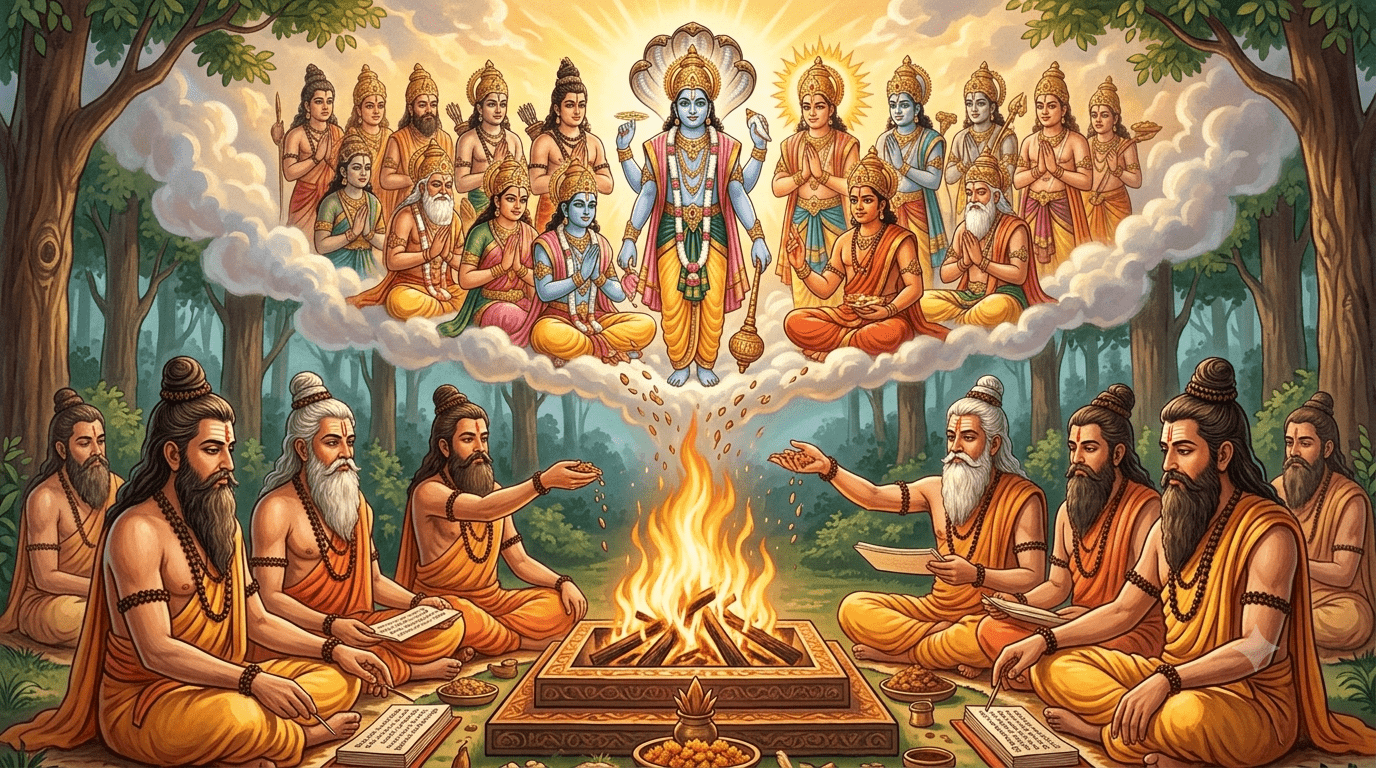
In the sacred tradition of the Rigveda, the venerable sage Shaunaka, together with the illustrious seer Grutsamada and his son Kurma, offered a profound prayer to the Viśvedevas. This hymn, composed in the majestic Triṣṭubh metre, combines poetic grandeur with philosophical depth. The Triṣṭubh chandas, with its measured rhythm and elevated cadence, was traditionally employed for solemn invocations and contemplations on cosmic truths. In this hymn, the sages approach the divine powers not merely as supernatural beings, but as embodiments of universal laws that govern the moral, natural, and spiritual order of existence.
The seers begin by addressing the Ādityas, the radiant deities who uphold truth, justice, and cosmic harmony. They declare, “O Ādityas, you stand under the solemn vow of truth.” In Vedic understanding, an oath is not a legal formality but an alignment with Ṛta, the infallible cosmic order. The Ādityas move swiftly through the universe, vigilant and all-seeing, ensuring that every action yields its corresponding result. Their speed symbolizes the instantaneous operation of natural and moral law, much like the precision with which scientific principles govern the visible and invisible worlds.
The sages employ a delicate metaphor: just as a woman brings forth her child in a secluded place, hidden from the gaze of others, so may the gods carry away human errors to a distant realm beyond sight and memory. This image reveals a subtle spiritual truth. Nature performs its most sacred transformations in silence. In the same way, divine grace removes sin inwardly and quietly, without spectacle. The prayer is not a request to escape responsibility, but a plea for purification and renewal.
Turning to Mitra and Varuna, the sages affirm their awareness of the gods’ benevolent acts and sacred ordinances. Mitra presides over friendship, trust, and social cohesion, while Varuṇa governs moral accountability and the hidden depths of conscience. Together they represent the twin foundations of civilization: mutual agreement and ethical restraint. The seers therefore approach them with full understanding, recognizing that true worship must arise from knowledge and sincerity rather than mechanical ritual.
They continue, “Hear our hymns of prayer.” In the Vedic worldview, sound is a creative force. Sacred utterance, when pronounced with devotion and precision, aligns human consciousness with cosmic vibrations. This reflects a scientific temperament as well: just as resonance in physics produces harmony between systems, mantra establishes resonance between the individual mind and universal intelligence. Prayer thus becomes an act of attunement rather than mere supplication.
The gods are praised as gracious, mighty, and destroyers of hostile forces. Yet the enemies referred to are not only external adversaries. They include false accusations, distorted perceptions, destructive thoughts, and moral weaknesses that obstruct the soul’s progress. The sages ask the deities to separate truth from falsehood and to defeat all forces that seek to diminish righteousness. This prayer recognizes that the greatest battles are often fought within the human heart.
The seers invoke divine blessings for both the present and the future, seeking enduring well-being rather than temporary gain. This reveals the Vedic understanding of time as a continuum in which present actions shape future consequences. Spiritual practice, ethical living, and disciplined thought become investments in the destiny of generations yet to come.
With touching humility, the sages confess, “O gods, we are weak. What rites can we adequately perform for you?” This admission reflects one of the deepest truths of Vedic spirituality: human effort alone is limited, and divine grace is indispensable. They ask what rituals are worthy of the ancient and inexhaustible wealth bestowed by the gods. Here wealth signifies not only material prosperity, but wisdom, health, virtue, and inner peace.
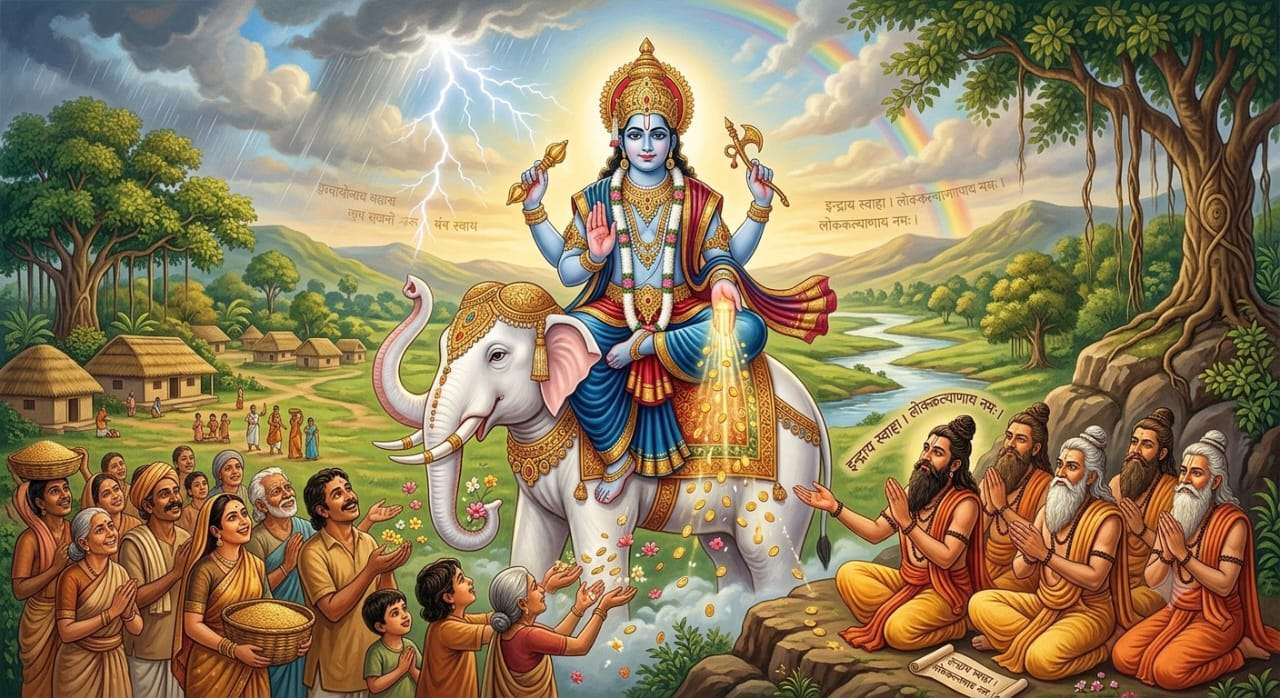
The prayer expands to include Indra, Aditi, and the Maruts. The sages ask them to shower auspiciousness as rain nourishes the earth. Rain in Vedic symbolism represents both physical sustenance and spiritual grace. Just as atmospheric cycles replenish the soil, divine blessings refresh the mind and awaken latent potential.
The gods are addressed as kinsmen. This intimate relationship is central to Vedic thought. The divine is not remote but deeply woven into the fabric of life. The sages pray that the celestial chariot may hasten to their yajña without delay. The chariot signifies the movement of divine energy into human consciousness. When higher forces enter the field of sacrifice, the heart is filled with joy and the community is strengthened.
The seers recall that the gods guide humanity as a father instructs his son. This tender comparison emphasizes that divine law is not oppressive but educative. Like a loving parent, the gods impart wisdom, discipline, and protection. Through their instruction, the mortal is gradually separated from sin and ignorance, moving toward freedom and self-knowledge.
A striking image follows: a hunter strikes a bird before its helpless young. The sages implore the gods not to treat them with such mercilessness. The metaphor conveys the anguish of children deprived of their parents and the fragility of family life. It reveals the Vedic reverence for domestic stability and the duty to preserve life for the welfare of future generations.
Though conscious of fear and human inadequacy, the worshippers ask for a place in the hearts of the gods. To dwell in the divine heart means to live under the shelter of truth and compassion. They pray not to become prey to wolves—symbols of predatory forces, whether human, psychological, or environmental. The request is universal: “Do not hand us over to those who seek our harm.”
Finally, the hymn turns to King Varuṇa, guardian of moral order. The sages pray that they may never be compelled to reveal their poverty before a wealthy donor. This is not merely a request for material security; it is a plea for dignity and self-sufficiency. They ask for sufficient resources to sustain righteous living, so that they, together with their children and grandchildren, may continue to chant the sacred hymns and preserve the continuity of spiritual culture.
This sublime Vedic prayer unites humility, ethical aspiration, social concern, and metaphysical insight. It teaches that true prosperity consists in freedom from sin, protection from injustice, harmony in family and society, and the capacity to transmit sacred wisdom across generations. Its scientific temperament lies in its recognition that the universe operates according to immutable laws and that human flourishing depends upon conscious alignment with those laws. By invoking the Viśvedevas, the sages affirm that the cosmos is not chaotic but ordered, compassionate, and responsive to sincere prayer.