MS Sparsha
History often celebrates famous scientists, groundbreaking inventions and spectacular discoveries. Yet, some of the most consequential agricultural revolutions begin with an ordinary act of courage — the refusal to discard something whose potential others cannot see.
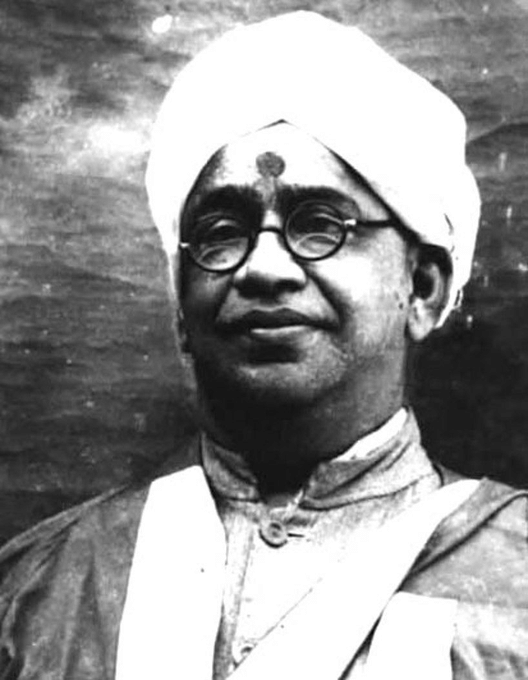
In Coimbatore, Tamil Nadu, a Tamil Brahmin scientist named Tiruvadi Sambasiva Venkatraman once refused to let his superior throw away a tray of seemingly worthless seedlings. That decision helped transform India’s sugarcane cultivation, strengthened sugar industries overseas and eventually carried Coimbatore-bred canes to 22 countries.
The story began when India depended heavily on imported sugar from Java. Improving domestic sugarcane varieties was therefore not merely a scientific challenge; it was an economic necessity.
Charles Barber, the Government Sugarcane Expert, and his assistant, Venkatraman, embarked on an ambitious experiment. Their objective was to cross the high-sugar-content Saccharum officinarum, commonly called noble cane, with Saccharum spontaneum, a hardy wild grass growing near their research campus. The hope was to combine the sweetness of cultivated cane with the resilience of its wild relative.
The first year’s seedlings all perished. The following year, while Barber was touring northern India, Venkatraman raised another batch in an ordinary field bed. Among them, he noticed a few unusual seedlings that appeared different from the rest.
He sent Barber a telegram.
Barber hurried back, examined the plants and dismissed them as grass. Feeling that the experiment had produced nothing worthwhile, he ordered the seedlings destroyed. For him, they were a failed scientific exercise. For Venkatraman, they represented a possibility that deserved another chance.
He stood his ground.
Eventually, Barber agreed to spare the seedlings on one condition: Venkatraman would have to nurture them without spending even an hour of official working time on the effort. It was hardly an endorsement, but it was enough. Venkatraman continued to tend the plants.
A few months later, the supposedly worthless seedlings developed recognisable sugarcane joints. What had been dismissed as grass was, in fact, the beginning of something extraordinary.
The cross involved Vellai, a noble cane, and wild Coimbatore Saccharum spontaneum. It produced Co 205, released in 1918. The variety proved exceptionally productive in Punjab, yielding approximately 50 per cent more than the local canes. Within six to eight years, it had largely replaced the older varieties there.
A modest tray of seedlings had helped change the economics of sugarcane cultivation.
Barber retired the following year, but Venkatraman continued at the Coimbatore research station until 1942. The work did not end with Co 205. The varieties developed through the station’s breeding programme would go on to influence sugar production far beyond India’s borders.
South Africa provided a striking example. When streak disease threatened its Uba cane, Co 281 was sent from Coimbatore and helped replace the affected variety. In 1938, seed from Venkatraman’s cross involving Co 421 and Co 312 was sent to Natal. One resulting seedling became NCo 310.
Released in 1945, NCo 310 went on to become a landmark variety. Within a decade, it accounted for more than half of South Africa’s sugar production. By the 1960s, Coimbatore-bred sugarcanes were being cultivated in 22 countries.
Venkatraman’s achievement reminds us that scientific progress requires more than laboratories, equipment and official recognition. It requires the patience to observe, the courage to question authority and the conviction to defend a promising idea when established opinion dismisses it.
He did not need a dramatic breakthrough or a celebrated moment to change agricultural history. He simply refused to destroy what he believed deserved to live.
Those seedlings survived because one scientist looked beyond appearances. Their legacy travelled from Coimbatore to Punjab, Natal and far beyond, helping farmers produce more sugar and reshaping an industry across continents.
In the history of agricultural science, Venkatraman deserves recognition not merely for the varieties he helped develop, but also for the judgement and persistence that allowed them to emerge.
Sometimes, a revolution begins not when someone discovers something new, but when someone refuses to throw it away.