Lakshmanrao Upadhyayula
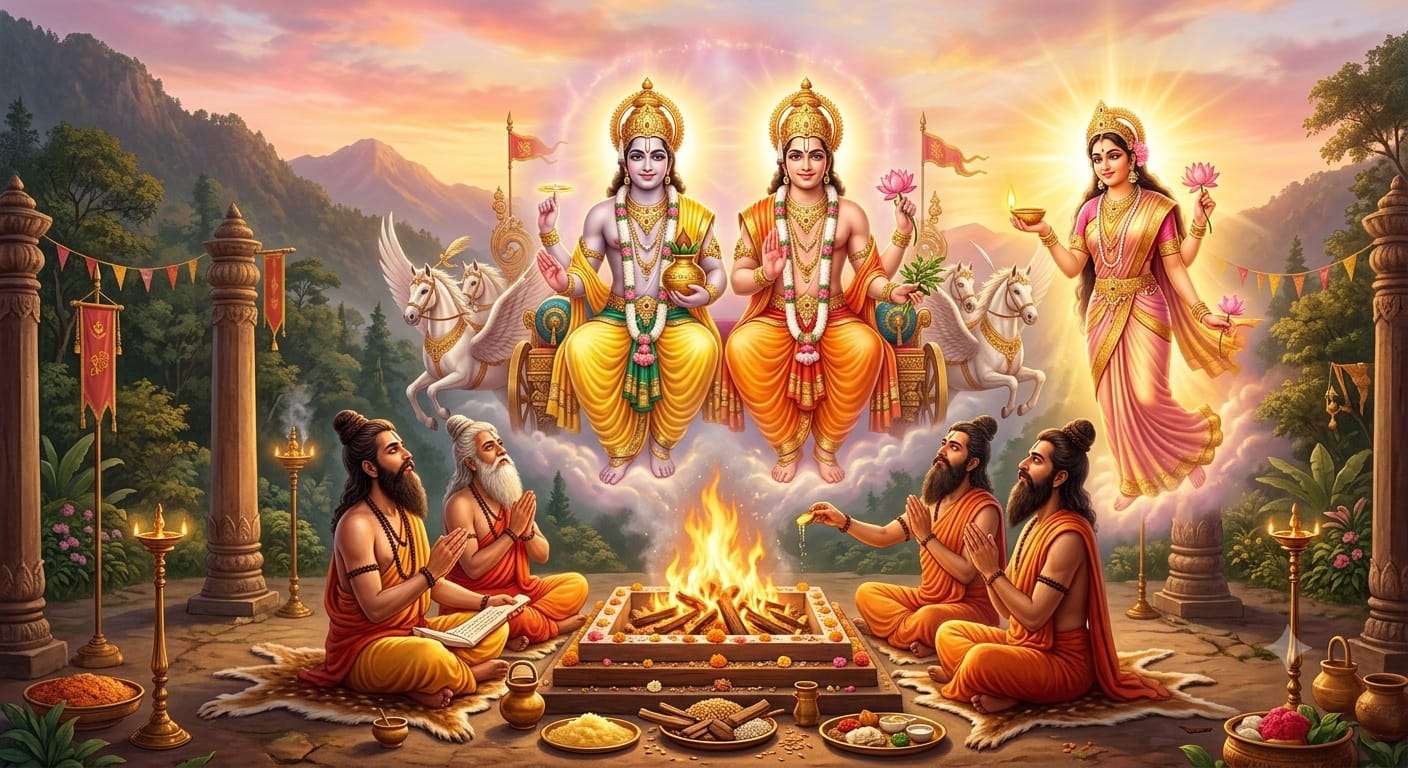
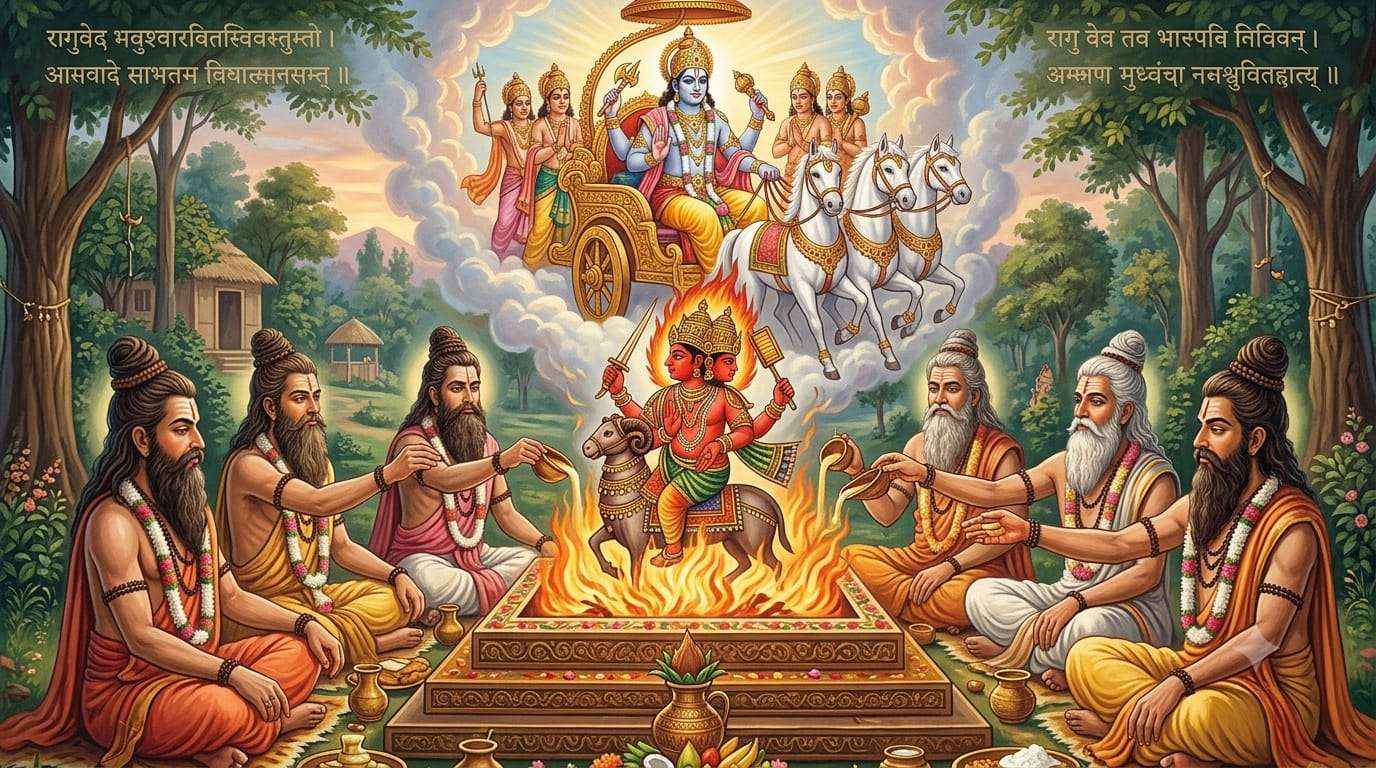
The illustrious sage Vishwamitra, endowed with profound spiritual insight and luminous intelligence, raised his sacred invocation to the divine powers of Agni and Indra through the exalted cadence of the Gayatri Chandas found within the eternal hymns of the Rigveda. In the stillness of the sacrificial atmosphere, where the fragrance of clarified butter mingled with the rising smoke of consecrated fire, the sage called upon these cosmic deities with reverence, wisdom, and unwavering devotion. The Soma essence, mystically prepared in the celestial realms and ritually purified by sacred discipline, was offered as the divine nourishment worthy of the gods alone. Vishwamitra prayed that Agni and Indra might graciously descend into the yajna, recognise the sincerity of human aspiration, and partake of the immortal Soma, the luminous elixir symbolising spiritual exhilaration, expanded consciousness, and divine communion.
The sacred Soma was not merely a ritual beverage but a profound symbol of inner illumination and transcendental vitality. In Vedic understanding, Soma represented the subtle ecstasy experienced when the human mind became harmonised with cosmic truth. Thus the sage described it as the sustaining force behind noble undertakings and righteous yajnas performed by enlightened priests. It was believed to awaken refined perception, elevate the senses toward purity, and inspire higher states of contemplation. The preparation of Soma reflected remarkable scientific temperament within Vedic civilisation, for every stage of the ritual embodied disciplined observation, precision, purification, rhythmic chanting, and harmonious coordination between nature and consciousness. The sacrificial arena thereby became both a spiritual observatory and a laboratory of divine energies where matter, sound, mind, and cosmic order interacted in sacred unity.
Agni and Indra, invoked together throughout the hymn, symbolised complementary principles governing both the outer universe and the inner human being. Agni represented transformative fire, the carrier of offerings, the principle of energy, illumination, and disciplined aspiration. Indra embodied dynamic strength, atmospheric power, victorious intelligence, and the force that shattered obstruction. When united, these two deities reflected the Vedic perception that spiritual progress required both luminous wisdom and courageous action. Inspired by the invigorating Soma within the yajna halls, they were believed to bestow blessings upon generous patrons who upheld dharma through sacrifice, charity, and devotion. The sage therefore invited them repeatedly to drink the Soma and become satisfied, for divine satisfaction symbolised cosmic harmony descending upon the earthly realm.
The hymn further glorified Indra and Agni as unconquerable destroyers of hostile forces and victorious eliminators of the mighty Vritra, the dark power that obstructed the life-giving waters. In Vedic symbolism, the battle against Vritra represented not merely a mythological conflict but the perpetual struggle against ignorance, stagnation, fear, drought, and the limitations that imprison human consciousness. By overcoming such forces, Indra and Agni restored movement, fertility, rain, and spiritual awakening to the world. The sage humbly appealed to these victorious powers to grant abundant nourishment and prosperity, recognising food itself as sacred energy sustaining life and ritual continuity. In this prayer, material well-being and spiritual elevation were never seen as separate realities but as interconnected expressions of cosmic balance.
The people sanctified through mantra and disciplined worship gathered with profound reverence around the sacrificial fire, understanding that sacred speech possessed transformative potency. Vedic seers perceived sound as a creative vibration woven into the fabric of existence itself. Every mantra, uttered with precision of tone and purity of intention, was believed to harmonise the human mind with universal rhythms. Thus Vishwamitra declared his own worship of Indra and Agni for the attainment of food, vitality, and divine favour, acknowledging that all prosperity ultimately emerged from alignment with cosmic order. The yajna therefore functioned not merely as external ritual but as an inner process of refining thought, speech, and action.
The hymn vividly recalled the mighty deeds of Indra and Agni, whose united force shattered the ninety strongholds of the Dasyus, the powers opposed to light and sacred order. These fortified dwellings symbolised layers of ignorance, selfishness, and spiritual resistance that hindered the ascent of truth within humanity. The imagery reflected the Vedic conviction that divine intelligence and disciplined energy possess the capacity to overcome even the most deeply entrenched darkness. Simultaneously, the priests spread themselves in all four directions according to the ordained pathways of yajna, symbolising the expansion of sacred knowledge across the entire cosmos. Their ritual movements revealed a sophisticated awareness of spatial harmony, directional symbolism, and cosmic interconnectedness deeply embedded within Vedic science and spirituality.
The sage finally proclaimed the inseparable relationship between strength, nourishment, rain, and divine cooperation. Indra and Agni together governed the release of rain, the fertility of earth, and the sustaining energies of existence. The Vedic seers possessed acute observation of natural phenomena and understood the dependence of civilisation upon atmospheric balance, seasonal rhythms, and ecological harmony. Hence the gods were praised not merely as supernatural beings but as manifestations of universal principles operating through nature itself. Agni shone as terrestrial and sacrificial fire, while Indra ruled the celestial atmosphere and thunderous rains. Their radiant splendour adorned the heavens and revealed itself gloriously upon the battlefield where victory arose through courage, discipline, and divine alignment.
Thus the hymn of Vishwamitra stands as a magnificent confluence of devotion, philosophy, natural observation, and spiritual psychology preserved within the sacred heritage of the Rigveda. Through poetic brilliance and contemplative depth, the sage transformed the yajna into a sublime bridge between humanity and the cosmos. Every invocation carried layers of symbolic meaning, scientific sensitivity, ethical aspiration, and mystical insight. The prayer to Agni and Indra therefore continues to illuminate the timeless Vedic vision wherein divine forces, natural laws, disciplined intellect, and spiritual awakening exist not as separate realities but as harmonious expressions of one eternal truth.