Lakshmanrao Upadhyayula
The venerable sage Śaunaka Gṛtsamada, endowed with profound spiritual insight, raised his voice in adoration to the radiant Maruts through a majestic hymn composed in the Jagatī and Triṣṭubh metres of the Rigveda. These metres, stately and sonorous, were chosen to match the grandeur of the deities invoked. The Maruts, the resplendent sons of Rudra and born of the celestial mother Pṛśni, are the divine powers that animate storms, winds, lightning, and rain. In the Vedic vision, they are not merely atmospheric phenomena, but conscious cosmic intelligences that sustain the harmony of the universe.
The Maruts are described as moving through the heavens veiled in streams of water. This poetic image evokes the gathering of rain-bearing clouds across the sky. Their force is irresistible; their vigor overcomes all opposing powers. Fierce as untamed beasts and swift as warriors charging into battle, they spread throughout the worlds by their own inherent energy. Their brilliance flashes like sacred fire, and they carry within themselves the waters of life. They direct the movements of multitudes, stir the atmosphere into action, and release nourishing rains upon the earth.
Golden-hearted and adorned with celestial ornaments, the Maruts embody both beauty and strength. Their birth from Pṛśni, the many-hued cosmic mother symbolizing the fertile cloud, reveals the Vedic understanding that life emerges from the union of luminous energy and fecund matter. Their ornaments glitter like stars, and their lightning flashes across the sky with sudden radiance. They destroy hostile forces and inspire the descent of rain, shining in the cloud like electric fire that illuminates and purifies.
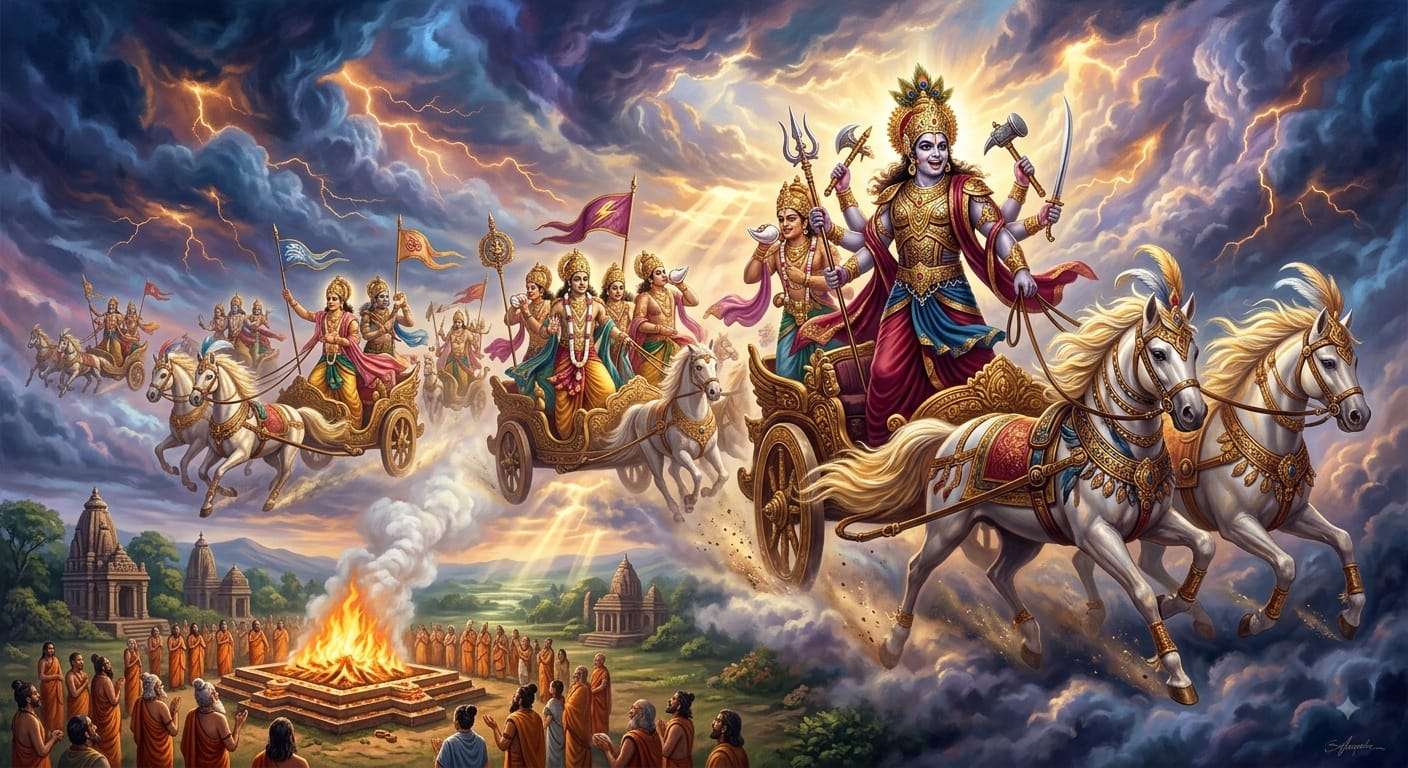
Like noble steeds upon a battlefield, the Maruts traverse the vast expanse of the universe. Mounted upon swift horses and sometimes upon spotted deer, they move with astonishing speed through thunder and cloud. Their golden crowns and gleaming adornments signify the splendor of natural law. Equal in ardor and united in purpose, they shake trees and mountains, stirring all of nature into motion. Yet they are also drawn to sacrificial offerings, arriving at the sacred altar to receive the devotion of the worshipper.
As loyal companions, the Maruts hasten to those patrons who prepare their oblations with reverence and purity. Born, as it were, from the power of sacred hymns, they respond to the invocations of the priests and partake of offerings refined by ritual discipline. Just as well-nourished cows yield abundant milk, so the sacrifice enriches the patron with food, vitality, and prosperity. The Maruts transform devotion into tangible blessings, filling life with strength and abundance.
The sage prays that the Maruts may bestow a worthy son—one capable of earning his sustenance, preserving the sacred tradition, and chanting hymns whenever the gods are invoked. He asks that priests be granted sufficiency, courage, and undiminishing strength. In times of battle, whether external or inward, they are to be endowed with generosity, skill, steadfastness, and immense power. Thus the Maruts become guardians of both spiritual wisdom and worldly success.
The chests of the Maruts shine with sparkling ornaments, symbols of their luminous and beneficent nature. They provide abundant food and nourishment to the sacrificer. Their blessings descend swiftly, as quickly as a cow lets down milk for her calf when it approaches. This vivid comparison reveals the immediacy of divine grace: when the human heart approaches with sincerity, the response of the cosmic powers is spontaneous and generous.
The hymn also recognizes the existence of hostile forces—those men who, like wolves, harbor enmity and seek to harm the righteous. The sage invokes the Vasus and the Maruts for protection from such tormentors. Through the wheel of austerity and spiritual discipline, may these adversaries be scattered in all directions. O hosts of Rudra, cast down their weapons and reveal before all beings the astonishing power by which truth overcomes falsehood.
When the Maruts churned the upper regions of Pṛśni, they dispelled those who reviled the priests and the sacred hymns. This imagery portrays the turbulence of storm clouds and, at a deeper level, the stirring of consciousness that destroys ignorance and hostility toward divine wisdom. The deeds of the sons of Rudra are unique, for they cleanse both the atmosphere and the mind.
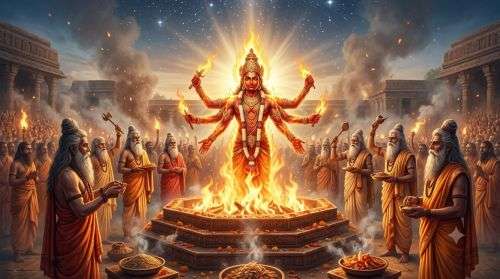
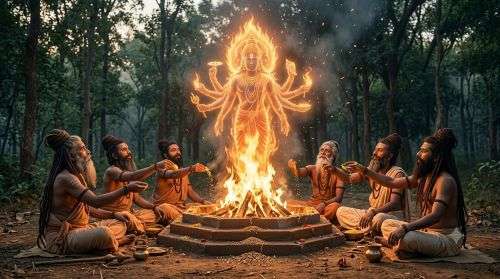
The auspicious Maruts are ever drawn to the sanctified precincts of sacrifice. When the Soma is prepared and the clarified butter is poured with the wooden ladle, the priests invoke these celestial beings to bestow wealth and enduring prosperity. As dwellers in heaven, they bridge the realms of gods and men, carrying offerings upward and blessings downward.
According to ancient tradition, the Angirasas were the first to perform the primordial sacrifice. At the appearance of Uṣas, the rosy dawn, the Maruts engage humanity in sacred activity. Uṣas dispels the darkness of night with her crimson rays, while the Maruts, radiant and vast, illuminate the heavens with lightning and release the life-bearing waters. The first sacrifice thus symbolizes the awakening of consciousness at daybreak, when the universe renews itself in light and order.
The Maruts, sons of Rudra, are celebrated as flourishing in music, especially in the harmonious strains of the vīṇā. Their reddish splendor is reflected in the glowing clouds that hold the waters. They abound in strength, beauty, and grace. Since water is the sustaining essence of life, the Maruts are revered as guardians of vitality, fertility, and natural balance. The worshipper therefore prays for their colorful and manifold riches, and seeks their protection through the chanting of Vedic hymns.
The hymn further alludes to the threefold energy, or Trita, who leads the Maruts in their cosmic functions. They bear the discus-like wheel, symbol of cyclical motion and divine power. They are worshipped by the five priests within the human body: prāṇa, apāna, vyāna, udāna, and samāna—the five vital currents that sustain life. In this inner interpretation, the Maruts are the dynamic forces that govern respiration, circulation, transformation, and consciousness.
Finally, the sage implores the Maruts to provide shelter to the patron of the sacrifice. May they protect him from sin, preserve the priests from the grasp of enemies, and release all seekers from the bonds of fear and adversity. Thus the hymn reveals the Maruts as both cosmic and psychological powers: they govern storms in the heavens and energies within the human being. To invoke them is to harmonize oneself with the luminous forces of nature, to receive strength, abundance, and wisdom, and to participate in the eternal rhythm by which the universe is sustained.