Lakshmanrao Upadhyayula
The revered sage Śaunaka Gṛtsamada, illumined by Vedic insight, invokes the divine Aśvins in the majestic Triṣṭubh metre of the Rigveda. These twin deities, known also as Nāsatyā and Dasrā, are among the most beloved gods of the Vedic seers. They are the celestial physicians, the swift rescuers, and the bringers of harmony between heaven and earth. Their approach is likened to the united strength of the cosmos itself, for they embody the cooperative forces that sustain life, motion, and healing throughout the universe.
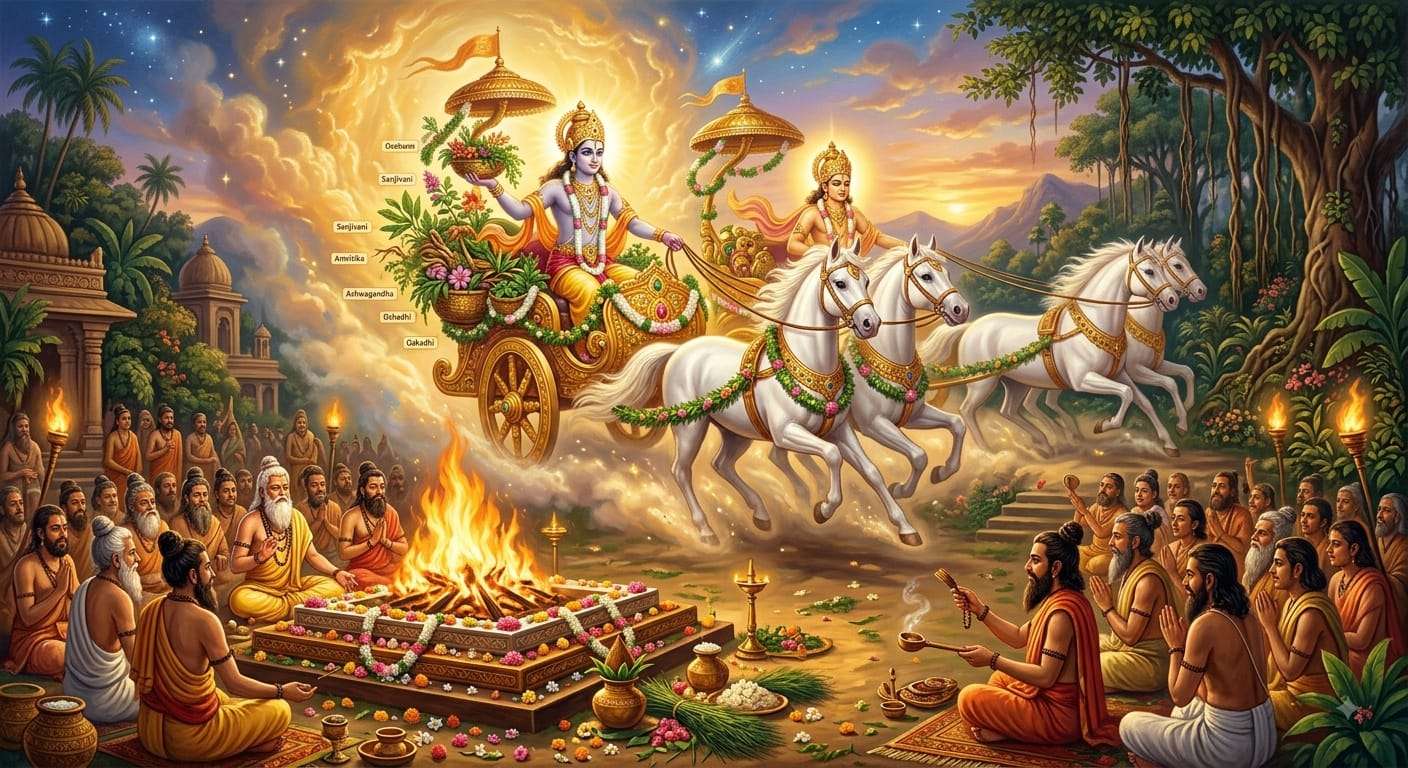
The Aśvins are described as two birds descending gracefully upon a tree, a beautiful image of divine beings alighting upon the sacred altar where the yajamāna, the patron of the sacrifice, awaits them with reverence. They are also compared to learned priests chanting mantras in perfect cadence and to royal messengers who faithfully carry the commands of a king. These metaphors reveal their role as intermediaries between the mortal and the divine, welcomed alike by priests, patrons, and all assembled participants in the yajña.
Like twin charioteers who herald the dawn, the Aśvins arrive at the threshold between darkness and light. Their chariot, celebrated throughout the Rigveda, symbolizes the dynamic movement of time and consciousness. They are heroic in every aspect of their nature. Like two mountain goats, they move in perfect coordination over difficult paths; like two radiant maidens, they charm the eye with beauty and grace; like a devoted couple, they remain inseparable in purpose and affection. Thus the hymn celebrates both their strength and their harmony.
The Aśvins are sovereigns of the sacred rite and benefactors of all humanity. The sage earnestly entreats them to come to the devotee as a ship carries travelers safely across perilous waters. In this profound symbol, life is seen as an ocean of uncertainty, and the divine twins become navigators who guide the soul to the far shore of well-being and wisdom. They are compared to the essential parts of a chariot—its axles, spokes, and wheel-rims—without which motion would be impossible. Scientifically, this imagery reflects the Vedic understanding that every system depends upon the balanced interaction of interconnected components.
As vigilant as two faithful dogs guarding their master, the Aśvins are implored to protect the human body from suffering, decay, and premature old age. As bodyguards preserve a king, so do these deities shield the devotee from disease and infirmity. Their healing power is renowned in Vedic lore, where they restore youth to the aged, sight to the blind, and movement to the lame. In spiritual terms, they protect not only the physical frame but also the vitality of the mind and the purity of the heart.
The hymn further compares them to twin winds that never tire and to two rivers flowing swiftly toward their destination. Wind signifies prāṇa, the life-force that animates all beings, while rivers symbolize the uninterrupted stream of nourishment and knowledge. They are also likened to two mantras made visible, indicating that divine principles become manifest through sacred sound and disciplined consciousness. Their movement through the cosmos reflects the scientific observation of natural forces operating with precision and continuity.
As hands and feet support the body, the Aśvins sustain human life and direct it toward prosperity and noble attainment. Like two lips, they speak words sweet with truth and blessing. Like the inexhaustible source of a mother’s milk, they nourish and sustain all creatures. As nostrils preserve breath and ears receive sound, they protect life and hear the prayers of their worshippers. These comparisons reveal an integrated vision of physiology and spirituality, in which every bodily function mirrors a cosmic principle.
Like two skillful hands, the Aśvins grant efficiency, dexterity, and success in all righteous endeavors. Like Heaven and Earth, they bestow the life-giving waters essential to fertility and abundance. In Vedic thought, water represents both physical sustenance and the flow of consciousness. Thus the hymn acknowledges them as benefactors who nourish both material prosperity and inner illumination. All chants and invocations are lovingly directed toward these gracious deities.
The poet calls upon the Aśvins to sharpen their swords upon the cosmic wheel, symbolizing the refinement of divine power through disciplined motion. The sword signifies discriminative wisdom, and the wheel represents cyclical time and cosmic order. Through this vivid image, the sage prays that the Aśvins may cut away ignorance, adversity, and disease with their keen and luminous intelligence.
Śaunaka Gṛtsamada concludes his hymn with deep devotion, declaring that these sacred verses are composed for the delight and glorification of the divine twins. The Aśvins are cherished as compassionate lords, ever near to those who call upon them with sincerity. The sage prays that all these invocations may reach them, and that he, together with his children and grandchildren, may continue to chant these mantras in the sacred yajña, enjoying health, prosperity, and spiritual fulfillment across generations.
This hymn reveals the extraordinary poetic genius of the Vedic seers, who perceived no separation between nature, divinity, and human existence. Every metaphor is both spiritually profound and scientifically suggestive, illustrating principles of motion, balance, healing, and interconnectedness. In the Aśvins, the Vedic mind recognized the twin powers of cooperation and restoration, forever journeying through the cosmos to uplift those who invoke them with faith and understanding.