Lakshmanrao Upadhyayula
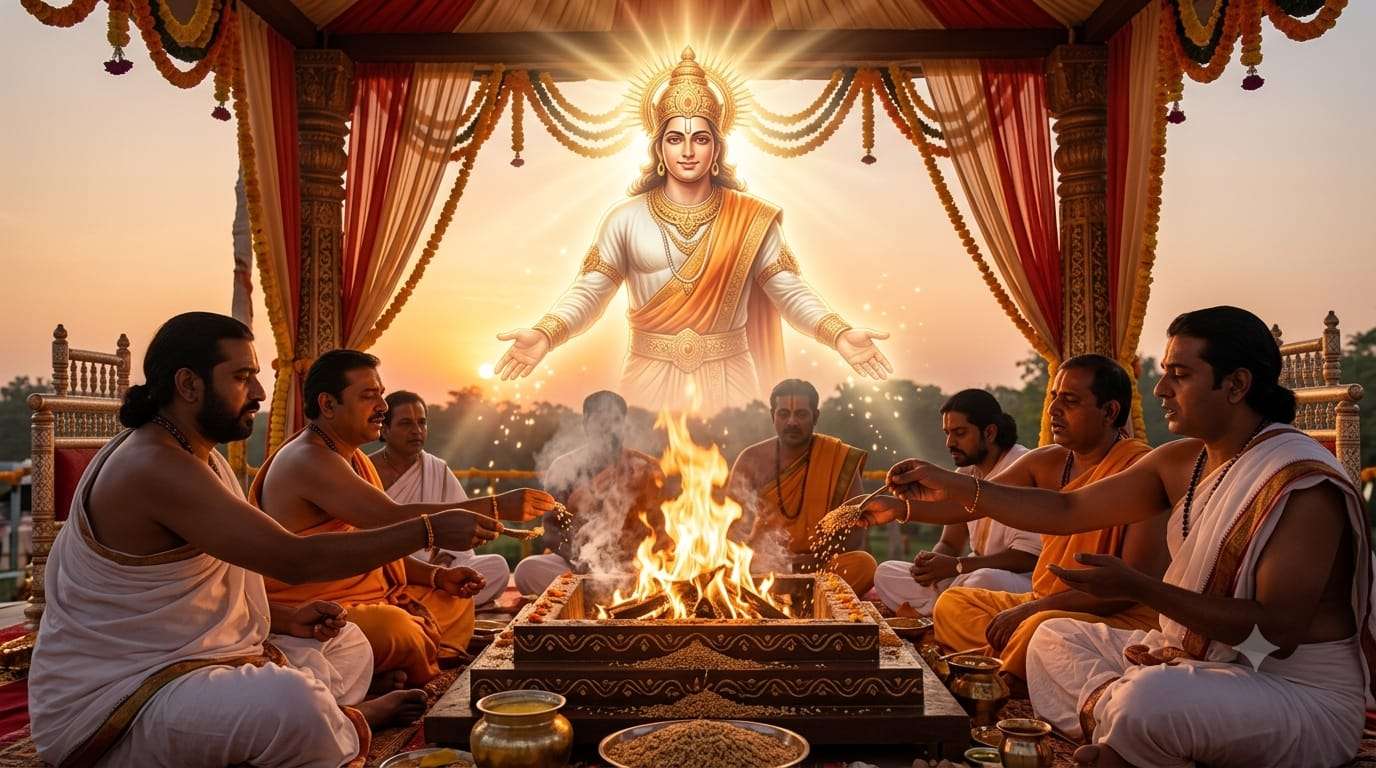
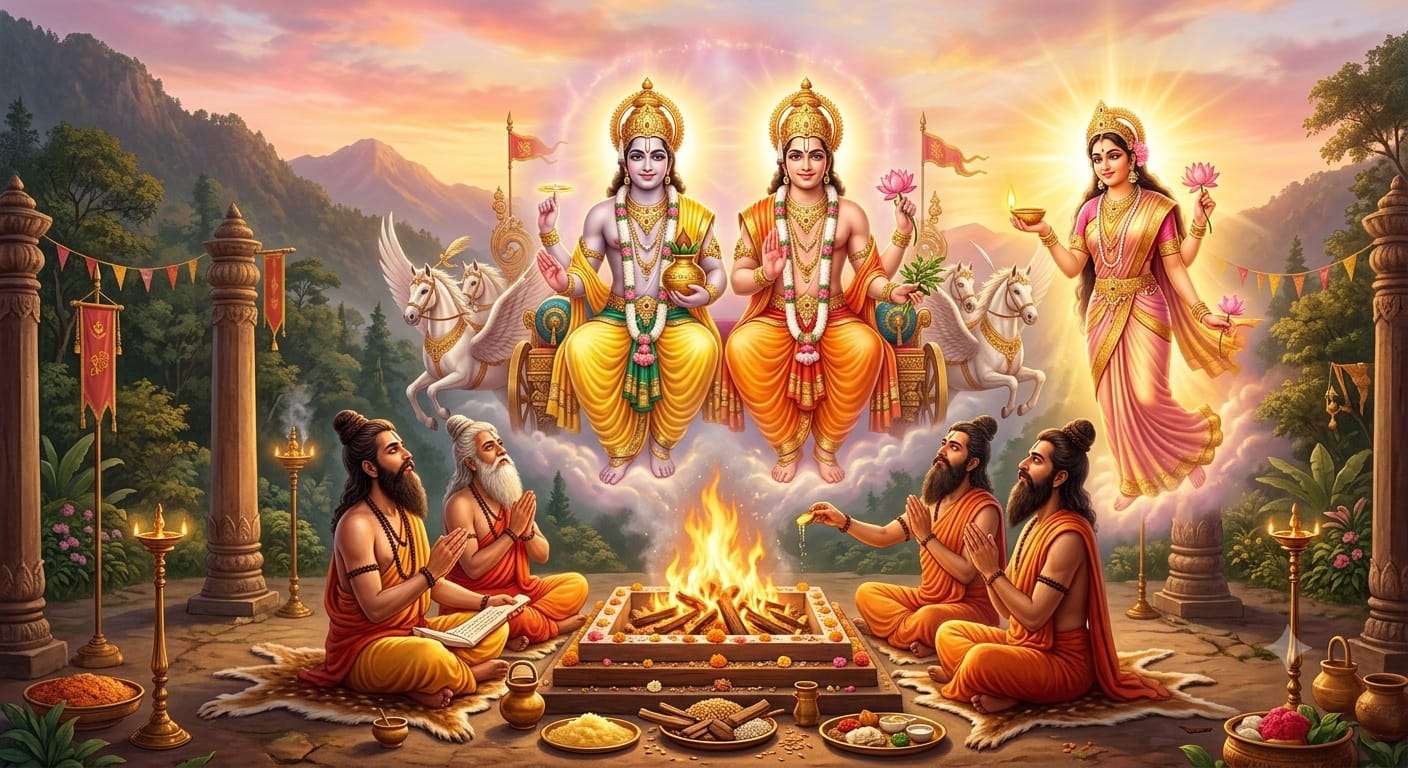
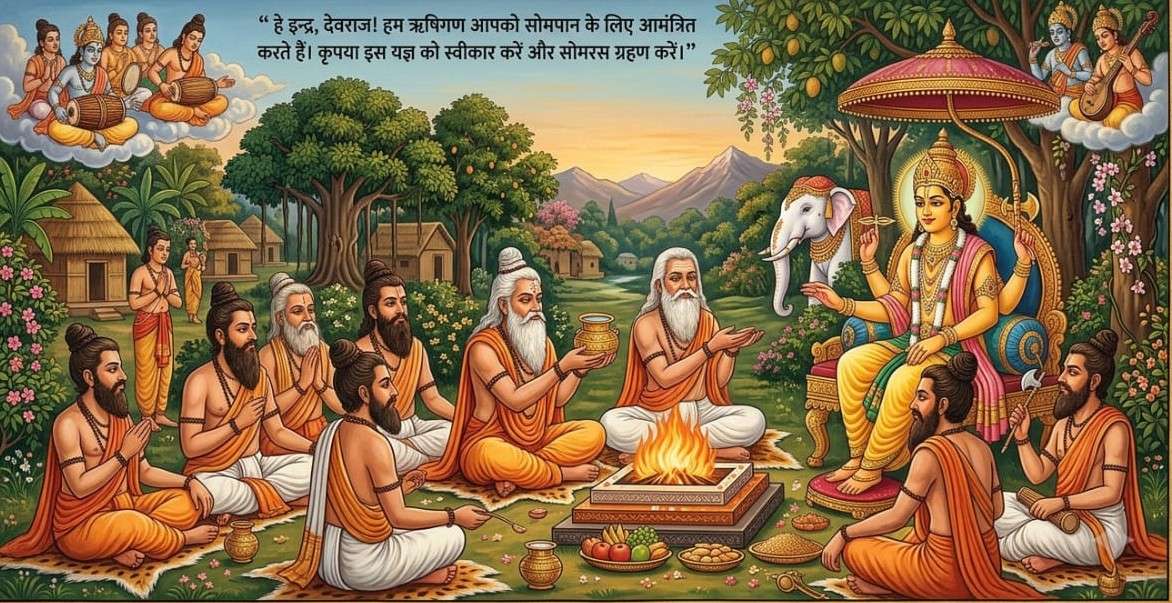
In the sacred Trishtubh hymns of the Rigvedic seers Ghora and Vishwamitra, a solemn invocation rises toward Indra, the mighty sovereign of celestial power. The sages call upon him to arrive accompanied by the Maruts, the radiant deities of wind and storm, whose dynamic energies symbolize movement, vitality, and the forces of nature. The Soma, carefully gathered, pressed, filtered, and sanctified according to sacred injunctions, is prepared with reverence and devotion. The priests invite Indra to accept this divine elixir, which has been offered not merely as a ritual substance but as an expression of gratitude, faith, and communion between the human and the divine realms. Through sacred chants and offerings, the worshippers seek to establish harmony between earthly existence and cosmic order.
The Vedic tradition remembers that in ancient times the Soma offering bestowed upon Indra immeasurable vigor, brilliance, creativity, and greatness. Strengthened by Soma, he became the luminous champion who upheld righteousness and protected the worlds from chaos. Therefore the sages once again offer the purified Soma and humbly pray that Indra may accept it. They seek not only material prosperity but also a place in the heavenly realms and the grace that transcends mortal limitations. In this aspiration lies the profound Vedic understanding that ritual worship is ultimately directed toward spiritual elevation and the realization of higher consciousness.
The preparation of Soma itself reflects both spiritual symbolism and scientific temperament. The sacred creepers are gathered, pressed with stones, filtered through carefully prepared media, and purified repeatedly before being offered. This meticulous process demonstrates the Vedic appreciation for observation, refinement, precision, and disciplined practice. The transformation of the raw plant into a purified sacrificial offering mirrors the purification of the human mind through knowledge, discipline, and devotion. Just as the Soma is cleansed of impurities, the seeker strives to remove ignorance and cultivate inner illumination.
The sages remind Indra that both ancient and freshly prepared Soma are dedicated to him. They invite him to relish the offering with the same delight with which he accepted the sacred libations of former ages. The continuity of this ritual tradition symbolizes the eternal relationship between divine power and human aspiration. Through repeated acts of worship, each generation reconnects itself to the wisdom of its ancestors while renewing its own commitment to truth, righteousness, and cosmic harmony.
Indra is praised as stronger than the strongest and victorious over all hostile forces. In the Vedic vision, his battles are not merely physical conflicts but representations of the perpetual struggle between order and disorder, light and darkness, wisdom and ignorance. When empowered by Soma, his energy becomes so immense that earth, heaven, and the intermediate space seem unable to contain his magnificence. This imagery conveys the limitless potential of awakened consciousness. The strength of Indra symbolizes the extraordinary power that emerges when divine inspiration, disciplined action, and righteous purpose unite.
The hymns celebrate Indra as the generous donor of blessings, wealth, nourishment, and heroic excellence. His cows are described as overflowing with rich milk, representing abundance, knowledge, and sustaining prosperity. His gifts are incomparable because they arise from divine generosity rather than worldly accumulation. The sages therefore approach him with humility, seeking both material welfare and spiritual enrichment. Their prayers reveal the Vedic conviction that prosperity achieves its highest purpose when aligned with dharma and dedicated to the welfare of all beings.
A beautiful metaphor unfolds through the imagery of rivers rushing toward the distant ocean. Flowing tirelessly along their ordained paths, they converge into a vast and sustaining whole. Likewise, the purified Soma offerings prepared by the Adhvaryu priests move toward Indra through sacred rites and invocations. The priests collect, press, purify, and sanctify the Soma with disciplined care, employing their hands, chants, and ritual knowledge. As rivers fulfill their destiny by reaching the ocean, so every sacred action finds fulfillment when dedicated to the Divine. The comparison also reflects an early understanding of natural processes, revealing the Vedic tendency to perceive profound spiritual truths through careful observation of the natural world.
The hymns further describe Indra’s capacity to receive offerings from many sacrifices simultaneously. His stomach is poetically likened to a vast reservoir capable of containing the Soma offered in numerous rituals. This symbolism points to the omnipresence of divine consciousness, which transcends limitations of time and space. The narrative recalls how Indra first accepted Soma and sacrificial cakes known as Purodasha and thereafter defeated the mighty Vritra, the obstructer of life-giving waters. By overcoming this force of obstruction, he restored balance and distributed portions to the gods, thereby reestablishing cosmic order. The story signifies the victory of constructive energies over stagnation and the liberation of life-sustaining forces for the benefit of creation.
The sages therefore implore Indra to bestow riches swiftly, for he is acknowledged as the supreme lord of wealth and abundance. They ask for a share of his worshipful treasures, not merely in the form of material possessions but also as wisdom, strength, virtue, and enduring prosperity. They pray for long life extending through a hundred seasons, for noble and heroic descendants, and for the nourishment necessary to sustain righteous living. Such prayers reveal the Vedic ideal of a balanced life in which spiritual aspiration coexists harmoniously with family welfare, social responsibility, and material sufficiency.
Indra is finally praised as the guardian of food, nourishment, enthusiasm, and sacred learning. He is the friend of devotees, the protector of sacrifices, the inspirer of understanding, and the facilitator of the hearing and comprehension of the Vedas. Fierce against forces of disorder yet benevolent toward seekers of truth, he stands as a symbol of divine protection and guidance. The sages approach him seeking refuge, confident that the Lord who grants victory in battle also grants victory over ignorance, fear, and limitation. Through devotion, disciplined ritual, and enlightened understanding, they aspire to participate in the cosmic harmony that Indra upholds, thereby transforming both individual life and collective existence into expressions of divine order and sacred fulfillment.