Lakshmanrao Upadhyayula
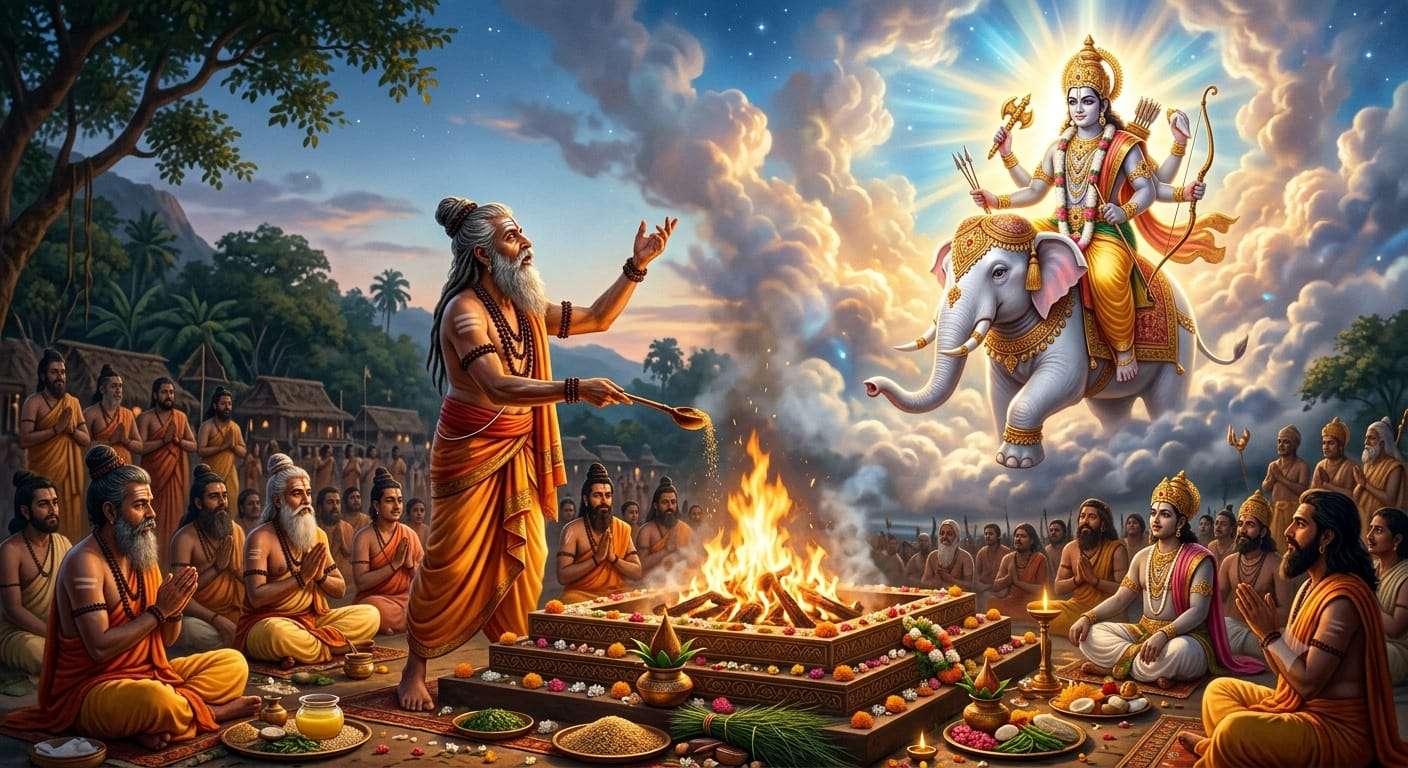
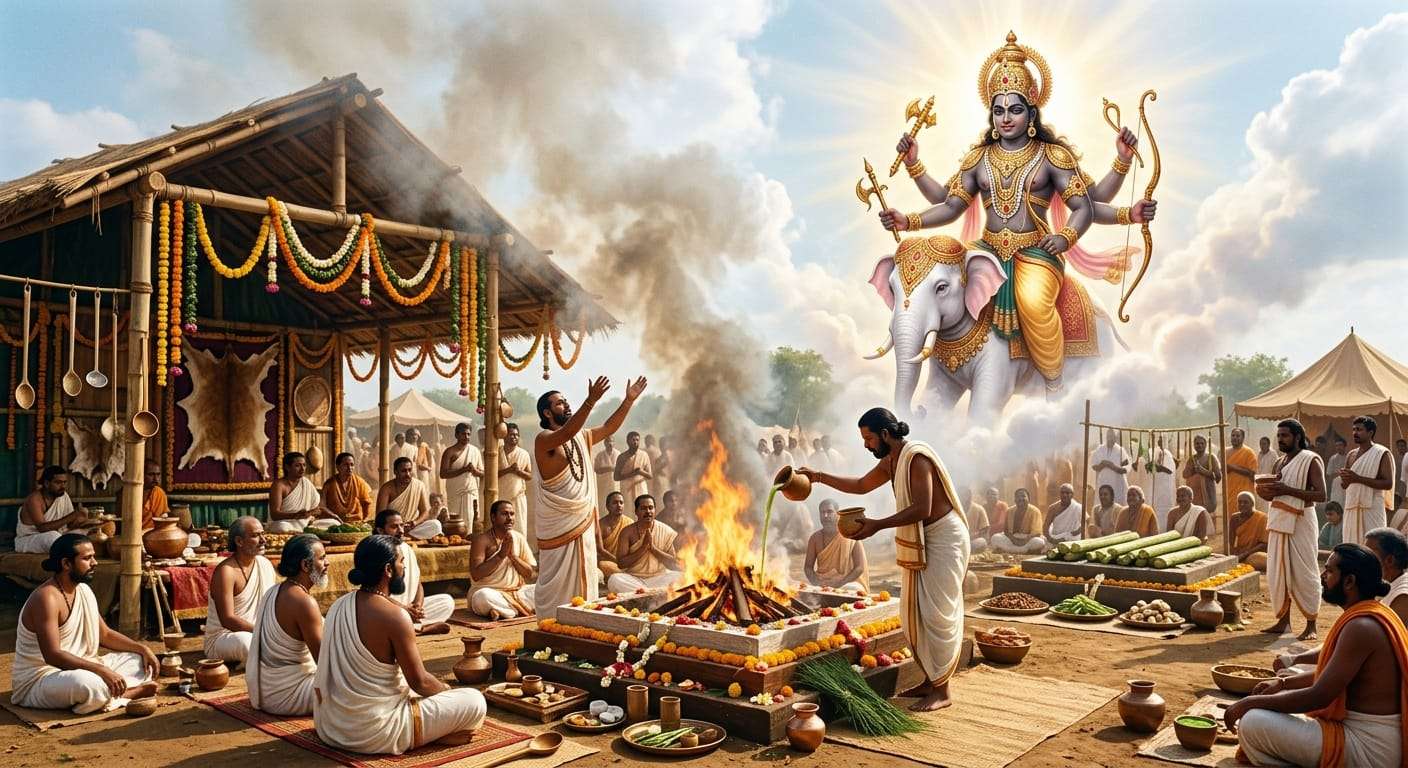
In this Trishtubh hymn of the Rigveda, the sages led by Vishwamitra invoke Indra during the sacred afternoon Soma ritual. The atmosphere is filled with reverence, devotion, and spiritual anticipation as the deity is invited to descend to the sacrificial ground and partake of the Soma, the divine elixir celebrated throughout Vedic literature as a source of vitality, inspiration, illumination, and immortality. Indra is praised as the resplendent lord of abundance, strength, and celestial sovereignty, whose presence sanctifies the sacrifice and blesses the worshippers with prosperity and protection.
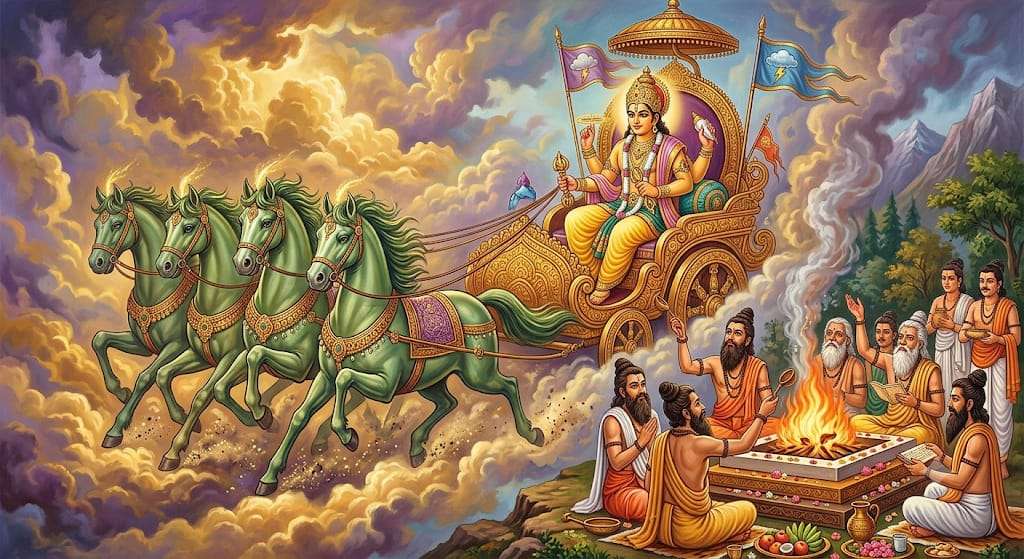
The hymn portrays Indra as the embodiment of united cosmic energies. The priests lovingly invite him to unharness the horses of his celestial chariot and allow them to graze peacefully beside the sacrificial enclosure. This symbolic imagery reflects the harmonious relationship between divine power and earthly life. The yajña is not merely a ritual offering but a sacred meeting point where cosmic forces, natural elements, divine beings, and human aspirations converge in mutual cooperation. The well-prepared offerings of clarified butter, sacred dairy products, and carefully pressed Soma express the gratitude of humanity toward the sustaining powers of the universe.
The Maruts and Rudras occupy a significant place in this sacred vision. The Maruts, associated with storms, winds, atmospheric movements, and dynamic energies of nature, are described as companions and supporters of Indra. They invigorate his strength, magnify his courage, and glorify his heroic deeds through hymns of praise. Their presence reveals a profound Vedic understanding that power arises not from isolation but from cooperation among various forces of nature. Spiritually, the Maruts symbolize energetic thoughts, disciplined actions, and collective effort. Scientifically, they may be viewed as poetic representations of meteorological forces that influence climatic patterns and rainfall.
The hymn recalls the celebrated victory of Indra over the serpent-demon Vṛtra. Vṛtra is depicted as the force that obstructs the waters and restrains the natural flow of life. Through the assistance of the Maruts, Indra discovers the hidden strongholds of Vṛtra and destroys them with his thunderbolt, the Vajra. As a result, the imprisoned waters are released and rain nourishes the earth. Spiritually, this victory symbolizes the triumph of wisdom over ignorance, movement over stagnation, and awakening over inertia. From a scientific perspective, the imagery beautifully reflects ancient observations of seasonal storms, atmospheric pressure changes, thunderclouds, and the arrival of life-giving rains after prolonged drought.
Indra is repeatedly invited to drink Soma in the company of the Maruts and Rudras. The Soma offering represents much more than a physical substance. In Vedic thought, it signifies exalted consciousness, inspiration, vitality, and divine joy. By offering Soma, the sacrificers seek alignment with cosmic order and aspire to awaken higher states of awareness. The ritual demonstrates the Vedic belief that human beings can elevate themselves through disciplined action, sacred speech, contemplation, and harmonious participation in the rhythms of nature.
The hymn celebrates Indra as the bringer of rain and fertility. The moving Maruts are requested to stimulate the waters of the atmosphere so that they may descend upon the earth. Indra is praised for releasing the waters after destroying the slothful and brilliance-deprived Vṛtra. Like a victorious horse charging through battle, he liberates the life-sustaining streams that nourish plants, animals, and human communities. This imagery reveals the intimate connection that Vedic society perceived between divine activity and natural processes. Rain was understood not merely as a meteorological event but as a manifestation of cosmic harmony and divine benevolence.
The grandeur of Indra transcends the limits of earth, atmosphere, and heaven. The hymn declares that neither terrestrial nor celestial realms can confine his glory. Even the assembled gods cannot diminish the power of his righteous actions and adherence to cosmic order. Here Indra emerges as a symbol of the universal principle that sustains balance throughout creation. His greatness lies not merely in physical strength but in his unwavering support of Ṛta, the eternal law that governs the cosmos.
The sages further praise Indra as the creator and sustainer of luminous phenomena such as the Sun and the Dawn. By bringing forth light, he dispels darkness and establishes the conditions necessary for life and knowledge. Spiritually, the Sun represents enlightenment and truth, while Dawn signifies awakening and new beginnings. Scientifically, these poetic descriptions reflect the deep fascination of Vedic observers with celestial cycles, solar movements, and the regular recurrence of natural phenomena that sustain life on earth.
The hymn recalls Indra’s divine birth and his immediate participation in the celestial order. Upon entering the vast heavens, he drinks Soma and assumes his role as a guardian of creation. Numerous manifestations emerge through his presence, indicating that cosmic evolution unfolds through the activation of divine energies. This portrayal reflects a sophisticated Vedic vision in which creation is not a single event but an ongoing process of emergence, transformation, and renewal.
The yajamāna, or patron of the sacrifice, seeks Indra’s protection and assistance. The priests pray that the Vajra be strengthened to overcome hostile forces and safeguard the righteous. The ancient seers understood enemies not only as external adversaries but also as internal obstacles such as fear, ignorance, selfishness, and disorder. Thus, the hymn serves as both a prayer for physical security and a call for inner discipline. Through devotion, sacrifice, and wisdom, individuals cultivate the strength necessary to overcome challenges in every sphere of life.
The concluding portions of the hymn express profound trust in Indra’s protective presence. Whenever difficulties arise, the worshippers turn to him with faith and sincere prayer. Just as people stranded on opposite shores call for a boatman to guide them across dangerous waters, families and communities seek Indra’s assistance in navigating life’s uncertainties. The sacred exclamation “Svāhā” accompanies the offering of Soma, symbolizing complete dedication and surrender to divine order. The overflowing vessel of Soma becomes a symbol of inexhaustible spiritual abundance, divine grace, and cosmic nourishment.
The hymn finally portrays Indra as unconquerable and infinitely expansive. Neither vast oceans nor hidden forces beneath them can obstruct his movement. He is the giver of food, nourishment, wealth, courage, leadership, and victory. He protects those who seek refuge in righteousness and rewards those who uphold sacred duties. Through magnificent poetic imagery, the hymn unites spirituality, natural observation, ethical values, and cosmic philosophy into a single vision. It reveals a civilization that viewed the universe as an interconnected whole, where divine intelligence, natural phenomena, human effort, and moral responsibility function together in harmonious balance. In this way, the hymn remains a timeless testimony to the spiritual depth and scientific temperament of Vedic thought, celebrating Indra as the dynamic force that transforms chaos into order, drought into abundance, and limitation into limitless possibility.