Lakshmanrao Upadhyayula
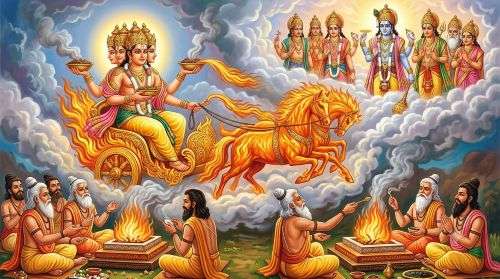
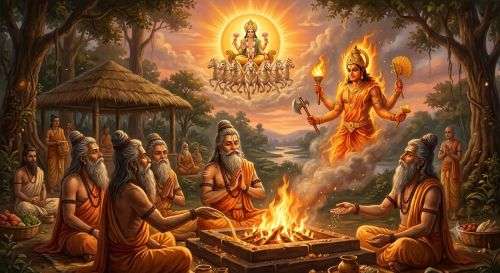
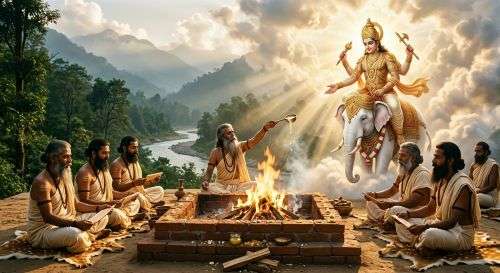
Among the profound hymns of the Rigveda, the prayers of Sage Vāmadeva addressed to Lord Indra stand as magnificent expressions of devotion, wisdom, and spiritual insight. Composed in the dignified Triṣṭubh metre, these hymns reveal Indra not merely as the heroic deity of thunder and rain but as the guardian of cosmic order, the protector of righteousness, and the divine force that sustains both nature and humanity. Every invocation combines poetic beauty with philosophical depth, presenting a vision in which material prosperity, moral integrity, and spiritual enlightenment coexist harmoniously.
The sage begins by inviting Indra, who is strengthened by Soma and established in eternal truth, to graciously approach the sacred sacrifice. His swift celestial horses are respectfully welcomed, anointed, and honoured, symbolizing the purification of the senses and the readiness of the human mind to receive divine wisdom. The hymns offered by the worshippers are not mere words but sincere expressions of devotion intended to establish a living communion between humanity and the Divine. The completion of the sacred journey, followed by the release of the horses, signifies liberation from worldly bondage after the successful fulfilment of righteous duties. Likewise, the afternoon Soma ritual symbolizes the gradual release of the soul from limitations through disciplined spiritual practice.
Indra is praised as the omniscient Lord who knows every thought, action, and intention. He is the mighty slayer of demons representing ignorance, arrogance, falsehood, and destructive tendencies within human consciousness. The learned scholars penetrate the inner meaning of the Vedic hymns, while Indra Himself understands the sincerity hidden within every act of worship. As the fulfiller of noble aspirations, He responds not merely to ritual performance but to purity of heart and truthfulness of purpose.
When Indra joyfully drinks the invigorating Soma, He releases the sevenfold rays of celestial brilliance from the heavens. These rays may be understood spiritually as the seven streams of divine knowledge that illuminate every aspect of existence. They also invite scientific reflection, resembling the seven visible colours contained within white sunlight, later explained through the science of optics. The Vedic seers intuitively perceived that light possesses multiple dimensions concealed within apparent unity. Thus, the hymn beautifully harmonizes spiritual symbolism with an early observational understanding of natural phenomena, illustrating how divine illumination and scientific curiosity can coexist.
The vast heavens spread infinitely under Indra’s sovereign authority. He dispels concentrated darkness, allowing all beings to perceive the visible world with clarity. On a symbolic level, darkness represents ignorance, confusion, and fear, while light signifies wisdom, discrimination, and awakened consciousness. Scientifically, this imagery reflects the indispensable role of sunlight in sustaining life, regulating biological rhythms, and making vision possible. The hymn therefore celebrates light both as a physical necessity and as a spiritual metaphor for knowledge.
The unique potency of Soma belongs to Indra alone, symbolizing the inexhaustible reservoir of divine energy that nourishes creation. Endowed with celestial strength and immeasurable glory, He fills both heaven and earth with His majestic presence. The creation and maintenance of the worlds are attributed to His cosmic power, demonstrating that divine authority extends beyond physical force into the preservation of universal harmony. His greatness surpasses all realms, while every beneficial act supporting humanity remains fully known to Him.
The Maruts, youthful deities associated with storms and atmospheric energy, receive rain through the grace of Indra. Their roaring voices split the mountains, a poetic description of thunder reverberating across valleys and rocky landscapes. They prepare spacious dwellings for the divine cows, symbols of light, knowledge, nourishment, and prosperity. From a scientific perspective, these vivid descriptions closely resemble the natural processes of atmospheric circulation, thundercloud formation, lightning, rainfall, and the hydrological cycle that sustains agriculture and civilization. The Vedic poets transformed careful observations of nature into enduring spiritual symbolism.
Indra’s thunderbolt, the Vajra, governs the world as the irresistible instrument of divine justice. The rain-bearing clouds respond to His command, while the ever-moving earth accompanies His cosmic activity. Through His own strength He becomes the sovereign of all worlds, inspiring the waters of rivers, oceans, and the vast celestial spaces. Modern science recognizes the interconnected movement of water through evaporation, cloud formation, precipitation, and river systems. The hymn poetically attributes these life-sustaining processes to Indra’s dynamic governance, reflecting an early appreciation of nature’s remarkable interconnectedness.
The divine dog Saramā discovers the cows hidden by the Paṇis, who symbolize greed, concealment, and spiritual ignorance. Guided by Indra, the Angirasa sages recover these treasures through sacred hymns. Spiritually, the lost cows represent hidden wisdom waiting to be rediscovered by sincere seekers. The narrative illustrates that divine grace, persistent inquiry, and enlightened speech together restore truth that has been obscured by selfishness. Through Indra’s blessings, humanity receives abundant nourishment and lasting prosperity.
Indra is honoured as the generous protector of His devoted worshippers. The noble Kutsa seeks His companionship, and Indra grants him shelter, wealth, and protection against hostile forces. The Lord exposes the deceptive actions of false priests who misuse sacred knowledge for selfish purposes while rewarding sincere devotion founded upon righteousness. This episode emphasizes that divine favour rests upon integrity rather than outward appearance or empty ritual.
An especially remarkable episode unfolds when Indra and Kutsa appear in nearly identical forms. Even Indra’s far-seeing consort, Śacī, momentarily marvels at their striking resemblance. This profound symbolism suggests that unwavering devotion gradually transforms the aspirant into the likeness of the Divine. In Vedic philosophy, spiritual companionship with God refines character until human virtues begin to reflect divine qualities. Kutsa prepares his chariot, yokes his twin horses, and courageously accompanies Indra into battle, representing disciplined action guided by divine wisdom.
Together they overcome powerful adversaries. Indra destroys the wicked Śiṣṭu, defeats numerous hostile forces, shatters the radiant disc of the enemy in battle, and slays formidable demons such as Pipru and Mṛgaya. He captures the son of Vidhidha, destroys countless dark forces, and demolishes the fortified cities of Śambara. These victories symbolize the triumph of truth over falsehood, discipline over chaos, and wisdom over ignorance. The repeated destruction of demonic powers reflects the continual struggle within every individual to overcome destructive tendencies through spiritual strength.
Though associated with the radiant Sun, Indra shines with a brilliance uniquely His own. While all forms become visible under the Sun’s light, Indra’s splendour surpasses ordinary illumination because it represents awakened consciousness itself. His radiance is not merely physical but moral, intellectual, and spiritual, revealing the highest possibilities of enlightened existence.
The hymn further portrays Indra as a fearless warrior who casts down enemies like wild beasts. Armed with the mighty Vajra and possessing the courage of a lion, He inspires confidence among those who seek refuge in Him. Some worship Him to overcome fear, while others seek prosperity, food, protection, and success. Whether in times of peace or conflict, sincere prayer connects humanity with divine strength. The visible wealth bestowed by Indra represents not only material abundance but also courage, wisdom, health, and inner contentment.
The sage acknowledges the countless noble deeds Indra has performed for humanity across the ages. The priests invite Him with reverence, recognizing that even amid fierce battles and terrifying thunderbolts, His protective presence preserves both physical life and moral courage. The prayer seeks not conquest born of pride but the safeguarding of righteousness, justice, and human dignity.
Vāmadeva earnestly prays that Indra may continue protecting the sacred sacrifice and remain the unfailing companion of those who uphold truth. The Lord is described as free from needless violence, acting only to restore cosmic balance and defend righteousness. His intelligence, compassion, and steadfast friendship inspire the worshippers to remain close to Him through constant remembrance and sincere recitation of the Vedic hymns.
The sage concludes with a prayer extending beyond personal welfare to embrace future generations. May the devotees shine with prosperity, wisdom, noble children, and flourishing descendants. May their enemies be overcome through righteousness rather than hatred. Throughout every season, by day and by night, they pledge their unwavering devotion. Their companionship with Indra should remain unbroken, for He is the inexhaustible source of strength, courage, and fulfilment.
Just as a skilled artisan fashions a perfectly balanced chariot, the inspired sages carefully compose hymns worthy of the Divine. Their prayers become vehicles carrying human aspiration toward the highest truth. Following the example of the ancient seers, Vāmadeva offers fresh hymns filled with reverence and gratitude. Like rivers continually replenished by life-giving waters, these sacred prayers nourish the spiritual life of humanity. By honouring Indra, the Lord of the tawny steeds, the worshippers seek enduring prosperity, righteous action, enlightened understanding, and everlasting harmony with the cosmic order established by the Divine.