



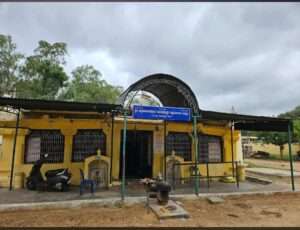
Sri Veerabhadreshwara Swamy Temple is located in the historic temple town of Talakadu, in T. Narasipura Taluk of Mysuru District, Karnataka. Situated on the banks of the sacred River Kaveri, the temple stands close to the famous Sri Vaidyanatheshwara Temple. Talakadu is one of Karnataka’s most revered Shaiva pilgrimage centres and is well known for its ancient temples, many of which were buried beneath shifting dunes over the centuries.
The exact date of construction is unknown, but the temple is believed to be over 1,000 years old. Its origins are generally attributed to the Western Ganga Dynasty (4th–10th century CE), with later renovations and additions by the Cholas, Hoysalas, Vijayanagara rulers, and the Wodeyars of Mysore.
The presiding deity is Sri Veerabhadreshwara Swamy, the fierce manifestation of Lord Shiva who emerged during the destruction of Daksha’s Yajna. At Talakadu, Lord Veerabhadra is worshipped as the Kshetrapalaka (Guardian Deity) of the sacred kshetra. Devotees seek his blessings for courage, protection from enemies, removal of obstacles, victory over difficulties, and relief from negative influences.
The temple is built in the traditional Dravidian style using granite stone. It consists of a simple entrance, a mukha mandapa with carved stone pillars, and the sanctum housing Sri Veerabhadreshwara Swamy. Ancient stone sculptures, including the figures of Tala and Kada, can also be seen within the temple premises.
Talakadu served as the capital of the Western Ganga Dynasty and later came under the rule of the Cholas, Hoysalas, Vijayanagara Empire, and the Wodeyars of Mysore. During these periods, the town flourished as an important centre of Shaivism, with numerous temples being constructed.
Sri Veerabhadreshwara Temple is one of the ancient surviving shrines of Talakadu. While many temples were gradually buried under the shifting sands of the River Kaveri, this temple continued to remain an active place of worship. For centuries, devotees have revered Sri Veerabhadreshwara as the divine guardian of Talakadu and traditionally seek his blessings before visiting the other sacred Shiva temples in the town.
The Sthalapurana of Sri Veerabhadreshwara Temple is closely associated with the origin of Talakadu.
According to legend, the region was once covered by a dense forest where two hunter brothers named Tala and Kada lived. One day they noticed wild elephants regularly worshipping a large sacred tree. Curious, they cut the tree, only to discover a radiant Shiva Linga hidden inside it. Instantly, the elephants transformed into great sages who had been freed from a divine curse through the grace of Lord Shiva.
Lord Shiva appeared before Tala and Kada, blessed them, and accepted their devotion. The place where this miracle occurred came to be known as Talakadu, named after the two brothers. Even today, stone images representing Tala and Kada are found in front of the temple, preserving the memory of this sacred event.
Another local tradition states that after destroying Daksha’s sacrificial ceremony, Lord Veerabhadra chose Talakadu as his sacred abode and became the eternal guardian of the kshetra. Since then, devotees have worshipped him as the powerful protector who safeguards the holy town and blesses devotees with strength, courage, and victory over evil.
The temple celebrates Maha Shivaratri with special Abhishekas and Shiva worship. Veerabhadra Jayanthi is observed with special pujas dedicated to the presiding deity. Kartika Deepotsava, Shravana Monday Pujas, and other important Shaiva festivals are also celebrated with devotion. During the Panchalinga Darshana, held once every twelve years at Talakadu, thousands of pilgrims visit Sri Veerabhadreshwara Swamy Temple to seek the blessings of the guardian deity of the sacred kshetra.


