MS Shanker
There is a growing need to distinguish between a genuine democratic protest and a politically engineered confrontation masquerading as a student movement. The distinction is not difficult to make if the entire evidence available in the public domain—including live television footage, CCTV recordings, police video, social-media posts and investigative findings—is examined objectively.
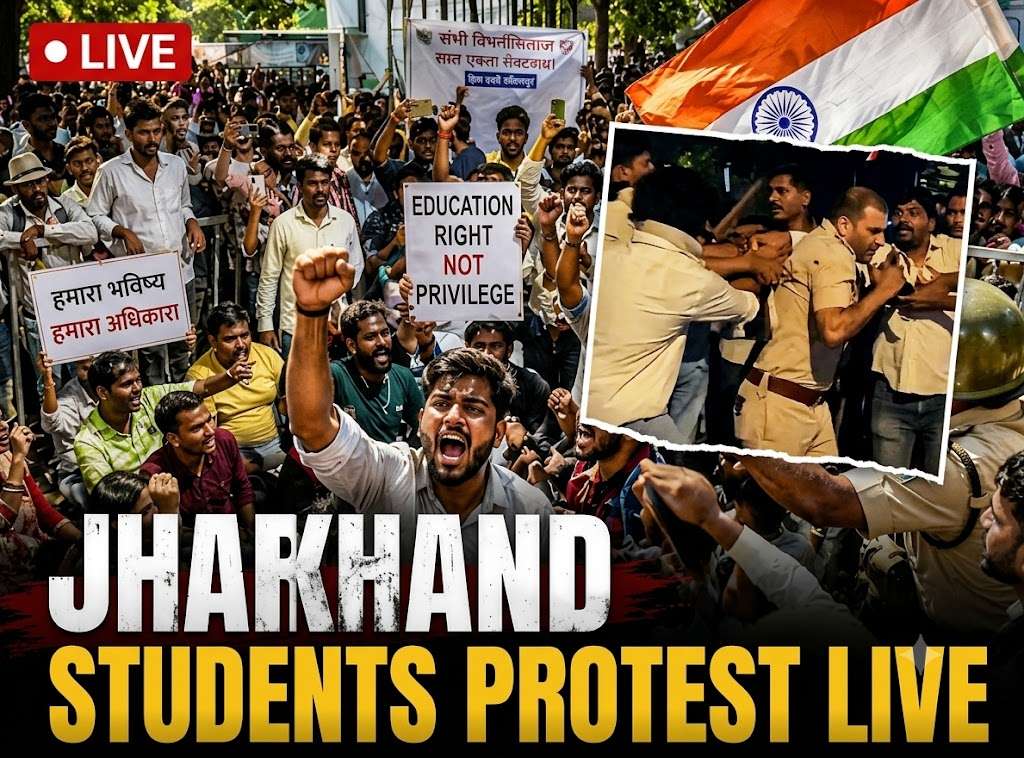
A student carrying the national flag, raising legitimate concerns over recruitment, examination irregularities or paper leaks and demanding accountability is exercising a constitutional democratic right. But when a protest degenerates into stone-pelting, vandalism, attacks on security personnel, inflammatory slogans and attempts to breach security around Parliament, it enters an entirely different territory.
The violence witnessed during the Jantar Mantar protests should therefore not be viewed merely through the political narrative being projected by those who organised or supported the agitation. Delhi Police has reportedly stated that 2,800 persons among the protesters were identified in connection with the violence. More than 250 security personnel were also injured. Police have been examining extensive video footage to identify those involved and establish individual responsibility.
These are not trivial details that can be dismissed while debating the conduct of the security forces.
More importantly, investigating agencies have also been examining alleged foreign-funding channels and their possible links with the mobilisation and organisation of protests. If such channels have indeed been identified during the investigation, that dimension cannot be brushed aside simply because the agitation was presented as a spontaneous student uprising. Foreign funding, if established to have been used for destabilising or unlawful activities, is a matter of national security—not merely partisan politics.
But here lies the real issue.
The judiciary must certainly scrutinise the conduct of the police and security forces. No security personnel should be permitted to use disproportionate force against peaceful demonstrators. Any officer found guilty of excessive or unlawful action must face consequences. That is precisely what the rule of law demands.
However, judicial scrutiny must be based on the complete evidentiary picture rather than isolated incidents or impressions created by one side of the political narrative.
When hundreds of security personnel are confronting a large and agitated crowd, it is unreasonable to examine the actions of the forces without simultaneously examining what preceded them. Were barricades breached? Were stones thrown? Were officers attacked? Was public property damaged? Were inflammatory slogans raised? Was there an attempt to move towards or threaten a highly protected constitutional institution? Who instigated the violence? Who participated in it? Were some participants deliberately brought into the gathering to provoke confrontation?
These questions deserve answers before sweeping observations are made against the security establishment.
Perhaps the courts could also consider directing that the available visual evidence be comprehensively examined. In an age when almost every major incident is recorded by multiple television cameras, mobile phones, CCTV systems and social-media platforms, there is little justification for deciding the narrative merely on the basis of competing affidavits or political claims.
There is another uncomfortable truth that political parties must confront.
Student grievances are legitimate. Political exploitation of student grievances is not. A recruitment scam, examination irregularity or paper leak deserves a transparent investigation and speedy remedy. But once political organisations convert genuine student anger into an anti-government mobilisation, encourage confrontation and then demand that the security forces remain passive spectators, democracy is being reduced to street power.
Parliament is the temple of India’s representative democracy. Governments can be criticised. Prime Ministers and ministers can be opposed. Even their resignation can be demanded. But threatening the institution of Parliament or abusing the armed forces that defend the nation’s territorial integrity cannot be defended in the name of democratic protest.
The contrast between peaceful students carrying the Tricolour and organised groups turning violent is therefore significant. The flag represents constitutional India; violence against its institutions represents contempt for the very democracy that permits the protest.
The judiciary must remain the ultimate guardian of constitutional liberties. But that constitutional responsibility also requires sensitivity towards those who stand between an angry crowd and a protected public institution. Police and security personnel do not have the luxury of walking away when a mob turns violent. They are expected to protect public property, constitutional institutions and human life—often while themselves becoming targets.
Therefore, the message must be balanced but unequivocal: If the police crossed the line, hold them accountable. If protesters crossed the line, hold them accountable. If political organisations deliberately provoked or exploited violence, hold them accountable. If foreign funding was used for unlawful or destabilising activity, investigate and prosecute it according to law.
The Constitution cannot have different standards for different actors.
India needs peaceful dissent, not politically manufactured disorder; fearless journalism, not selective outrage; and judicial scrutiny, not premature condemnation.
The rule of law must protect the protester—but it must protect the policeman, the Parliament and the Republic with equal determination.