



Sri Bhimeshvara Temple is located at Nilagunda (Neelagunda) in Harapanahalli taluk of Davangere district, Karnataka. The temple is situated in a peaceful rural setting surrounded by fields, a lake and low rocky hills.
The present temple dates back to the last quarter of the 11th century CE, during the rule of the Western Chalukyas, also known as the Kalyani Chalukyas. This makes the temple nearly 900 years old. It is today protected by the Archaeological Survey of India as a monument of national importance.
The presiding deity is Lord Bhimeshvara, worshipped in the form of a Shivalinga. The temple also has beautiful sculptures of Ganesha, the Saptamatrikas and Mahishasuramardhini. A Nandi is placed facing the shrine.
The name Bhimeshvara and the temple’s traditional association with Bheema make the shrine particularly interesting in connection with Bheemana Amavasya.
The temple is an excellent example of Western Chalukyan architecture and is built mainly using soapstone. Its most distinctive feature is its unusual multi-shrine plan, with several sanctums connected to a common sabhamandapa. The intricately carved doorways, lathe-turned pillars, and decorated exterior walls showcase the remarkable craftsmanship of the Chalukyan period.
The temple was constructed during the Western Chalukya period in the late 11th century. Inscriptions found in the temple courtyard belong to the Chalukya-Vikrama period and the later Kalachurya period of King Bijjala, providing evidence of the temple’s continued importance during the medieval period.
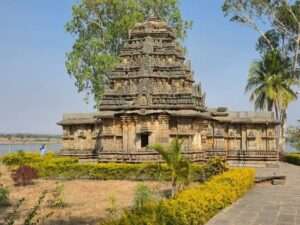
The temple’s surviving architecture and inscriptions make it an important monument for understanding the development of medieval temple architecture in Karnataka. It is now under the protection of the Archaeological Survey of India.
According to the local Sthalapurana, the Pandavas came to this region during their period of exile. During their wanderings, they are believed to have worshipped Lord Shiva at several sacred places, and Nilagunda is traditionally considered one of these places.
It is believed that the Pandavas installed and worshipped a Shivalinga here. Bheema, the second of the Pandavas, is particularly associated with this shrine, and the deity came to be revered as Bhimeshvara. The association with Bheema has continued through generations and gives the temple its distinctive name and sacred identity.
This Pandava-Bheema connection is part of the temple’s traditional Sthalapurana and should be understood as sacred local belief rather than archaeologically proven history. The historical antiquity of the present temple, however, is firmly associated with the Western Chalukya period of the 11th century.
Bheemana Amavasya, also known as Jyoti Bheemeshwara Amavasya, is traditionally associated with the worship of Lord Shiva and Goddess Parvati. Devotees pray for family welfare, marital happiness and the wellbeing and longevity of the husband.
The Bhimeshvara name of the deity and the local tradition connecting the temple with Bheema and the Pandavas make this ancient Shiva temple particularly appropriate to feature during Bheemana Amavasya.
The temple celebrates important Hindu festivals and the annual Jatre, when devotees from the surrounding villages visit the shrine. On ordinary days, the temple remains relatively peaceful and less crowded than the more famous Chalukyan temples of Karnataka.


