



Sri Valmikeshwar Nath Mahadev Mandir is an ancient Shiva temple situated on the outskirts of Sursand town in Sitamarhi district, in the Mithila region of Bihar, close to the India–Nepal border. Also known as Baba Balmikeshwar Nath Mahadev Mandir, this sacred shrine is closely associated with Maharshi Valmiki, the great sage who composed the Ramayana. The temple is an important pilgrimage centre for devotees of Lord Shiva from Bihar and neighbouring Nepal.
According to local tradition, the sacred Shivalinga dates back to the Treta Yuga and is believed to have been established by Maharshi Valmiki himself. Although its exact historical age is not known, the shrine is considered one of the ancient sacred places of Mithila.
The presiding deity is Lord Shiva, worshipped as Valmikeshwar Nath Mahadev. The sacred Shivalinga is installed approximately 21 feet below ground level, making it a distinctive feature of the temple. Devotees offer water, milk, Bilva leaves and flowers to Lord Shiva, seeking his blessings for health, prosperity and peace.
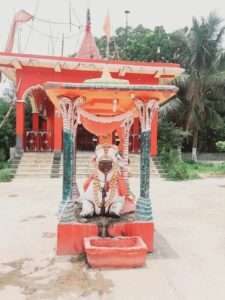
The temple has a traditional shrine structure, with its most remarkable feature being the underground sanctum where the Shivalinga is worshipped. Devotees descend to offer prayers to Lord Shiva. The temple complex also provides space for religious ceremonies and gatherings, particularly during the holy month of Shravan and Maha Shivaratri.
The temple is associated with the ancient Mithila kingdom ruled by King Janaka, the father of Goddess Sita. According to local belief, Maharshi Valmiki performed severe penance at this place and established the sacred Shivalinga.
The present temple structure is believed to have been constructed by a former ruler of the Sursand Raj estate, who also donated land for its maintenance. Over the years, the temple has remained an important centre of Shiva worship in the Mithila region.
According to a fascinating local legend, Maharshi Valmiki was originally a robber named Ratnakara, who lived during the reign of King Janaka. Ratnakara was feared throughout the kingdom for robbing travellers and creating disturbances.
One day, King Janaka learned through his spies that Ratnakara was planning to rob the royal treasury. The king disguised himself as a security guard and waited for him.
When Ratnakara arrived, he captured the disguised king. King Janaka then asked him a simple but powerful question: Would his family members, for whose sake he committed these crimes, also share the burden of his sins?
Ratnakara returned home and questioned his family. To his surprise, they refused to share responsibility for his wrongdoings. Deeply troubled by this realisation, he returned to King Janaka and asked him to show the path towards salvation.
Following the king’s guidance, Ratnakara began his spiritual journey. As he travelled through the forest, he heard a divine voice, or Akashvani, directing him to perform penance at the place where the present temple stands.
Ratnakara sat in deep meditation and continued his penance for more than sixty years, according to the legend. During this long period, an anthill gradually formed around his body, completely covering him.
Years later, King Janaka visited the forest with his family. While playing nearby, his daughter accidentally touched the anthill, causing blood to flow from it. The astonished king ordered his guards to remove the mound and discovered a sage absorbed in deep meditation.
King Janaka then instructed his daughter to care for the sage until his penance was completed.
Finally, pleased with his extraordinary devotion, Lord Shiva appeared before Ratnakara and restored his physical form. Through divine grace and spiritual enlightenment, Ratnakara became the great sage Maharshi Valmiki. The sacred Shivalinga associated with his penance came to be worshipped as Valmikeshwar Nath Mahadev.
Another local tradition says that Lord Rama, accompanied by Lakshmana and Sage Vishwamitra, visited this sacred shrine during their journey through Mithila. It is believed that Lord Rama worshipped the Shivalinga both before and after the Sita Swayamvara at King Janaka’s court.
Maha Shivaratri is celebrated with great devotion, including special pujas, Abhisheka and the ceremonial celebration of Lord Shiva’s marriage. During the holy month of Shravan, particularly on Mondays, large numbers of devotees visit the temple to perform Jalabhisheka. Pilgrims bring sacred water from Pahleja Ghat near Patna and the Doodhmati River at Janakpur in Nepal to offer to Lord Shiva. The temple attracts devotees from both India and Nepal throughout these celebrations.


