



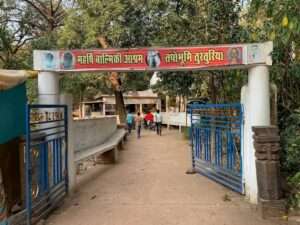
Sri Maharishi Valmiki Ashram is situated amidst dense forests and picturesque hills near Kasdol in Chhattisgarh, Turturiya Valmiki Ashram is an ancient sacred place associated with Maharishi Valmiki, the revered author of the Ramayana. Located near the Barnawapara Wildlife Sanctuary, on the banks of the Balbhadri stream, this peaceful place is traditionally believed to be the birthplace of Lava and Kusha, the twin sons of Lord Rama and Mata Sita. The place is also known as Surasuri Ganga.
The sacred site is traditionally associated with the Treta Yuga, the period of the Ramayana. Archaeological remains, including ancient sculptures, stone pillars and inscriptions, are attributed to the 8th–9th century CE, indicating that the site has a historical heritage of over 1,100 years.
The ashram is dedicated to Maharishi Valmiki, who is honoured as the Adi Kavi, or the first poet of Sanskrit literature. He composed the great epic Ramayana, consisting of approximately 24,000 verses. The sacred place is also associated with Mata Sita and her sons Lava and Kusha. Ancient idols of Lord Vishnu, Shiva Lingas and Buddhist sculptures found in the surrounding area reflect its rich spiritual heritage.
Unlike conventional temples, Turturiya is a sacred complex surrounded by natural forests, hills and flowing water. One of its remarkable features is an ancient Gomukh, through which water flows into a brick-lined sacred kund. Near the kund are ancient stone idols of Lord Vishnu, including one depicting him reclining on Adishesha. Beautifully carved stone pillars, inscriptions, ancient sculptures and remains of ruined shrines are scattered around the site.
Turturiya was an important religious and cultural centre during the early medieval period. The discovery of Buddhist, Vaishnava and Shaiva sculptures indicates that different religious traditions flourished here. Its proximity to the ancient Buddhist centre of Sirpur adds to its historical importance. The sacred place also preserves a local tradition of women serving as priestesses.
The name Turturiya is believed to have originated from the gentle tur-tur sound produced by the Balbhadri stream as it flows through narrow rocky passages.
According to local tradition, after Mata Sita left Ayodhya, she found shelter in the peaceful forest hermitage of Maharishi Valmiki. The compassionate sage welcomed her and provided a safe place where she could live with dignity and peace.
It is believed that Mata Sita gave birth to her twin sons, Lava and Kusha, at this sacred place. Under the loving care and guidance of Maharishi Valmiki, the two princes grew up in the forest, unaware of their royal heritage.
The great sage taught them the Vedas, Dharma, archery and the values of truth, courage and righteousness. He also taught them to recite the Ramayana, the sacred epic describing the life and noble deeds of their father, Lord Rama.
According to the Ramayana tradition, when Lord Rama performed the Ashwamedha Yajna, the sacrificial horse wandered into the region where Lava and Kusha lived. The brave young princes stopped the horse and challenged the warriors who came to retrieve it.
Despite their young age, Lava and Kusha displayed extraordinary courage and skill. Eventually, their true identity as the sons of Lord Rama and Mata Sita became known.
The story beautifully highlights the wisdom of Maharishi Valmiki, who not only composed the Ramayana but also became the teacher and guardian of the two young princes.
Local devotees believe that the peaceful forests of Turturiya still preserve the spiritual presence of the great sage and the sacred memories of Mata Sita, Lava and Kusha.
Maharishi Valmiki Jayanti, associated with Ashwina Pournami, is an important occasion for devotees to remember the great sage and his teachings. Special prayers and devotional activities mark the occasion. The sacred site also attracts devotees during Navaratri, while a traditional three-day annual fair brings together pilgrims from surrounding villages and districts.

