



Shubh Navaratri Day – 9
॥ Om Devi Siddhidatryai Namah ॥
॥ Siddha Gandharva Yakshadyairasurairamarairapi।
Sevyamana Sada Bhuyat Siddhida Siddhidayini ॥
Today is Mahanavami, the ninth and final day of Sharadiya Navaratri, dedicated to Goddess Siddhidatri, the ninth manifestation of Goddess Durga. She is worshipped as the divine mother who bestows spiritual accomplishments, wisdom and blessings upon her devotees.
Goddess Siddhidatri represents the fulfilment of spiritual aspirations and the highest form of divine grace. According to Hindu belief, worshipping her helps devotees overcome sorrow, attain inner peace and progress towards Moksha, or liberation from the cycle of birth and death.
Goddess Siddhidatri is traditionally depicted with four arms. She holds a Sudarshana Chakra and a mace (gada) in her right hands, and a lotus and a conch (shankha) in her left hands. She is commonly shown seated on a fully blossomed lotus or riding a lion.
The goddess is associated with eight principal Siddhis, or supernatural accomplishments: Anima (becoming extremely small), Mahima (becoming immensely large), Garima (becoming extremely heavy), Laghima (becoming extremely light), Prapti (attaining what is sought), Prakamya (fulfilment of one’s will), Ishitva (divine authority) and Vashitva (the power of control).
Her divine form is often surrounded by Siddhas, Gandharvas, Yakshas, Asuras and Devas, all worshipping her. Her name means “the giver of Siddhis,” reflecting her role as the bestower of spiritual powers and divine blessings.
The traditional iconography of Goddess Siddhidatri features the lotus, lion and four divine attributes she carries in her hands. The lotus symbolises purity and spiritual awakening, while the Sudarshana Chakra represents divine power and the destruction of evil.
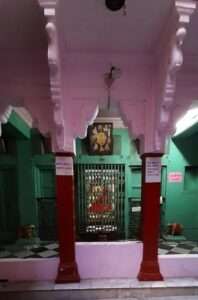
The goddess’s traditional form reflects spiritual perfection, divine wisdom and the power to overcome ignorance. Her worship is an important part of the religious traditions associated with the Navadurga in Varanasi.
Varanasi, one of India’s most ancient sacred cities, is closely associated with the worship of Lord Shiva and Goddess Shakti. The city has numerous shrines dedicated to the different manifestations of Goddess Durga, and the worship of the Navadurga forms an important part of its Navaratri traditions.
Devotees worship Goddess Siddhidatri on the ninth day of Navaratri, seeking her blessings for spiritual growth, prosperity and fulfilment. Her worship marks the culmination of the nine-day celebration of the Divine Mother.
According to the Devi Purana, Lord Shiva attained the Siddhis through the blessings of Goddess Siddhidatri. It is believed that her divine power transformed his body into a form consisting of one male half and one female half. This sacred form became known as Ardhanarishwara, representing the inseparable unity of Shiva and Shakti and the balance of masculine and feminine principles in creation.
Another important account associated with the Divine Mother’s supreme power appears in the Devi Mahatmya, also known as the Durga Saptashati. It describes the great battle between Goddess Ambika and the demon Shumbha.
During the battle, the goddess declared that no power existed independently of her and that all the different forms of the Divine Mother were manifestations of her own supreme energy. Goddesses such as Brahmani and the other divine manifestations who had appeared to assist her then merged back into Goddess Ambika. She revealed that she alone had manifested in many forms through her divine power, and those forms had now returned to her.
Goddess Ambika stood alone on the battlefield and challenged Shumbha to prepare for the final battle. A fierce confrontation followed between the goddess and the demon, while the Devas and Asuras also fought against one another.
When Shumbha approached the goddess, she took her trident and pierced his chest. The mighty blow brought the demon down, and his fall shook the mountains, islands, oceans and the entire earth.
With Shumbha’s death, peace and stability returned to the universe. The sky became clearer, destructive disturbances such as violent rains and meteor showers ceased, and the rivers returned to their natural courses. The gods and sages rejoiced as the forces of evil were defeated and cosmic order was restored.
This story illustrates the supreme power of the Divine Mother, who manifests in different forms to protect the universe, destroy evil and restore Dharma. The worship of Goddess Siddhidatri on Mahanavami represents the culmination of the Navaratri spiritual journey, reminding devotees of the importance of faith, devotion, and surrender to the Divine Mother.
Mahanavami is an auspicious day when devotees offer special prayers to Goddess Siddhidatri. Devotees perform puja, chant Durga mantras, offer flowers and fruits, and seek her blessings for wisdom, prosperity, family harmony, and spiritual growth.
In many Hindu traditions, Kanya Puja is performed during Mahanavami, honouring young girls as manifestations of the Divine Mother. Navaratri worship culminates on this day, celebrating the victory of good over evil and the power of divine grace.
Devotees pray to Goddess Siddhidatri for the removal of obstacles, fulfilment of righteous wishes, inner strength and spiritual enlightenment. Her worship reminds devotees that true accomplishment comes through devotion, wisdom and the grace of the Divine Mother.

