



Shri Kalki Vishnu Mandir is situated at Kot Purvi in Sambhal, Uttar Pradesh. The temple is traditionally associated with Lord Kalki, the tenth and final avatar of Lord Vishnu. Sambhal occupies a unique place in Hindu tradition as the sacred place where Lord Kalki is believed to appear at the end of Kali Yuga.
The present shrine is generally associated with the 18th century and is traditionally connected with the patronage of Maharani Ahilyabai Holkar, who built and restored numerous Hindu temples across India.
The presiding deity is Lord Kalki, the future tenth avatar of Lord Vishnu. He is traditionally described as appearing on a white horse with a sword in his hand to destroy adharma and restore righteousness at the end of Kali Yuga.
The present temple is relatively small compared with India’s major Vishnu temples. It is noted for its distinctive octagonal form and decorative work on its walls and dome. Its importance lies primarily in its rare dedication to Kalki and its association with the religious traditions of Sambhal.
Sambhal has been associated with the Kalki avatar for centuries. There are also traditions concerning an older Hari Har or Vishnu temple in the town, with historical claims connecting it to the Mughal period. However, the history of this earlier temple is disputed and should be kept separate from the present Kalki Vishnu Mandir.
The surviving shrine is associated with the 18th century and is traditionally said to have received the patronage of Maharani Ahilyabai Holkar. Her contribution to the restoration of Hindu temples throughout India forms an important part of the temple’s later history.
According to Hindu cosmology, time moves through four great Yugas: Satya Yuga, Treta Yuga, Dvapara Yuga and Kali Yuga. Kali Yuga is considered the final and most difficult of these four ages. As Kali Yuga progresses, dharma gradually declines, while adharma, injustice, greed and moral disorder increase.
Hindu scriptures and later religious traditions describe Lord Vishnu as appearing in different forms whenever righteousness declines, and evil becomes dominant. The Kalki avatar is regarded as the final manifestation of this divine intervention.
Unlike Rama, Krishna, Narasimha and the other avatars who are believed to have already appeared, Kalki is regarded as the avatar who is yet to come. At the end of Kali Yuga, when unrighteousness reaches its peak, Lord Vishnu will appear as Kalki.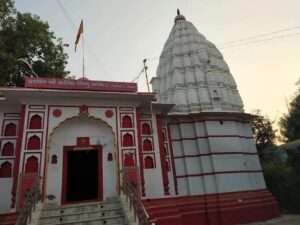
Kalki is traditionally described as a radiant divine warrior riding a magnificent white horse and carrying a sword. He will destroy the forces of adharma and restore righteousness. His appearance will bring about the end of Kali Yuga and prepare the world for the beginning of a new Satya Yuga.
The most important part of this tradition is the belief that Sambhal will be the place of Kalki’s manifestation. Because of this belief, Sambhal is considered a sacred place connected not with the past appearance of an avatar, but with the future appearance of Vishnu himself.
This gives the Kalki Vishnu Mandir a very unusual spiritual significance. At temples associated with Rama or Krishna, devotees worship at places connected with events believed to have happened in the distant past. At Sambhal, devotees worship Lord Kalki in a place believed to be connected with an event that is yet to happen.
The traditional accounts of Kalki describe a world in which righteousness has almost disappeared. Kings and rulers will become unjust, people will move away from truth and compassion, and moral values will decline. At that time, Kalki will appear to restore the balance between dharma and adharma.
The white horse associated with Kalki has also become one of the most recognisable symbols of the avatar. The sword represents the destruction of evil and ignorance, while the horse represents the swift arrival of divine justice.
The deeper message of the Sthalapurana is the eternal victory of dharma over adharma. Kalki represents the belief that however dark an age may become, righteousness will ultimately be restored. Sambhal therefore occupies a unique place in Hindu tradition—as the sacred land associated with the arrival of Vishnu’s final avatar.
Kalki Jayanti is the principal festival associated with Lord Kalki and is observed with special prayers and religious rituals. Devotees also visit the shrine throughout the year to offer prayers to Lord Vishnu in His Kalki form.
🙏 Shri Kalki Vishnu Mandir is therefore not merely a temple dedicated to an unusual form of Vishnu. It represents a powerful Hindu belief in the eventual restoration of dharma and stands in Sambhal, the sacred land traditionally believed to be the future manifestation place of Lord Kalki.

