



Shri Japeshwar Mahadev Temple is an ancient Shiva shrine situated at Jubutia village near Kirnahar in Birbhum district of West Bengal. The temple is associated with the ancient Gauda kingdom and is revered by devotees for its traditional belief in Lord Shiva’s power to relieve suffering and bless those who worship him with devotion.
According to local tradition, the temple’s origins date back approximately 1,400–1,500 years, to the period of King Shashanka of Gauda in the early seventh century CE. However, its exact age has not been archaeologically established.
The presiding deity is Lord Japeshwar Mahadev, worshipped in the form of a sacred Shivalinga.
Lord Shiva is revered here as Ashutosha, the compassionate Lord who is easily pleased by sincere devotion, and Vaidyanatha, the divine healer who relieves suffering.
The name Japeshwar is associated with Japa, the repetition of sacred mantras, reflecting the importance of prayer and meditation in Shiva worship.
Devotees offer water, milk, Bilva leaves, and flowers to the Shivalinga while chanting Om Namah Shivaya, seeking blessings for good health, protection, peace, and spiritual well-being.
The temple reflects the traditional architectural heritage of rural Bengal.
The earlier structure was known for its terracotta decorations, a characteristic feature of historic Bengal temples.
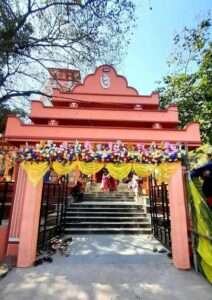
According to local accounts, the old temple collapsed in 2002 and was subsequently reconstructed. Although much of its original architectural character was lost, the shrine continues to preserve its religious significance.
The temple’s historical tradition is associated with King Shashanka, who ruled the Gauda kingdom in Bengal during the early seventh century CE.
Shashanka was an important ruler of ancient Bengal and is historically associated with Shaivism.
According to local tradition, the shrine originated during his reign and gradually became an important centre of Shiva worship in the Birbhum region.
The temple has undergone renovations over the centuries, preserving its religious significance and traditional worship practices.
According to a local legend, during the reign of King Shashanka of Gauda, a minister named Chakradhar suffered from a severe abdominal ailment.
Despite his influential position in the royal administration, Chakradhar experienced considerable pain and distress because of his illness.
The traditional account states that his recovery was associated with the divine blessings of Lord Shiva.
It is believed that through the grace of Mahadev, Chakradhar was relieved of his suffering. In gratitude for this divine intervention, the establishment of a shrine dedicated to Lord Japeshwar Mahadev became associated with him.
Over time, the sacred place developed into a centre of Shiva worship, where devotees prayed for relief from illness, protection from difficulties, and peace of mind.
The legend reflects the traditional Shaiva belief that Lord Shiva responds to sincere devotion and grants relief from suffering.
Thus, the Sthalapurana of Japeshwar Mahadev highlights the compassion and healing grace of Lord Shiva, whose blessings are believed to bring hope and relief to devotees.
Mahashivaratri is the principal festival associated with Shri Japeshwar Mahadev Temple. Devotees gather to perform Abhisheka, offer Bilva leaves, and chant sacred Shiva mantras.
The holy month of Shravana, particularly Mondays, is another important period for Shiva worship.
Devotees from Kirnahar, Mirati, Jubutia, and neighbouring villages visit the temple to seek the blessings of Lord Japeshwar Mahadev.

