



Shri Gajantlakshmi Temple is situated in the village of Marcel (Mashel) in Ponda Taluk of North Goa district, Goa. The temple is located opposite the famous Shri Lakshmi Ravalnath Temple and near the temple parking area. It is one of the important temples associated with the Daivajna Brahmin community and serves as the Kuladevi (family deity) temple for many families across Goa and neighboring regions.
The exact date of the original temple’s foundation is not known. However, the deity was worshipped on Chorao Island long before the Portuguese conquest of Goa in the sixteenth century, indicating that the shrine is several centuries old. The present temple at Marcel traces its origins to the late eighteenth century when the deity was brought from Bicholim and reinstalled here. The current structure evolved from a small laterite shrine built in the early nineteenth century.
The presiding deity of the temple is Goddess Gajantlakshmi, a sacred form of Goddess Lakshmi. The name “Gajantlakshmi” is derived from the Sanskrit words Gaja (elephant) and Lakshmi (Goddess of prosperity). She is worshipped as the bestower of wealth, fertility, abundance, good fortune, and family well-being.
The idol of the Goddess is golden in appearance and is seated majestically on a silver-colored throne. She is flanked by two elephants carved from black stone, which form an integral part of her iconography. The Goddess holds sacred symbols including lotuses and Bilva fruits, while attendants holding chamaras stand beside her, signifying royal dignity and divine prosperity.
The temple follows the traditional architectural style of Goan Hindu temples. Though modest in size, it possesses a serene and spiritually uplifting atmosphere. The sanctum sanctorum houses the beautiful idol of Goddess Gajantlakshmi seated on a fully blossomed lotus.
The silver throne, black stone elephants, and decorative elements within the sanctum create a striking visual impression. The temple complex reflects the simplicity and elegance characteristic of many traditional Goan temples rebuilt after the period of Portuguese religious persecution. The peaceful surroundings make the temple an ideal place for prayer and contemplation.
The history of Shri Gajantlakshmi Temple is closely connected with the struggles faced by Goa’s Hindu community during Portuguese rule. The original temple was located on Chorao Island, where Goddess Gajantlakshmi was worshipped by local devotees and Daivajna Brahmin families.
In 1541, the Portuguese authorities initiated a campaign against Hindu temples and religious practices in territories under their control. Between 1541 and 1546, the original temple of Goddess Gajantlakshmi was demolished along with several other Hindu shrines on Chorao Island.
Foreseeing the danger, the temple Mahajanas and devotees secretly removed the deity and transferred her to Vargaon in Bicholim, which was then under the protection of the Sawant Bhonsle rulers and outside Portuguese control. The deity remained there for many years.
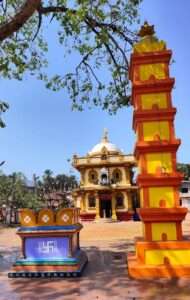
In 1781, when the Portuguese annexed Bicholim, the devotees once again relocated the deity to a safer location. Goddess Gajantlakshmi was brought to Mashel (Marcel) along with several other deities that had been preserved from the destroyed temples of Chorao. Initially housed in a temporary shelter at Deulvaddo, the deity was later enshrined in a small laterite temple constructed by the Mahajanas in the early nineteenth century. Over time, this shrine developed into the present temple.
Shri Gajantlakshmi Temple is primarily known for the sacred symbolism of its deity and its remarkable historical journey of preservation.
In Hindu tradition, Gajantlakshmi represents the divine power that sustains creation and prosperity. The Goddess is seated on a fully blossomed lotus, symbolizing purity, spiritual growth, and abundance. The lotus also represents Mother Earth, who nourishes all living beings.
The two elephants standing on either side of the Goddess are among the most important features of Gajantlakshmi iconography. They are shown showering the Goddess with celestial waters. These elephants symbolize rain-bearing clouds that bring fertility to the earth and ensure agricultural abundance. Thus, the image of Gajantlakshmi signifies the harmonious relationship between nature, prosperity, and divine grace.
Another unique feature of the idol is the Bilva fruits held by the Goddess. Hindu tradition regards the Bilva tree as a symbol of prosperity and auspiciousness. Ancient scriptures, including the Sri Sukta, associate Bilva with Goddess Lakshmi and the blessings of abundance.
For centuries, devotees have worshipped Goddess Gajantlakshmi seeking wealth, success, harmony in family life, good health, and protection from difficulties. As the Kuladevi of many Daivajna Brahmin families, she is deeply revered as a compassionate mother goddess who guides and protects her devotees through all stages of life.
Navaratri is the most important festival celebrated at the temple and attracts large numbers of devotees. Kojagiri Purnima and Diwali are also observed with special poojas and decorations dedicated to Goddess Lakshmi. During these occasions, devotees offer prayers seeking prosperity, happiness, and divine grace.

