



Digital health is expanding, but primary health neglected
India’s healthcare system has been undergoing an unprecedented transformation over the past decade. The rapid expansion of digital technologies, artificial intelligence, telemedicine, electronic health records, health data management, and integrated digital platforms have begun to transform healthcare delivery. Medical science, meanwhile, is shifting from just treating diseases to placing greater emphasis on “wellness,” i.e., holistic health, disease prevention, mental health, nutrition, yoga, and a healthy lifestyle. The Government of India’s initiatives such as the Ayushman Bharat Health and Wellness Centers (AB-HWC), Ayushman Bharat Digital Mission (ABDM), e-Sanjeevani, ABHA Digital Health ID, and the National Digital Health Ecosystem symbolize this transformation. These initiatives have certainly provided new opportunities for modernizing healthcare, but a fundamental question remains relevant—can digital transformation and wellness-focused approaches replace strong primary healthcare institutions?
The answer to this question is negative. Technology can make healthcare more efficient, transparent, and accessible, but it cannot replace doctors, nurses, medicines, laboratories, ambulances, and robust primary health care institutions. Healthcare is ultimately a human service, built on a strong institutional framework, trained human resources, and community outreach. If the primary health care system is weak, even the most advanced digital platforms will not be able to provide quality healthcare to citizens.
The foundation of India’s public health system is Sub-Health Centers (SCs), Primary Health Centers (PHCs), and Community Health Centers (CHCs). These institutions are the first point of contact for essential services such as maternal and child health, immunization, nutrition, family planning, infectious disease control, early detection of non-communicable diseases, and primary treatment. Unfortunately, in many rural, tribal, and remote areas of the country, these institutions have been struggling for years with a shortage of doctors, nurses, medicines, equipment, and infrastructure. Many Primary Health Centers lack regular electricity, clean drinking water, internet, laboratory facilities, and even ambulances. Therefore, simply developing digital platforms will not automatically improve the quality of health services.
The establishment of Ayushman Bharat Health and Wellness Centers was intended to expand primary healthcare services. These services included maternal and child health, as well as services such as diabetes, hypertension, early cancer screening, mental health, geriatric health, and yoga. This concept is consistent with modern public health approaches, as most diseases today are also lifestyle-related. However, in many places, health and wellness centers have been limited to mere name changes. The buildings remain the same, the equipment remains the same, the human resources remain scarce, and in many places, essential medicines are not regularly available. Without a parallel investment in institutional capacity, “health and wellness” will remain merely a policy term.
The Ayushman Bharat Digital Mission is an ambitious reform in the health sector. Through the ABHA ID, efforts are underway to create digital health records for every citizen, digitally register hospitals and health professionals, and integrate treatment information. This will preserve patients’ treatment history, reduce unnecessary tests, ensure continuity of health services, and provide reliable data to policymakers. This is a need for the future. However, it is equally true that digital health records cannot replace a doctor in a village, nor can they solve the problem of the unavailability of medicines or poor health infrastructure. If primary health centers themselves are not efficient, the digital health system will be limited to information management.
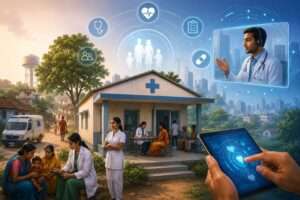
A major challenge facing digital health is the digital divide. Even today, millions of citizens in India lack smartphones, quality internet access, and digital literacy. Ensuring equitable access to digital services for those in rural areas, tribal areas, mountainous regions, the elderly, and economically weaker sections is not easy. If health services are heavily digital-based, the very segments of society that need them most will be most disadvantaged. Therefore, the goal of digitalization should be inclusion, not exclusion.
A wellness-focused approach is an important component of modern health policy. A healthy diet, yoga, regular exercise, stress management, mental health, and a drug-free lifestyle certainly play a significant role in disease prevention. However, it would be unfair to consider health solely as a result of individual lifestyle. A person’s health is deeply intertwined with their social, economic, and environmental environment. Poverty, malnutrition, lack of access to clean drinking water, poor sanitation, pollution, unsafe housing, and lack of education are social determinants of health that cannot be addressed solely through wellness campaigns. If a family lacks access to nutritious food, simply advising on a balanced diet will not lead to the desired improvement in health. If a pregnant woman has to travel several kilometers to reach the nearest health center, a digital health app will not solve her problem.
In a vast and diverse country like India, a strong primary health care system can be the key foundation for the success of healthcare services. The COVID-19 pandemic has made it clear that local health institutions, ASHA workers, ANMs, Anganwadi workers, and primary health centers play a crucial role in addressing any health crisis. While door-to-door surveys, vaccinations, contact tracing, public awareness, and community monitoring have certainly been improved with the help of digital technology, their actual implementation is carried out by grassroots health workers. This demonstrates that technology is a support, not a substitute.
The World Health Organization has long recognized primary health care as the cornerstone of universal health coverage. Both the 1978 Alma-Ata Declaration and the 2018 Astana Declaration emphasized that without a strong primary health care system, no country can provide equitable, accessible, and quality health services. The situation in India also confirms this principle. True democratization of health services is possible only when every citizen has access to quality primary health care near them.

