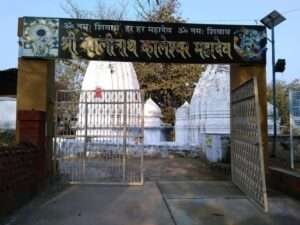
Kaleshwar Mahadev Temple, also known as Shri Kalinath Kaleshwar Mahadev Temple, is located in Kaleshwar village near the heritage village of Pragpur (Paragpur) in Kangra district, Himachal Pradesh. The temple stands peacefully on the banks of the sacred Beas (Vyas) River amidst the scenic Shivalik hills. Owing to its sacred riverside location and the belief that performing the last rites here grants liberation to departed souls, the temple is popularly known as the “Mini Haridwar of Himachal Pradesh.”
Kaleshwar Mahadev Temple is believed to have originated in Satya Yuga, according to temple tradition, making it one of the oldest Shiva shrines in Kangra district. While the exact date of its construction is unknown, historians believe the present structure was developed and renovated nearly 400 years ago under the patronage of the Katoch rulers. The temple has remained an important centre of Shaiva worship for centuries.
The presiding deity is Lord Shiva, worshipped as Sri Kalinath Kaleshwar Mahadev in his powerful Rudra form. The temple enshrines a sacred Swayambhu (self-manifested) Shiva Linga installed inside a unique underground sanctum below ground level. Devotees descend a few steps to have darshan of the Shivling, making it one of the rare underground Shiva shrines in northern India. The temple complex also houses shrines dedicated to Goddess Mahakali, Goddess Mahalakshmi and Goddess Saraswati, symbolising the divine union of Shiva and Shakti. Devotees offer prayers for protection, prosperity, removal of obstacles and spiritual upliftment.
The temple is built in the traditional Himalayan style using stone masonry and features beautifully carved pillars, doorways and walls depicting Hindu deities and floral motifs. Its most distinctive feature is the underground Garbhagriha housing the Swayambhu Shiva Linga. The temple complex overlooks the Beas River and includes the sacred Panchtirthi Kund, ancient bathing ghats and cremation grounds, adding to its spiritual importance.
Kaleshwar Mahadev Temple has been an important pilgrimage centre of the Kangra region since ancient times. Although its exact origin is unknown, the temple was renovated and expanded by the Katoch rulers around the 17th century while preserving its ancient sanctity. British archaeologist Henry Shuttleworth also documented the temple in 1913, recognising its historical and architectural significance.
The origin of Kaleshwar Mahadev Temple is connected with one of the most sacred legends of Lord Shiva and Goddess Mahakali. According to temple tradition, after powerful demons such as Jalandhara, and in some local traditions, Raktabeeja, spread fear and destruction across the universe, the Devas sought the protection of Lord Shiva. Lord Shiva instructed Goddess Yogamaya to assume the fierce form of Mahakali and destroy the demons. After a fierce battle, Mahakali successfully annihilated the demons, but her intense rage continued to burn even after victory. Her uncontrollable fury threatened the balance of the entire creation.
To restore peace, Lord Shiva silently lay down in her path. Without recognising him, Mahakali stepped upon Lord Shiva. The moment she realised that she had placed her foot on her Lord, she was overcome with remorse and her anger vanished instantly. She withdrew her fierce form and sought forgiveness from Lord Shiva.
To atone for her actions, Goddess Mahakali performed severe penance on the banks of the sacred Beas River. Pleased with her devotion and repentance, Lord Shiva appeared before her and agreed to remain forever at this holy place as Kalinath Kaleshwar Mahadev. Since then, devotees have worshipped this sacred shrine as the place where Shiva restored cosmic balance by calming the fierce energy of Mahakali, symbolising the eternal harmony between Shiva and Shakti.
Another revered local tradition associates the temple with the Pandavas during their exile. It is believed that they visited this sacred place, worshipped Lord Shiva and helped establish the shrine. They are also believed to have created the sacred Panchtirthi Kund. According to local belief, the waters of this holy pond possess the spiritual merit of five sacred pilgrimage sites, and devotees who bathe here with sincere faith receive blessings equivalent to visiting those holy tirthas.
One of the temple’s greatest mysteries is the sacred Swayambhu Shiva Linga. According to centuries-old local belief, the Shivling gradually sinks into the earth by approximately the width of one barley grain every year. Temple tradition says that when the entire Shivling disappears beneath the earth, Kali Yuga will come to an end. Although this belief is based on faith and has not been historically or scientifically established, it continues to inspire deep devotion among pilgrims.
Another remarkable belief associated with the temple is that during the annual floods of the Beas River, the rising waters reach only up to the Jalhari (base) of the Shiva Linga and never cross it. Devotees regard this as the divine grace and protective power of Lord Kaleshwar Mahadev.
Mahashivaratri is the grandest festival celebrated at the temple, with special Rudrabhisheka, Jalabhisheka, havans, devotional music and night-long worship drawing thousands of devotees. The holy month of Shravan is also observed with special prayers every Monday, while Baisakhi is marked by a large religious fair where devotees take a holy dip in the Panchtirthi Kund and the Beas River before offering prayers to Lord Kaleshwar Mahadev.