Lakshmanrao Upadhyayula
In the sacred Tristubh meter of the Rigvedic hymns, the sage Vishwamitra raises his voice in profound reverence to Indra, the mighty sovereign of celestial power, the nourisher of life, and the guardian of cosmic order. Indra is praised as the divine force who releases the life-giving waters concealed within the heavens, allowing rivers to flow, vegetation to flourish, and living beings to thrive. In Vedic understanding, rain is not merely a meteorological event but a sacred manifestation of divine benevolence, linking heaven and earth through an unbroken cycle of sustenance. Thus, Indra stands as the protector of fertility, abundance, and prosperity throughout creation.
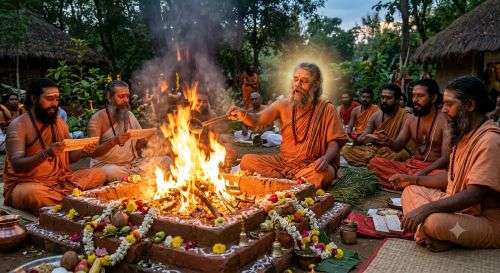
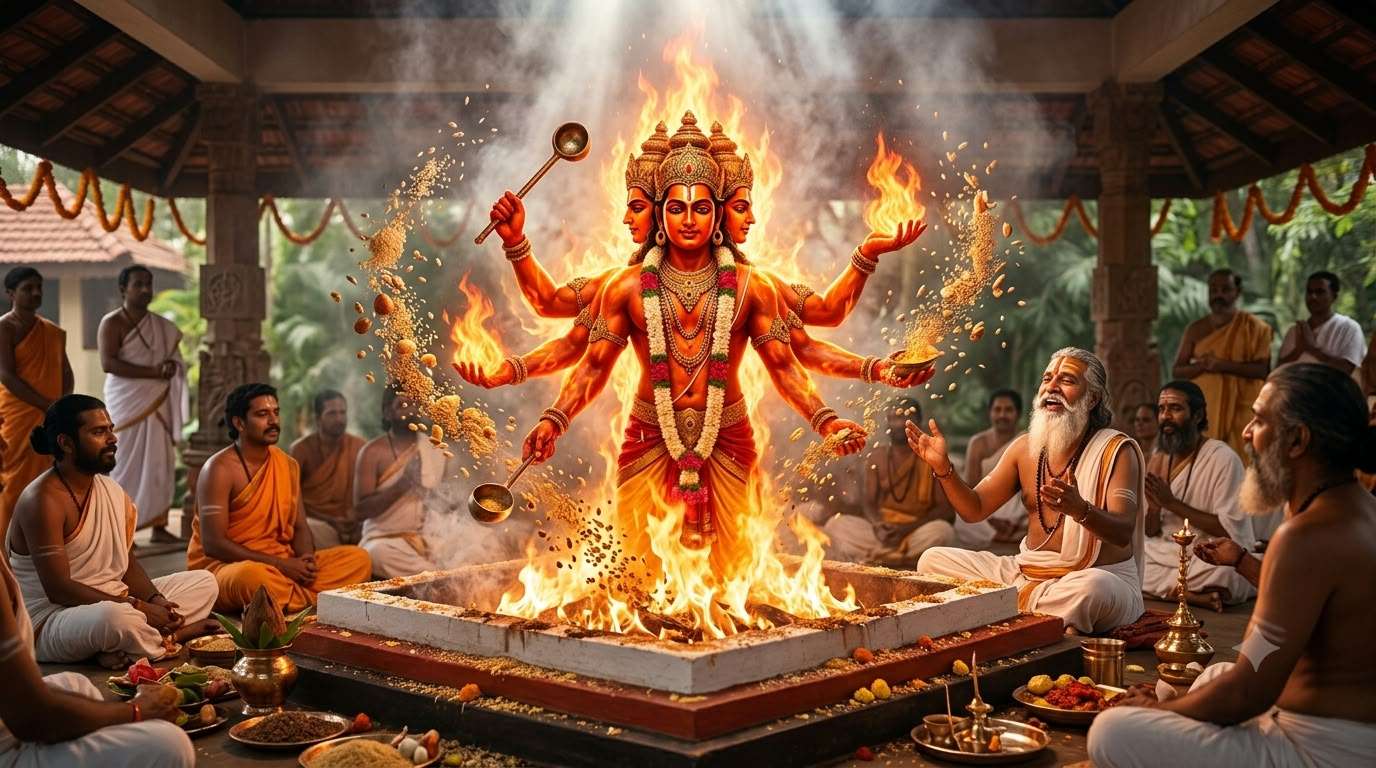
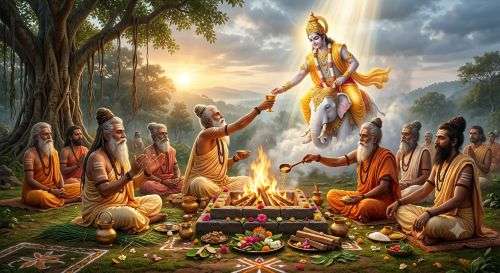
The hymn presents a sacred offering known as Purodāśa, a consecrated cake prepared from barley and ground rice, enriched with nourishment and sanctified through ritual devotion. This offering is united with Soma, the revered Vedic elixir that symbolizes vitality, illumination, and spiritual exaltation. The sage invokes Indra to partake of this purified Soma, which is offered with devotion and sacred intent. By drinking Soma, Indra is described as increasing in strength, courage, and victorious energy. The imagery conveys not merely physical empowerment but the awakening of divine consciousness that overcomes disorder and establishes harmony. The Soma fills the divine being in its most refined form, representing the nourishment of both cosmic power and spiritual wisdom.
Indra is celebrated as the courageous warrior who stands alongside the gods and is accompanied by the Maruts, the radiant storm deities who embody dynamic natural forces. Together they uphold Ṛta, the eternal cosmic order governing the universe. Endowed with insight and discernment, Indra is not only a conqueror in battle but also a knower of truth who understands the deeper principles underlying existence. The prayer seeks his protection from enemies, destructive forces, and cruel influences, asking that fear be removed from human hearts. In the Vedic vision, fearlessness arises when one lives in harmony with divine law and recognizes the sustaining presence of cosmic intelligence.
The hymn further honors Indra as the Lord of the seasons, the one who partakes of their essence and governs the rhythms of nature. The cyclical progression of time, rainfall, growth, harvest, and renewal reflects the orderly functioning of the universe. The invitation extended to Indra, accompanied by the Maruts and the celestial hosts, signifies the desire for divine participation in human life. The purified Soma becomes a symbol of sincere aspiration offered to the higher powers that sustain both the natural world and the inner life of the seeker.
A central theme of the hymn is the celebrated alliance between Indra and the Maruts. The Maruts accepted Indra as their leader and strengthened him during his cosmic battles against forces of obstruction. Empowered by their support, Indra defeated Vṛtra, the mighty serpent who symbolized drought, confinement, and resistance to the flow of life. This victory carries profound spiritual significance. Vṛtra represents every force that imprisons energy, wisdom, and progress, while Indra represents the awakening power that liberates hidden potential. Scientifically viewed, the imagery reflects humanity’s early observation of storms releasing rain from cloud formations, transforming barren lands into fertile landscapes. Spiritually viewed, it symbolizes the release of divine grace into the soul.
The hymn recalls additional victories in which the Maruts aided Indra against Ahi, Śambara, and the Phanis. These adversaries symbolize forces that conceal wealth, light, knowledge, and prosperity. The recovery of cows in Vedic symbolism often signifies the recovery of illumination, wisdom, and abundance. Through sacrifice, devotion, and divine cooperation, hidden treasures are restored to the world. Such narratives reveal a profound understanding that progress is achieved when strength, wisdom, discipline, and cooperation operate together under the guidance of higher principles.
Indra is praised as the possessor and distributor of gifts, richly endowed with horses that symbolize vitality, movement, and sovereign power. The Maruts continually magnify his glory through their sacrificial devotion, demonstrating the Vedic principle that divine and natural forces function in mutual harmony. The invitation for Indra to come with the hosts of the Maruts and partake of Soma expresses the aspirant’s longing for divine presence, inspiration, and protection. The sacred relationship between humanity and the divine is portrayed not as one of distance but of active participation, where sincere offerings draw higher blessings into earthly existence.
The hymn culminates in a majestic vision of Indra as the releaser of rain-bearing clouds, the inspirer of noble action, and the upholder of divine law. His unique and thunderous voice echoes through the atmosphere as a symbol of authority and creative power. He is portrayed as ancient, mighty, and surrounded by immeasurable strength, standing as a guardian of both cosmic order and human welfare. In Vedic contemplation, such descriptions elevate the mind toward an awareness of the vast intelligence permeating the universe. The prayer concludes with a heartfelt invitation, seeking new shelter, protection, and prosperity under his benevolent care. Thus the hymn becomes both a celebration of nature’s grandeur and a profound spiritual declaration that divine power, rightly understood, liberates, nourishes, protects, and guides all existence toward harmony and fulfillment.