MS Sparsha
For years, the equation was brutally simple. If India wanted advanced artificial intelligence, cloud computing and massive computing power, it had to largely depend on technology companies from the United States and other global giants. The servers were owned by companies such as Google, Amazon and Microsoft. Computing power was rented, often in dollars. Data was processed on foreign cloud platforms, sophisticated models were developed elsewhere, and India frequently found itself paying to access the digital intelligence generated from its own vast population.
That model is now beginning to change.
India has neither banned foreign cloud companies nor suddenly moved every piece of Indian data out of overseas infrastructure. The change is more strategic—and arguably more important. For critical public systems, India is increasingly seeking to build the technology stack within its own jurisdiction: the data, the computing infrastructure, the language models and the digital platforms that sit on top of them.
BHASHINI is perhaps the clearest illustration of this emerging approach.
Launched in 2022, BHASHINI was conceived to make digital services accessible across India’s extraordinary linguistic diversity. It supports translation, speech recognition, voice generation, transliteration and document understanding. Its scale has steadily expanded, with voice services across 22 Indian languages, text services across 36 languages, and hundreds of models and datasets.
This is far more than a language-translation initiative.
It is an attempt to create an indigenous digital language layer capable of understanding how Indians actually speak, write and communicate. An AI system trained predominantly on Western languages and datasets cannot automatically understand Indian accents, colloquialisms, regional expressions, cultural references and the complexities of a multilingual society. India’s linguistic diversity is not a peripheral problem for AI—it is one of the country’s biggest technology challenges and opportunities.
That is why the migration of BHASHINI to Yotta’s Government Community Cloud and Shakti Cloud assumes significance. According to information released through the Press Information Bureau, the migration has placed BHASHINI’s operations on Indian cloud and GPU infrastructure, with its datasets, models and citizen interactions remaining within Indian jurisdiction. The exercise reportedly involved more than 200 TiB of data and over 3.5 billion files.
The significance extends beyond BHASHINI itself.
Shakti Cloud represents the larger ambition: computing power within India, available for Indian requirements. Yotta has announced that its infrastructure will support the training and deployment of large language models aimed at Indian languages and use cases, using NVIDIA-powered infrastructure housed in Indian data centres.
This is where India’s digital strategy begins to resemble the philosophy behind UPI.
The lesson from UPI was not simply to create another payment application. It was to build a public digital infrastructure layer on which banks, fintech companies and millions of applications could compete and innovate. The infrastructure remained broadly accessible while the private sector built services on top of it.
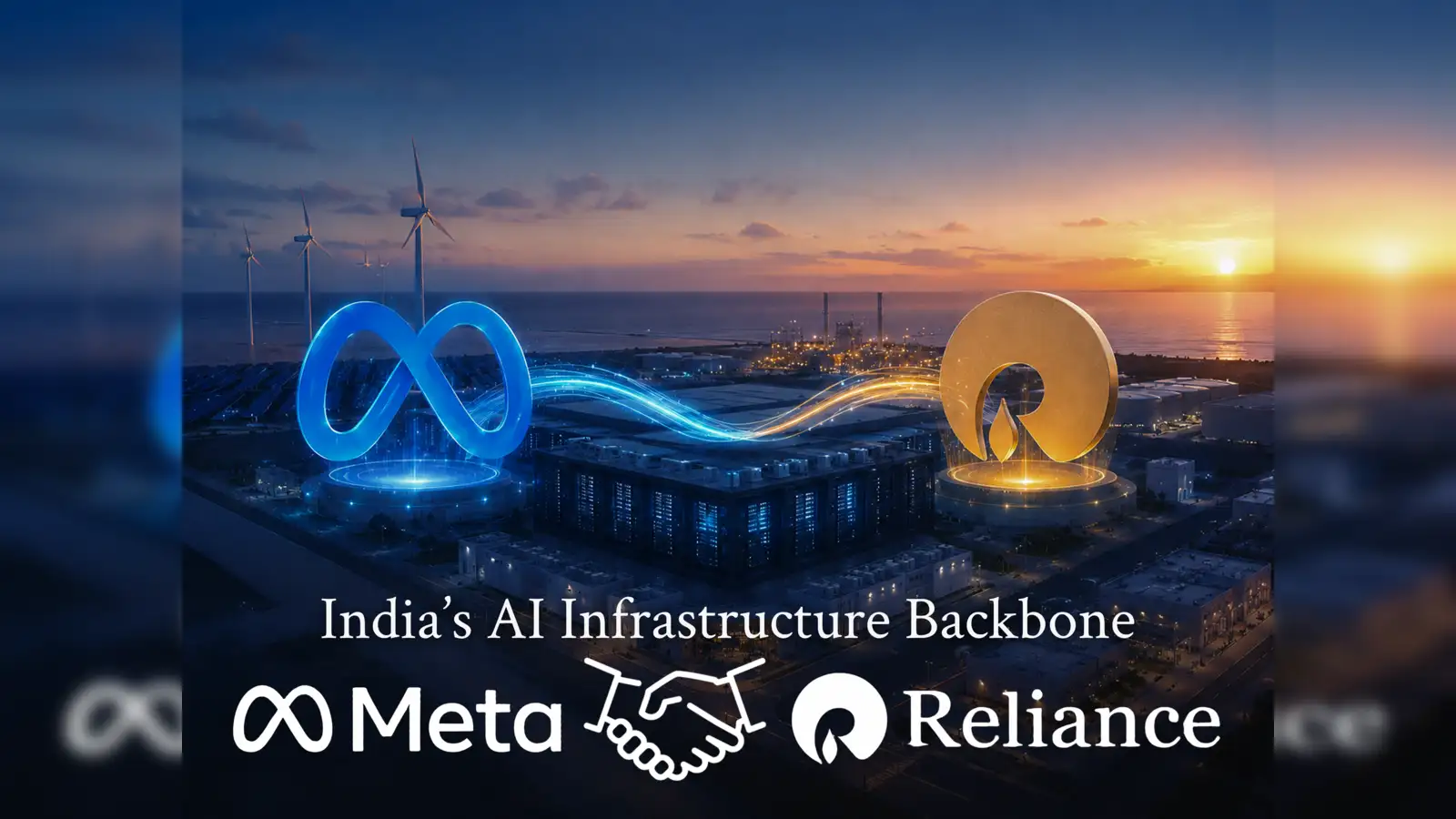
India appears to be attempting something similar in AI: create domestic infrastructure that reduces strategic dependence while allowing governments, businesses, researchers and start-ups to build upon it.
And this is ultimately about much more than technology.
Data is power.
Data can reveal how citizens communicate, travel, transact, work, consume services and interact with government. Whoever controls the infrastructure through which such data is stored and processed possesses an important degree of technological and strategic leverage. Keeping critical data and computing infrastructure within India can therefore strengthen sovereignty, resilience, security and accountability.
But India should not pretend that the journey is complete.
The chips powering these systems are still overwhelmingly imported. Much of the most advanced AI software and intellectual property remains foreign. India may increasingly own the buildings, control the data and operate the infrastructure, but important components of the technological engine still come from abroad.
That is precisely why this should not be described as the end of technological dependence.
It is the beginning of bargaining power.
India is gradually moving from being merely a massive consumer and customer of global technology companies to becoming a builder of its own digital foundations. The objective should not be to shut the world out. It should be to ensure that India can engage with the world from a position of strength rather than dependence.
For decades, India’s digital future was built largely on technology imported from elsewhere.
Now, quietly but decisively, the country is beginning to build the foundations itself.
The front door may not be fully locked yet. But India has started installing its own locks—and, more importantly, building its own house.