Special Correspondent
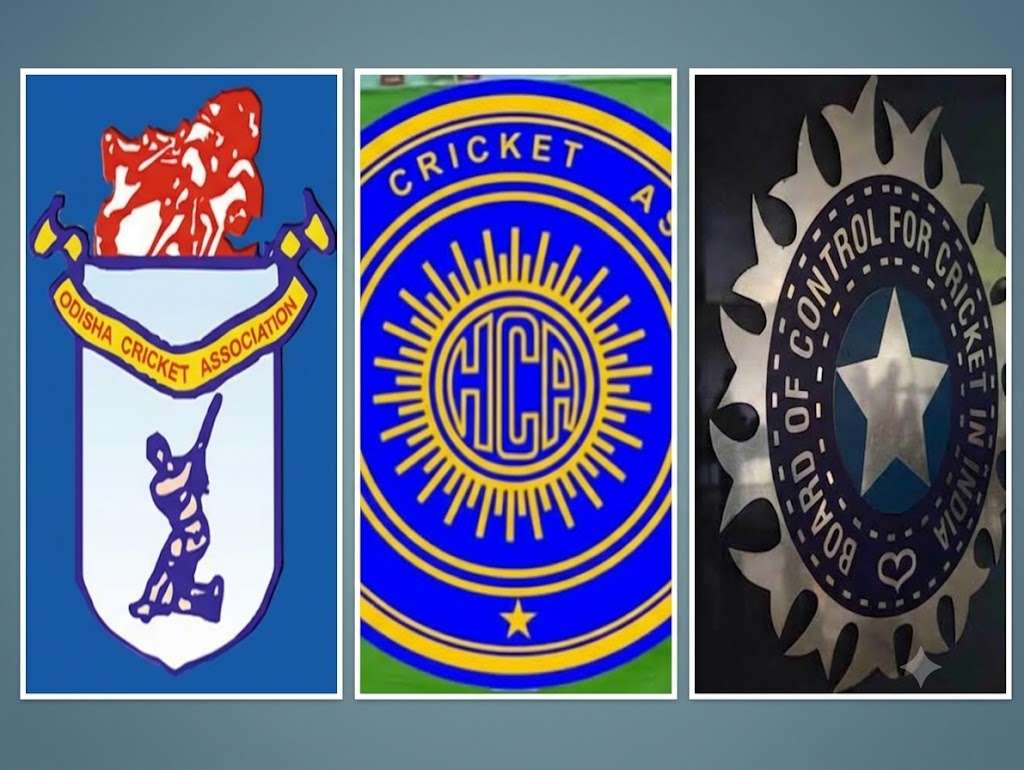
Indian cricket may be flourishing on the field, but the picture off it is becoming increasingly uncomfortable. The latest controversy surrounding the Odisha Cricket Association (OCA) and the continuing turmoil in the Hyderabad Cricket Association (HCA) may appear, on the surface, to be two separate disputes. In reality, they expose a strikingly similar governance malaise: uncertainty over elections, competing interpretations of rules, internal factions, prolonged institutional disputes and, ultimately, the courts being asked to settle matters that cricket administrators should ideally resolve themselves.
The Odisha controversy has now brought the issue into sharp focus. The OCA elections, originally due in October 2025, were deferred. The association has defended the postponement by saying that its General Body took the decision while assessing the implications of the National Sports Governance Act, 2025, the inclusion of cricket in the Olympic programme and a Union Sports Ministry communication that it interpreted as a transitional measure concerning elections. The OCA has maintained that the continuation of its office-bearers was approved by its General Body and was not a unilateral act by any individual.
The BCCI, however, has taken a markedly different position before the Orissa High Court. It has argued that OCA should conduct its elections immediately in accordance with its own by-laws, the BCCI framework and Supreme Court directions. The Board has pointed to the prescribed tenure structure, including the three-year term, maximum three terms and the restriction on more than two consecutive terms followed by a cooling-off period.
More significantly, the BCCI has reportedly told the court that cricket has not yet been notified as a “designated sport” under the new statutory framework. That position has inevitably created uncertainty among state associations, many of which had assumed that the new sports-governance regime and the transitional directions would affect the timing of their elections.
This is where the Odisha controversy becomes relevant to Hyderabad.
The HCA is already wrestling with its own internal governance complications. Its elections are due later this year, and the dispute within the Apex Council has increasingly become a contest over who has the authority to convene and conduct the General Body meeting and what decisions should be placed before it.
/odishatv/media/media_files/2026/08/27/oca-pix-2026-08-27-20-00-04.jpg "Odisha and Hyderabad: Two Cricket Associations, One Governance Crisis 4 OrangeNews9")
Also read: https://orangenews9.com/is-judiciary-set-to-take-over-state-cricket-associations/
On one side is the faction led by Acting President Sardar Daljit Singh, which maintains that holding the AGM is mandatory and that the amendments approved at earlier meetings should be formally endorsed. On the other is the faction associated with Secretary M. Jeevan Reddy, which has opposed the manner in which the AGM has been sought to be convened. The disagreement has reportedly resulted in the proposed AGM being formally notified more than once, while the question of the Acting President’s authority to convene it has itself reached the Telangana High Court.
Compounding matters, the Acting President’s push for an emergency AGM to amend the association’s bye-laws has reportedly not been accompanied by an agenda placed either before the Single Member Committee for its approval or before the members themselves. Bye-law amendments, by their very nature, cannot be treated as an emergency exercise — they call for due process, advance notice and full disclosure of what is actually being proposed. The irony is harder still to miss: the amendments already approved at the association’s earlier AGMs have themselves not been carried forward. That is the cruel joke at the heart of the Hyderabad dispute — a fresh AGM being pushed through in haste while the mandate from the previous one remains unimplemented.
That is precisely where the parallel with Odisha becomes striking.
In Odisha, the fundamental question is: Can an association defer an election on the basis of an evolving statutory framework when its existing constitutional and BCCI obligations require elections to be held?
In Hyderabad, the immediate question is different: Who has the authority to convene the General Body and take the association towards its next electoral process when rival factions dispute that authority?
But beneath both questions lies the same institutional failure—the inability of the cricket administration to provide a clear, universally accepted and legally unquestionable route to elections.
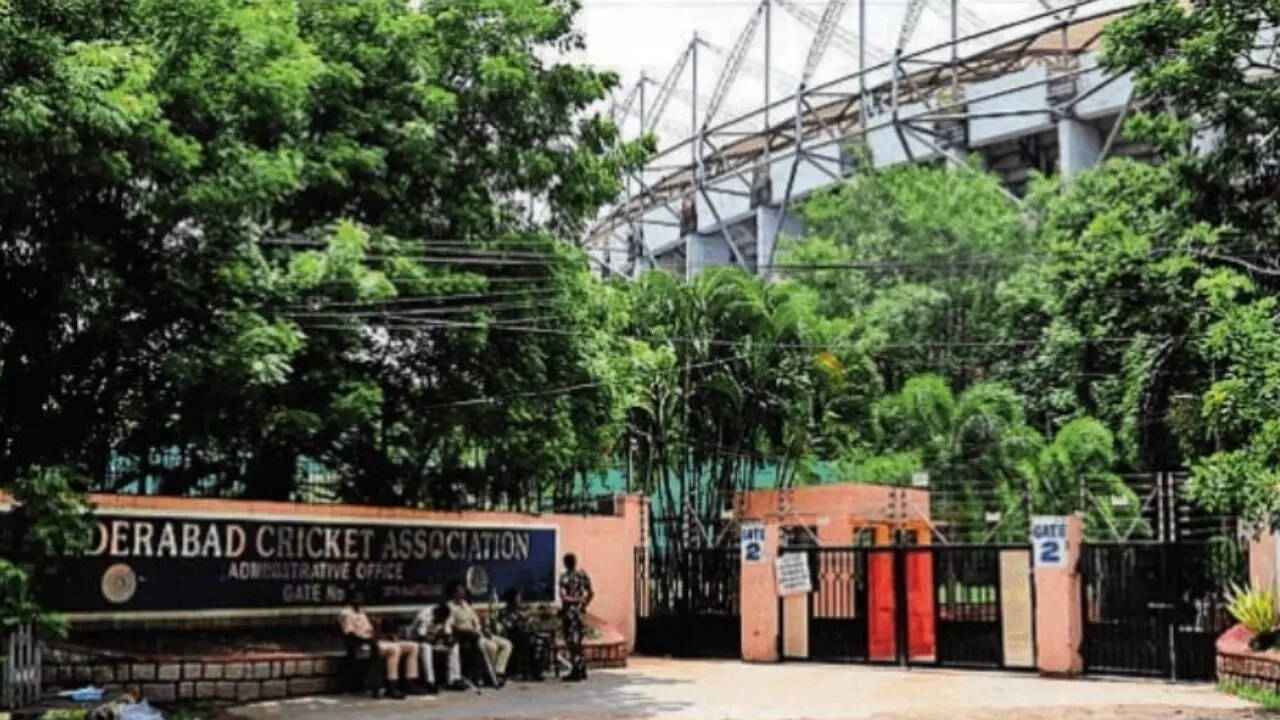
The HCA’s circumstances are even more complicated because the Telangana High Court has already placed the association under a Single Member Committee headed by Justice P. Naveen Rao (Retd.). The court-appointed arrangement continues to oversee aspects of the association’s administration, while the HCA’s own website records the functioning of its Apex Council and committees under this broader supervisory structure.
That should be a matter of concern for every stakeholder in Hyderabad cricket.
Judicial intervention is sometimes unavoidable when institutions fail to protect their own constitutional processes. But it cannot become the normal operating system of a sports association. The moment every AGM, election, appointment or internal disagreement becomes a potential court case, the association ceases to function as an autonomous sporting institution and gradually becomes an organisation administered through litigation.
And that is the real warning from Odisha.
Also read: https://orangenews9.com/hca-if-the-power-to-end-the-mess-exists-why-isnt-it-being-used/
The OCA-BCCI dispute is not merely about whether an election should be held tomorrow or after another few months. It has exposed a larger ambiguity involving three overlapping layers of authority: the association’s own constitution and by-laws, the BCCI’s governance framework shaped by Supreme Court directions, and the new statutory sports-governance regime. The courts may ultimately have to clarify how these frameworks interact.
Hyderabad cannot afford to travel down the same road.
The HCA should therefore treat the Odisha controversy as a cautionary tale rather than merely another dispute to watch from the sidelines. Every ambiguity surrounding the AGM, amendments, authority to convene meetings and the forthcoming elections must be removed through transparent constitutional procedure—not through competing notices, factional assertions or prolonged litigation.
If the BCCI insists in Odisha that state associations must adhere to their by-laws, its constitutional framework and Supreme Court directions, the same principle would be expected to apply consistently across every state unit, including Hyderabad. State associations need clarity, not contradictory interpretations depending upon the circumstances.
If the BCCI insists in Odisha that state associations must adhere to their by-laws, its constitutional framework and Supreme Court directions, the same principle must be applied consistently across all state units. State associations need clarity, not contradictory interpretations depending upon the circumstances.
The responsibility, however, cannot be shifted entirely to the BCCI or the judiciary. State associations themselves must demonstrate that they are capable of conducting orderly, transparent and timely elections. The legitimacy of an elected body ultimately depends not merely on winning an election but on ensuring that the process leading to it is beyond reasonable dispute.
Odisha and Hyderabad therefore represent more than two isolated cricket controversies. They are warning signals about the state of governance in Indian cricket.
If cricket administrators genuinely want autonomy, they must first demonstrate accountability. If they want to keep courts out of their everyday affairs, they must stop giving courts reasons to enter them. In practice, that means nothing more complicated than a transparent notice, an undisputed convening authority and a publicly available record of what is being voted on—the basic ingredients courts step in to supply only when associations fail to provide them.
The lesson is brutally simple: elections cannot remain hostage to factional battles, procedural ambiguity or convenient interpretations of rules. Cricket associations must clean up their own houses—or sooner or later, the judiciary will be compelled to do it for them.