



Ichangu Narayan Temple is located in Ichangu village of Nagarjun Municipality, about 3 km northwest of Swayambhunath and around 8 km from the center of Kathmandu, Nepal. The temple stands on a peaceful hill surrounded by traditional Newari settlements, forests, and agricultural fields. It is one of the four sacred Narayan temples that are believed to protect the Kathmandu Valley from the four directions.
The temple is believed to have been established during the Licchavi period in the 5th century CE, making it more than 1,500 years old. It is one of the oldest surviving Vishnu temples in Nepal and has remained an important center of worship for many centuries.
The presiding deity of the temple is Lord Vishnu in the form of Narayana, the protector and sustainer of the universe. Devotees worship him as the divine guardian of the western direction of the Kathmandu Valley. The temple also contains images of Garuda, Mahalakshmi, and other Vaishnava deities associated with Lord Vishnu.
Ichangu Narayan Temple is built in the traditional Nepalese pagoda style. The temple features a beautiful two-tiered roof, intricately carved wooden struts, decorative metalwork, and ancient stone sculptures. The courtyard houses several historic images of Garuda and other sacred figures. The architecture reflects the artistic traditions of both the Licchavi and Malla periods. Although the temple suffered damage during earthquakes over the centuries, including the devastating earthquake of 2015, it has been carefully restored while preserving its ancient heritage.
Ichangu Narayan Temple is one of the four sacred Narayan shrines of the Kathmandu Valley, the others being Changu Narayan, Bishankhu Narayan, and Shesh Narayan. The temple is traditionally believed to have been founded by King Haridatta of the Licchavi dynasty during a period when Hinduism flourished throughout the valley.
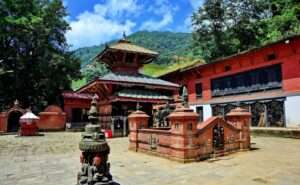
Over the centuries, the temple received patronage from successive Nepalese rulers and became an important center of Vaishnava worship. The present structure was largely renovated and rebuilt during the Malla period while retaining the sanctity of the original shrine. Despite the passage of more than fifteen centuries, the temple continues to be an active place of worship and an important pilgrimage destination for devotees of Lord Vishnu.
According to ancient Nepalese tradition, Lord Vishnu desired to protect the sacred Kathmandu Valley from negative forces, natural calamities, and spiritual disturbances. To safeguard the valley, he manifested himself in four divine forms and established sacred Narayan shrines in the four directions surrounding the region.
The western direction was assigned to Ichangu Narayan. In ancient times, a group of sages performed intense penance in the forests and hills of Ichangu, praying for the welfare and protection of all living beings. Pleased by their devotion, Lord Narayana appeared before them in a divine vision and promised to remain at the site forever, blessing devotees who worship him with sincerity and faith.
Another local tradition states that King Haridatta received a divine vision of Lord Narayana in a dream. The Lord instructed him to establish a temple at Ichangu and install his sacred image there. Obeying the divine command, the king built the shrine and dedicated it to the protection of the western part of the Kathmandu Valley.
Over time, devotees came to believe that visiting all four Narayan temples—Ichangu Narayan in the west, Changu Narayan in the east, Bishankhu Narayan in the south, and Shesh Narayan in the southwest—would bring spiritual merit, peace, prosperity, and the blessings of Lord Vishnu. Thus, Ichangu Narayan became an important part of the revered Char Narayan pilgrimage circuit of Nepal.
The temple celebrates major Vaishnava festivals such as Haribodhini Ekadashi, Harishayani Ekadashi, Vaikuntha Ekadashi, Vishnu Jayanti, Ram Navami, and Janmashtami. During these occasions, large numbers of devotees gather at the temple to offer special prayers and seek the blessings of Lord Narayana. The annual Char Narayan pilgrimage, during which devotees visit all four sacred Narayan temples of the Kathmandu Valley, is also observed with great devotion and enthusiasm.

