Upadhyayula Lakshman Rao
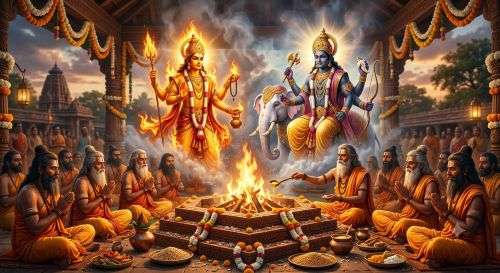
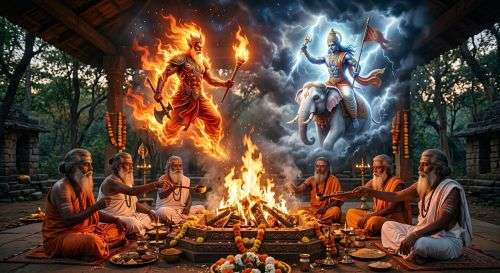
In the resonant cadence of Tristubh and Gayatri chandas, the sage Agastya raises a hymn that is at once a plea, a surrender, and a profound alignment with cosmic forces. The Maruts—the radiant storm deities, embodiments of movement, vitality, and luminous force—are invoked with humility and longing. The sage approaches them not merely with ritualistic utterance, but with an inner yearning shaped by reverence. His words carry both devotion and urgency: he seeks their presence, their nearness, and their calming grace. The call to “let loose the horses” is symbolic of releasing restrained energies of nature, allowing divine dynamism to flow freely into the human realm, dissolving stagnation and fear.
The hymn reveals itself as self-nourishing, not merely in the material sense but as a spiritual sustenance born from the deepest layers of divine consciousness. It is described as something created by the gods themselves from the depth of their being, suggesting that true prayer is not an invention of man but a rediscovery of an eternal vibration. To “bear this hymn in your mind” is to invite the deities into a shared consciousness, where devotion becomes a bridge between mortal limitation and divine infinitude. The Maruts, in their role as sustainers, are entreated to accept the offering not as a transaction, but as an exchange of affection and sacred regard.
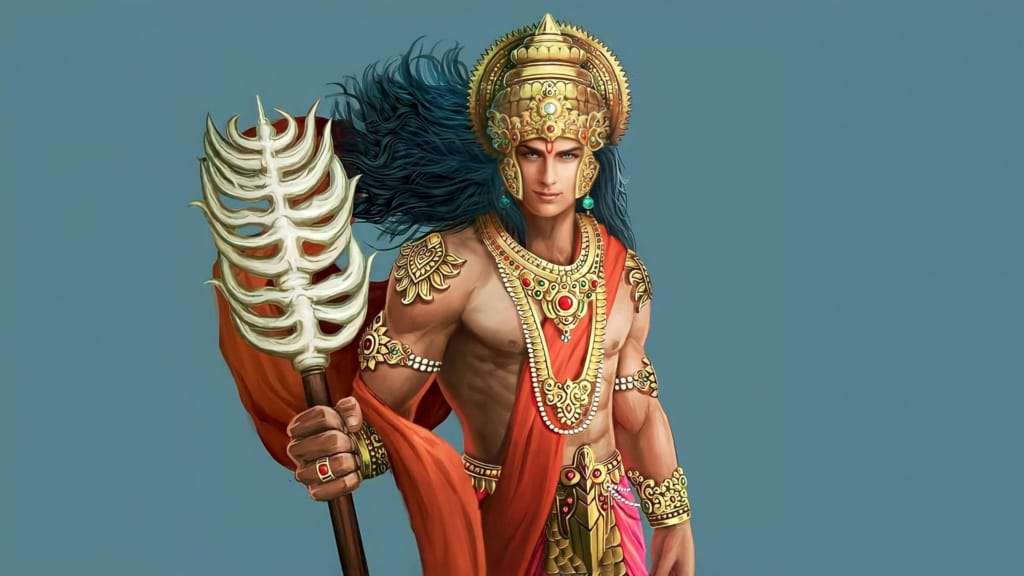
Alongside the Maruts stands Indra, the wielder of thunder and sovereign of celestial power. The sage’s voice trembles with both awe and vulnerability as he acknowledges Indra’s immense strength. There is an undercurrent of fear, a recognition of divine might that can both protect and overwhelm. The mention of oblations being “alienated” reflects a subtle tension—perhaps a disruption in the ritual order or an imbalance in devotion. Yet, even in this moment of uncertainty, the plea is not accusatory but conciliatory. The sage seeks forgiveness and restoration, trusting in Indra’s role as a benevolent bestower of well-being.
The imagery of the Ushas, the dawns, animated by Indra’s grace, brings a luminous dimension to the hymn. Light here is not merely physical illumination but the awakening of life itself. The dawn becomes a manifestation of divine will, carrying vitality into existence. Indra is praised as ancient and eternal, fierce yet nurturing, embodying both the destructive and life-sustaining aspects of the cosmos. His companionship with the Maruts signifies a harmonious interplay of power and motion, a cosmic alliance that sustains the rhythm of creation.
Yet the sage also becomes a mediator, gently urging Indra not to be angered by the Maruts. This reflects a deeper Vedic insight—the necessity of balance even among divine forces. The Maruts, though powerful and radiant, are also impetuous, and their energy must be guided rather than suppressed. The prayer thus becomes an appeal for unity, for divine forces to act in concord rather than conflict, ensuring protection, nourishment, and longevity for humanity.
In a striking turn, the hymn acknowledges the dual nature of the Maruts—their brilliance and their capacity for destruction. Their weapons, meant for cosmic battles, are respectfully asked to be kept at a distance. This is not a rejection of their शक्ति but a request for its benevolent expression. Even the mention of the weapon Asma carries has symbolic weight, representing unseen forces that can harm if not restrained. The sage’s plea is deeply human: to be spared from the unintended consequences of divine power, to live under protection rather than peril.
The closing movement of the hymn is tender and poignant. Human life is compared to straw—fragile, fleeting, easily consumed by the forces of time and nature. Yet within this fragility lies a profound aspiration: to be preserved, enriched, and guided toward a life of dignity and fulfillment. The Maruts are invoked as donors, not merely of material wealth but of vitality, protection, and inner strength. The prayer culminates in a vision of harmonious existence, where divine forces uplift rather than overwhelm, and where humanity, though delicate, is sustained by grace.
Thus, the hymn stands as a luminous testament to Vedic spirituality—a dialogue between the finite and the infinite, where fear transforms into faith, and supplication becomes a pathway to cosmic harmony.