In the sacred tradition of the Rigveda, Sage Śaunaka Gr̥tsamada composed a profound hymn to Rudra in the majestic metre of Trishtubh Chandas. This metre, renowned for its rhythmic dignity and solemn cadence, is traditionally employed to express elevated spiritual truths. The hymn reveals Rudra not merely as a fierce deity of storms and cosmic force, but as the compassionate physician of the universe, the father of the Maruts, and the protector of life itself.
The sage begins with a heartfelt invocation: “O Rudra, father of the Maruts, may the comfort and well-being you bestow descend upon us.” In this prayer, Rudra is recognized as the source of both dynamic power and tender compassion. Though the Maruts embody the tempestuous energies of nature, their father is invoked as the one who tempers force with benevolence. The seer prays that his family may never be deprived of the daily vision of Surya, for to behold the rising sun each day is to participate in the ongoing revelation of cosmic order and divine grace.
The prayer extends beyond personal welfare to the prosperity of future generations. The sage asks that his heroic sons may triumph over hostile forces and that his lineage may flourish through children and grandchildren. In the Vedic worldview, descendants are not merely biological continuations but living carriers of dharma, preserving sacred knowledge and sustaining the sacrificial fire through time. To multiply in progeny is to ensure that the covenant between humanity and the divine remains unbroken.
Rudra is then praised as the supreme healer. “With the medicines you bestow, may we live a hundred years in comfort and happiness.” This aspiration reflects the Vedic ideal of a full lifespan—śatam jīvema, “may we live for a hundred autumns.” The herbs of Rudra symbolize both botanical remedies and subtle energies that restore harmony within body, mind, and spirit. The prayer seeks deliverance from disease, the removal of sins, and the destruction of all forces that disturb the natural equilibrium of life.
In a striking image, Rudra’s hands are described as vajra-like—diamond-strong and thunderbolt-powerful. The vajra signifies indestructibility and focused energy, suggesting that Rudra’s healing power is both precise and irresistible. Though among the most ancient of gods, he remains ever-expanding in greatness. The sage implores him to guide devotees safely away from sin, much as a skilled navigator steers a vessel clear of hidden reefs and dangerous currents.
The hymn repeatedly emphasizes that Rudra responds to sincere invocation offered with many intentions. Whether worshipped for healing, protection, prosperity, or liberation, he is the fulfiller of worthy desires. The sage asks that Rudra not become angered by the ritual summons, but instead strengthen the children of the worshippers through his sacred medicines. This reflects a deep Vedic insight: divine power must be approached with humility and reverence, for the same force that heals can also chastise when cosmic law is disregarded.
The seer declares that he has heard Rudra is the greatest among physicians. With oblations poured into the sacrificial fire, he seeks to pacify the deity’s formidable wrath. Rudra is envisioned as slender in form, auspicious in nature, and tawny or golden-hued in radiance. The “yellow-colored ascetic” symbolizes purified energy, akin to the brilliance of sunlight and the regenerative force of living nature. Though capable of fierce destruction, he is invoked here as the serene and benevolent guardian who nourishes his devotees with food, vitality, and inner satisfaction.
The sage compares himself to one afflicted by scorching heat who finds refuge beneath the cool shade of a verdant tree. In the same way, the weary soul seeks shelter in Rudra. This metaphor beautifully captures the experiential dimension of Vedic devotion: divine grace is not abstract theology, but immediate relief from the burning afflictions of suffering, anxiety, and mortality. To rest in Rudra’s protection is to rediscover strength, peace, and joy.
The prayer asks, “Where is that healing hand of yours, O Rudra, soothed with medicine for the sick?” Here Rudra is portrayed as a cosmic physician whose touch restores wholeness. The expression that he “takes away the sins of the gods” suggests that Rudra possesses the power to dissolve even the subtlest impurities in the celestial order. He is thus not only a healer of individual beings but also a purifier of the universe itself.
The priests are called upon to worship Rudra with pure Vedic chants. He is described as manly, multiform, serious, and luminous. Adorned with golden ornaments, he stands as the sovereign of all existence and the sustainer of life. Gold in Vedic symbolism represents immortality, incorruptibility, and spiritual brilliance. To contemplate Rudra clothed in golden splendor is to recognize the divine consciousness that shines through all forms.
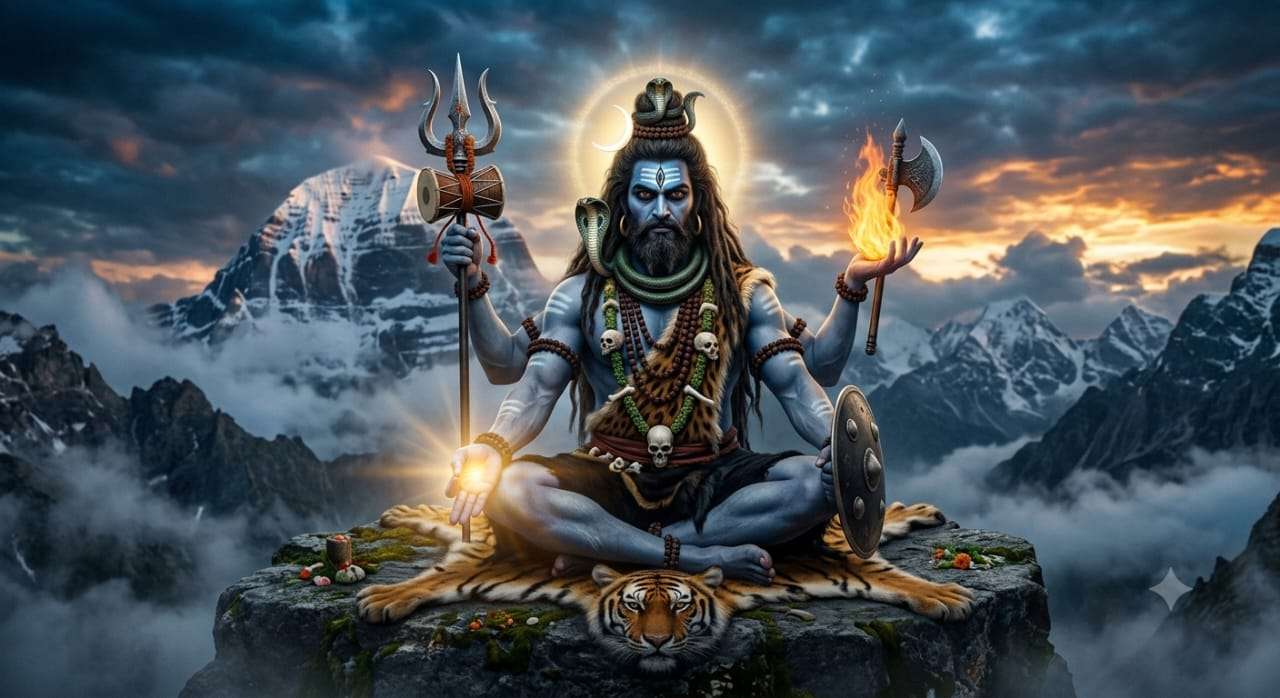
Rudra is hailed as the unsurpassed archer whose arrows never miss their mark. His bow represents concentrated intention, and his arrows symbolize the laws of cause and effect that maintain cosmic justice. Yet the sage prays that this formidable power be turned away from the generous patron and his descendants. “Do not string your bow against us,” he pleads, seeking not punishment but protection. The scientific temperament of the Vedic mind is evident here: the universe operates through precise laws, but those laws may become instruments of blessing when approached with wisdom and harmony.
Ever youthful and mounted upon his renowned vehicle, Rudra is as fierce as a wild beast to the wicked and as protective as a father to the righteous. His army scatters hostile forces, both visible and invisible. As a devoted son bows before his father, so the worshippers salute Rudra upon his arrival. They praise him as the donor of riches and the savior of the holy, and they seek from him the medicines that sustain health and spiritual vigor.
The hymn also turns to the Maruts, asking for their pure and effective herbs. These remedies, said to have been established by Manu, are described as safe, comforting, and unfailingly beneficial. This reflects an early scientific outlook in which medicinal knowledge was regarded as sacred, empirical, and inherited through generations of observation and practice.
The sage entreats Rudra’s flaming weapon to spare the worshippers and asks that his severe disposition withdraw. He requests that Rudra not bend his bow against the generous sacrificer, but instead grant enduring prosperity with children and grandchildren. Here the destructive power of nature is respectfully acknowledged and ritually harmonized, demonstrating the Vedic understanding that fearsome energies can be transformed into guardianship through reverent alignment with ṛta, the cosmic order.
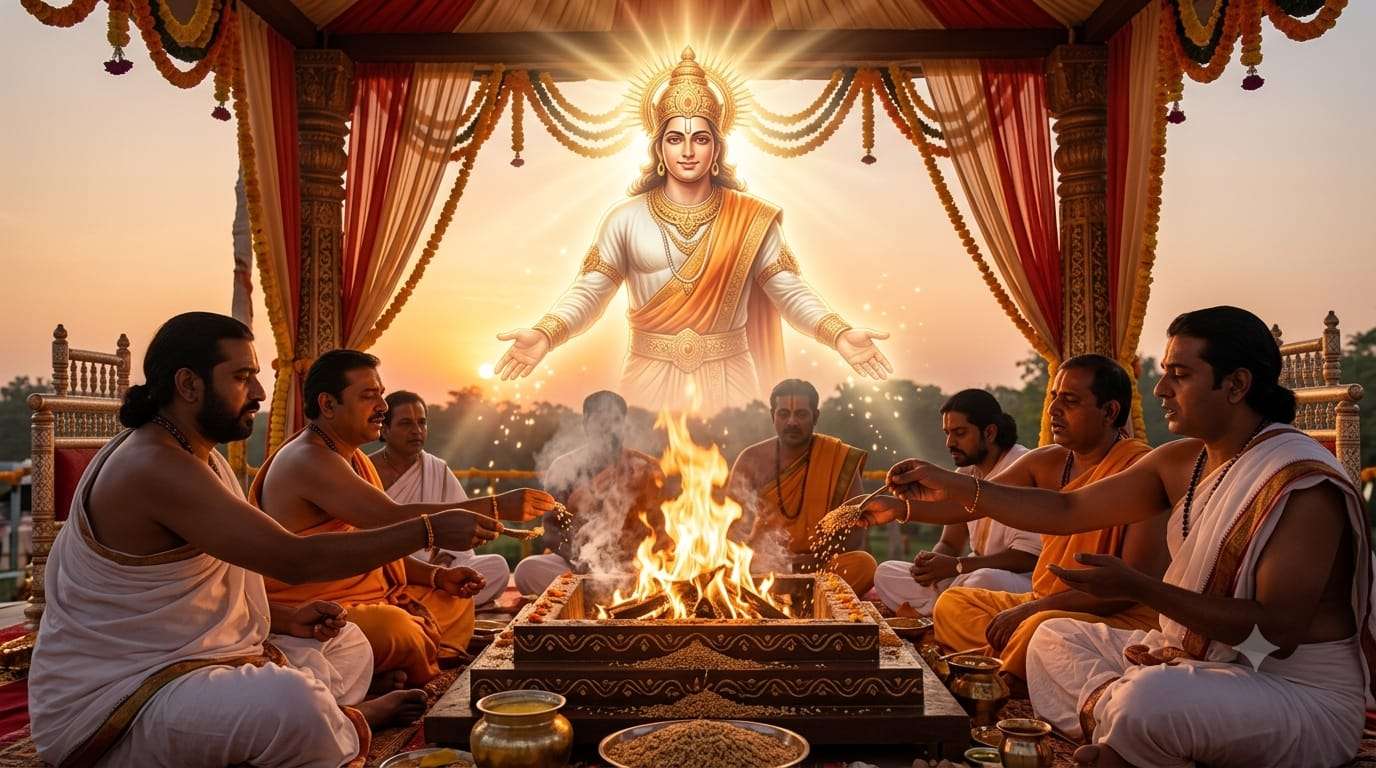
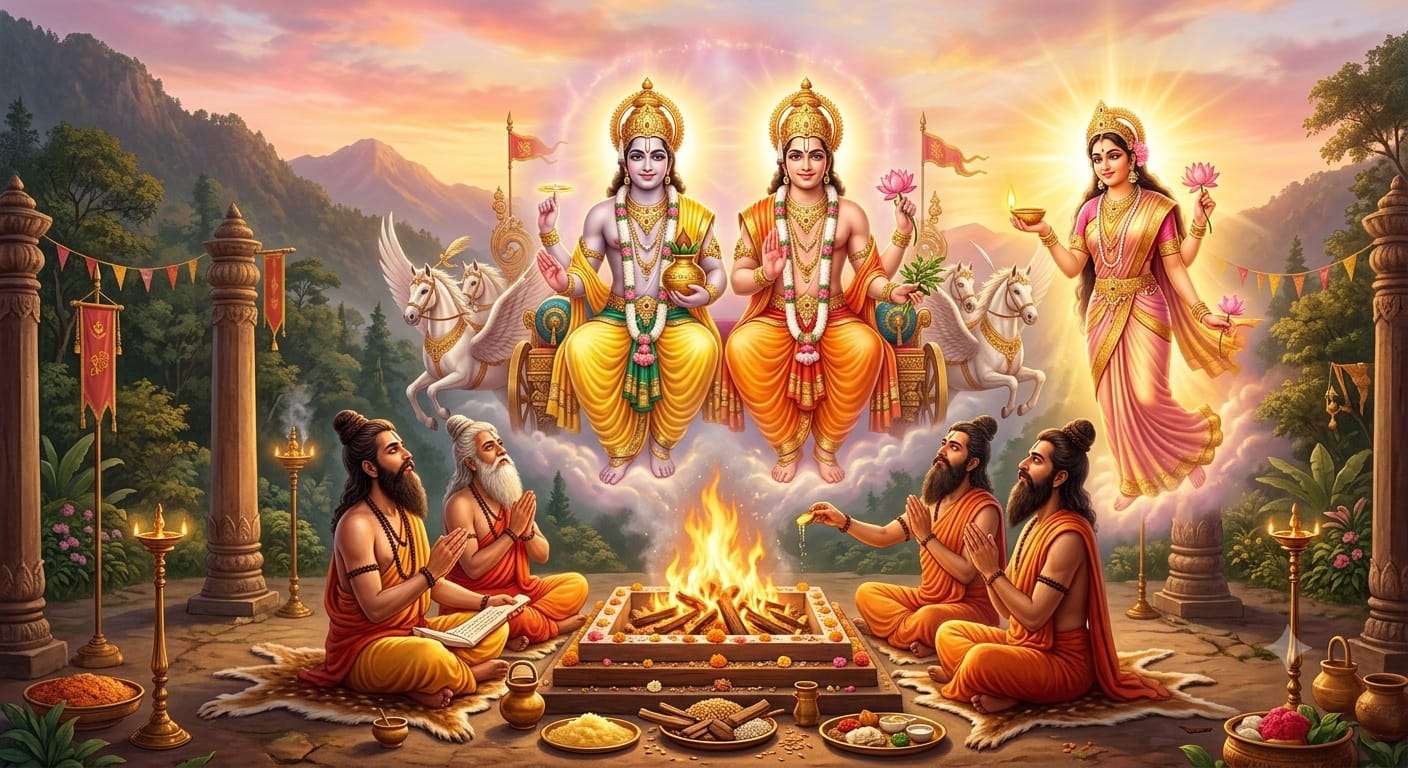
In the closing verses, Rudra is portrayed as dark-brown in hue, radiant in brilliance, and all-knowing in awareness. The worshippers invite him into the sanctified precincts of the yajña and pray that he never become angry with them. They ask that no harm come to them or to their descendants. Surrounded by sacred fires and resonant Vedic hymns, they seek to establish a relationship of trust with the divine physician, whose grace encompasses protection, health, prosperity, and spiritual illumination.
This hymn stands as one of the most moving testimonies to the Vedic vision of reality. In Rudra, the seer perceives the unity of awe and compassion, destruction and healing, justice and mercy. He is the untamed force of nature and the tender hand that heals the afflicted. To invoke Rudra is to acknowledge that the same cosmic energy which governs storms and transformations also nourishes life and restores balance. Through this timeless prayer, humanity approaches the Lord of universal power and discovers in him a refuge of strength, wisdom, and enduring peace.